
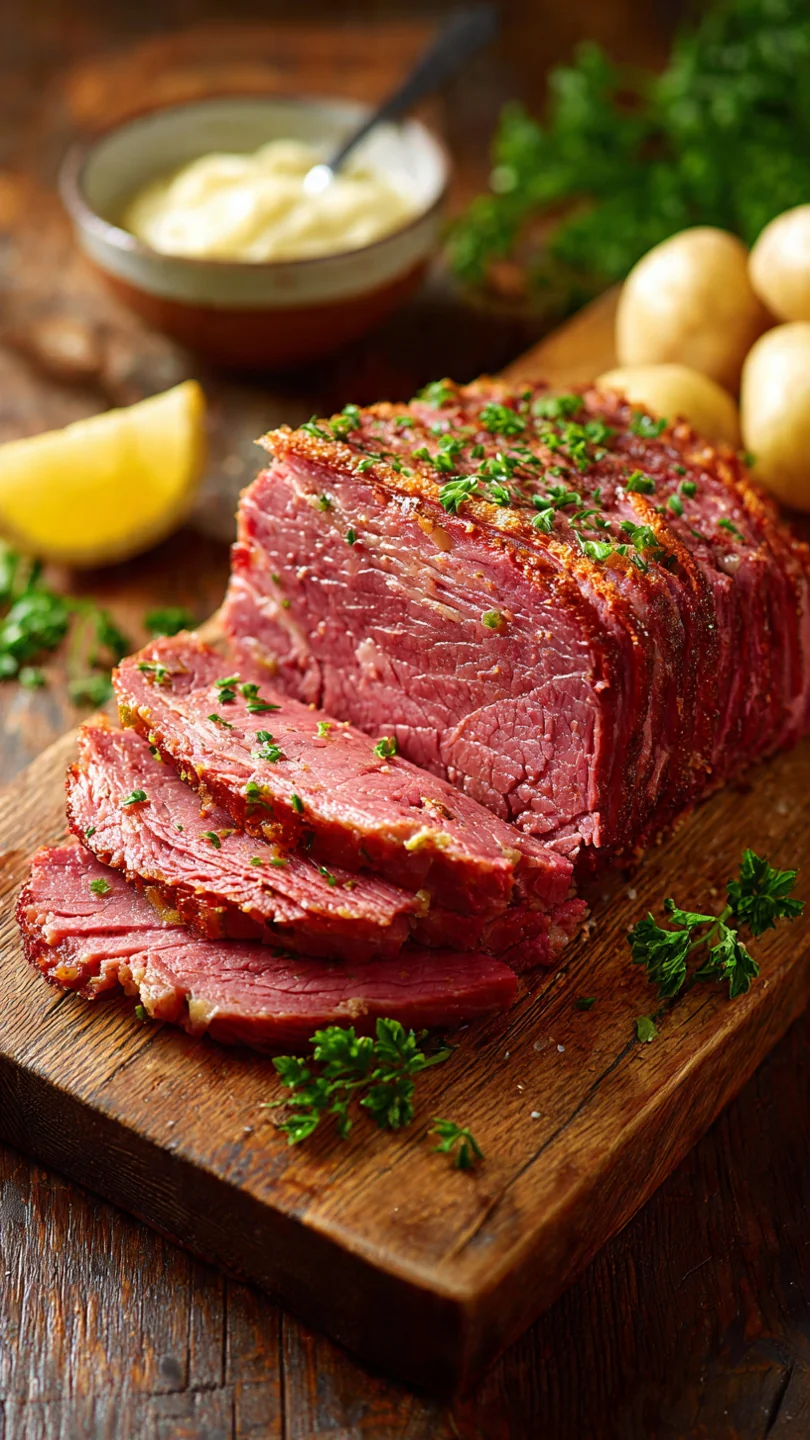
There’s something deeply satisfying about a pot of corned beef simmering on the stove. The aroma of spices fills the kitchen, promising a meal that’s both comforting and celebratory. While it’s a St.
Patrick’s Day staple, this incredibly tender, flavorful dish deserves a spot in your regular rotation for cozy Sunday dinners. The secret to perfect corned beef isn’t a complex technique—it’s patience and understanding a few key principles. After testing this method in professional kitchens and countless home trials, I’ve honed a recipe that delivers fall-apart tender meat and perfectly cooked vegetables every single time.
Let’s make the best corned beef of your life.
- Foolproof tenderness: The low-and-slow simmering method breaks down the tough connective tissue without drying out the meat, guaranteeing a melt-in-your-mouth texture.
- Deep, layered flavor: Cooking the brisket with a classic blend of whole spices and aromatics infuses every bite with a savory, peppery, and subtly sweet taste.
- A complete meal in one pot: You cook the hearty vegetables right in the same flavorful broth as the meat, making cleanup a breeze and ensuring everything is perfectly seasoned.
- Incredible leftovers: This recipe makes fantastic sandwiches, hash, or a quick skillet dinner for days, often tasting even better the next day.
- Surprisingly simple: While it cooks for hours, the active hands-on time is minimal. It’s mostly about letting time and gentle heat do the work.
- A crowd-pleasing centerpiece: Whether for a holiday or a family gathering, a beautifully sliced platter of corned beef with vegetables is always a hit.
Ingredients You’ll Need
Let’s gather our ingredients. The beauty of this recipe lies in its simplicity. A good-quality corned beef brisket and a handful of pantry staples are all you need to create a truly memorable meal.
When selecting your brisket, look for one with even marbling and a good fat cap—this fat will baste the meat as it cooks, keeping it juicy. Most briskets come pre-brined and include a small spice packet. We’ll use that, but bolstering it with extra whole spices makes a world of difference in building a more complex flavor base.
- Uncooked corned beef brisket: This is typically beef brisket that has been cured in a seasoned brine. A 3-4 pound brisket is ideal for feeding 6-8 people with leftovers.
- Yellow onion and garlic: These aromatics form the foundational flavor of the cooking liquid, which in turn seasons the meat and vegetables.
- Bay leaves, black peppercorns, mustard seeds, coriander seeds: This classic spice blend adds earthy, pungent, and citrusy notes. The coriander is my professional addition for a brighter, more rounded flavor profile.
- Green cabbage, carrots, and red potatoes: These sturdy vegetables hold up beautifully to the long cook time and absorb the delicious spiced broth. Red potatoes are preferred for their waxy texture, which prevents them from becoming mushy.
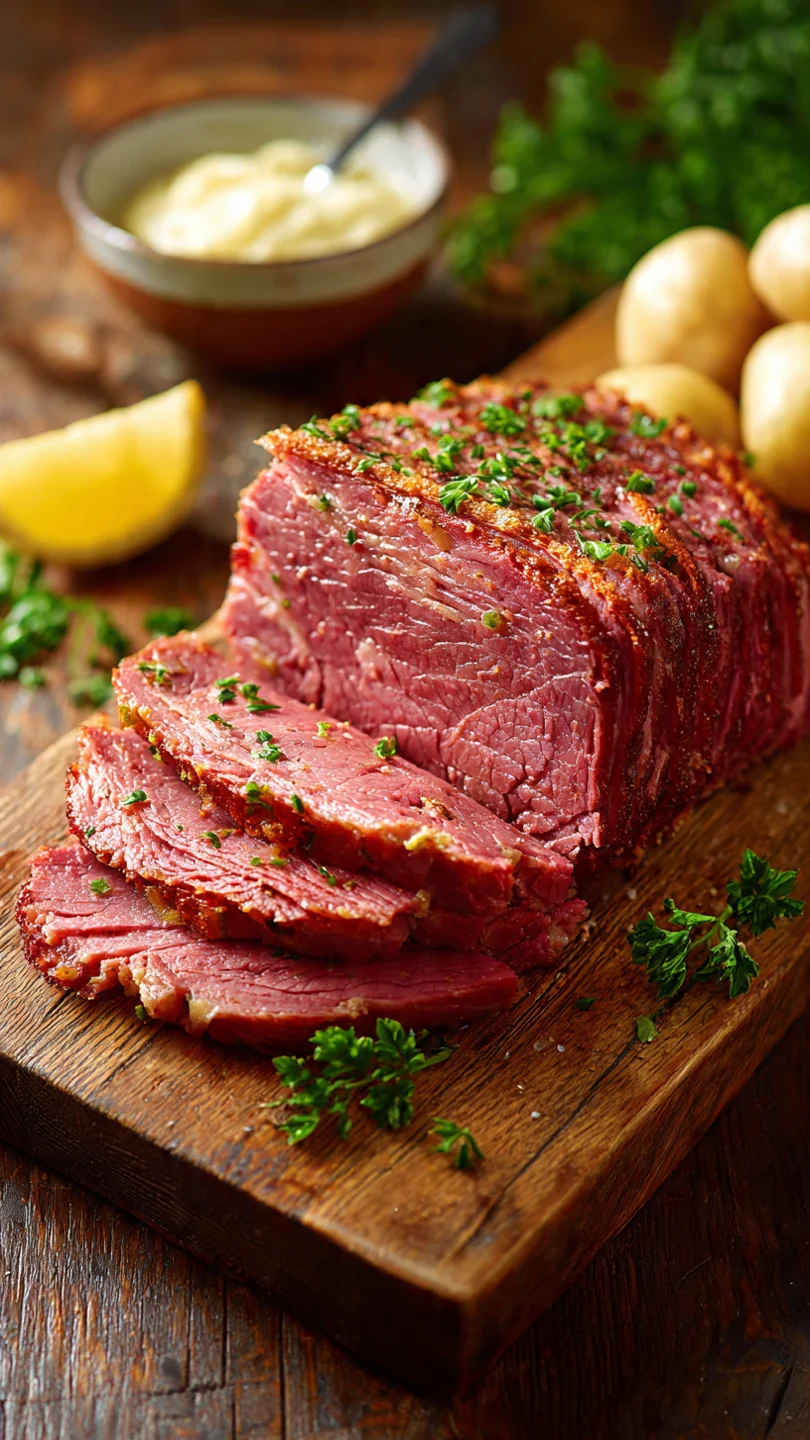
Note: You’ll find the complete list of ingredients, along with their exact measurements, in the printable recipe card at the bottom of this post.
Kitchen Equipment Needed
You don’t need any special equipment for this classic recipe. A large, heavy-bottomed pot is the only essential. I prefer a Dutch oven because its thick walls and tight-fitting lid distribute heat evenly and maintain a steady simmer.
A 7-8 quart stockpot works perfectly as well. You’ll also need a sharp knife for slicing the rested meat against the grain—this is key for tender bites. A slotted spoon or spider strainer is helpful for fishing out the vegetables.
That’s truly it!
How to Make Corned Beef Recipe
Step 1: The Gentle Start
Place your corned beef brisket, fat cap up, into your large pot. Scatter the quartered onion, smashed garlic, all the spices (including the packet from the brisket), and bay leaves around it. Now, completely submerge everything in cold water.
Starting with cold water is a chef’s trick—it allows the flavors to seep into the meat gradually as the temperature rises, rather than shocking the proteins. Bring this to a boil over high heat. The moment you see a rolling boil, it’s time to dial it way back.
Step 2: The Patient Simmer
This is the most critical step. Reduce the heat to the lowest setting that maintains a bare simmer. You should see tiny, lazy bubbles rising to the surface—not a vigorous boil.
A rolling boil will make the meat tough and stringy. Cover the pot and let time work its magic. Trust me, the difference between a simmer and a boil is the difference between tough and tender.
Set a timer for 2.5 hours and resist the urge to peek too often; keeping the lid on maintains a consistent temperature.
Step 3: Testing for Tenderness
After 2.5 hours, it’s time to check your progress. Carefully insert a long fork into the thickest part of the brisket and try to pull it out. If it slides in and out with only a slight tug, it’s done.
If you meet significant resistance, it needs more time. Continue cooking, checking every 20-30 minutes. The total time can vary from 3 to 3.5 hours depending on the specific cut and your stove.
Believe me, it’s done when it’s tender, not when the clock says so.
Step 4: Cooking the Vegetables
Once the meat is fork-tender, use tongs to nudge it to one side of the pot. Now, add your halved potatoes and carrot chunks to the bubbling broth. Let them cook for about 15 minutes to get a head start before adding the more delicate cabbage.
Submerge the cabbage wedges and cook for another 15-20 minutes. You want the vegetables to be tender but not falling apart. The potatoes should be easily pierced with a knife.
Step 5: Rest, Slice, and Serve
Here’s where many go wrong: slicing immediately. Using tongs, transfer the hot corned beef to a cutting board and walk away for 10-15 minutes. This allows the juices to redistribute throughout the meat.
If you slice it now, all those precious juices will run out onto the board. While it rests, use a slotted spoon to arrange the vegetables on a large platter. Now, using a sharp knife, slice the brisket thinly across the grain—look for the lines of muscle fibers and cut perpendicular to them.
This shortens the fibers, making each piece incredibly tender. Arrange the slices with the vegetables, ladle a bit of broth over top, and serve.
- The Simmer is Sacred: Maintaining that gentle, bare simmer is the single most important factor for tender corned beef. A boil will tighten and toughen the proteins.
- Against the Grain: Always, always slice corned beef against the grain. Find the direction of the long muscle fibers and cut perpendicular to them. This turns a potentially chewy bite into a tender one.
- Don’t Skip the Rest: Letting the meat rest after cooking is non-negotiable for juicy results. Cover it loosely with foil to keep it warm during this time.
- Broth Boost: For a richer cooking liquid, substitute 2-3 cups of the water with a light lager or low-sodium beef broth. It adds a wonderful depth of flavor.
- Pre-Soak for Less Salt: If you’re sensitive to salt, you can soak the corned beef in cold water for 1-2 hours in the refrigerator before cooking, changing the water once. This draws out some of the excess salt from the curing process.
Recipe Variations
- Slow Cooker Corned Beef: After the initial boil in a pot (Step 1), transfer everything to a 6-quart slow cooker. Cook on LOW for 8-9 hours or on HIGH for 5-6 hours. Add vegetables in the last 2 hours on LOW or 1 hour on HIGH.
- Beer-Braised Corned Beef: Replace all the water with a combination of a malty beer, like a brown ale or stout, and enough beef broth to cover the meat. This creates a deeply flavorful, almost stew-like result.
- Honey Mustard Glaze: For a glossy, sweet-and-tangy finish, mix 1/4 cup honey with 2 tablespoons of whole-grain mustard. Brush it over the corned beef during the last 30 minutes of cooking, or broil it on the sliced meat for a few minutes before serving.
- Spicy Kick: Add 1-2 teaspoons of crushed red pepper flakes or a few whole dried arbol chiles to the pot with the other spices for a warm, lingering heat.
- Root Vegetable Medley: Swap or add other sturdy vegetables like parsnips, turnips, or rutabaga along with the carrots for a more complex vegetable side.
What to Serve With This Recipe
This corned beef dinner is a complete meal on its own, but a few accompaniments can elevate it. A loaf of warm, crusty soda bread or dense rye is perfect for sopping up the flavorful broth. For condiments, classic grainy mustard or a creamy horseradish sauce are must-haves on the side.
If you’re serving a crowd, a simple green salad with a sharp vinaigrette helps cut through the richness of the meal. Beverage-wise, a malty amber ale, a dry stout, or even a crisp hard cider pairs beautifully. The next day, the leftovers are destined for legendary Reuben sandwiches or a crispy corned beef hash topped with a fried egg.
Storage & Make-Ahead Instructions
- Refrigeration: Store leftover corned beef and vegetables in an airtight container in the refrigerator for up to 4 days. Keep the meat and broth together to prevent it from drying out.
- Freezing: For longer storage, slice the cooled corned beef and place it in a freezer-safe bag or container, covered with some of the cooking liquid. It will keep for 2-3 months. Thaw overnight in the refrigerator before reheating.
- Reheating: The best way to reheat is gently. Place slices in a skillet with a few tablespoons of the cooking broth, cover, and warm over low heat until heated through. You can also microwave slices with a splash of broth on a plate covered with a damp paper towel.
- Make-Ahead: You can fully cook the corned beef 1-2 days in advance. Let it cool in its broth, then store the whole pot in the refrigerator. Gently reheat the entire pot on the stove over low heat before slicing and serving. This often improves the flavor.
Frequently Asked Questions
Q: Do I rinse the corned beef before cooking?
A: It’s generally recommended to give it a quick rinse under cold water to remove any excess surface brine, which can make the final dish overly salty. Pat it dry with paper towels afterward.
Q: Why is my corned beef tough?
A: This is almost always due to cooking at too high a temperature (a boil instead of a simmer) or not cooking it long enough. Low, slow, gentle heat is essential for breaking down the tough connective tissue.
Q: Can I cook this in an Instant Pot or pressure cooker?
A: Absolutely. For a 3-pound brisket, cook on high pressure for 90 minutes with a natural pressure release for at least 15 minutes. Always check for tenderness and add more time if needed.
Q: What does “corned” even mean?
A: The term “corned” refers to the large grains of rock salt (“corns” of salt) historically used in the dry-curing process for the beef brisket.
Q: Is the spice packet necessary?
A: While you can make your own blend, the packet is convenient and provides the classic flavor. I recommend supplementing it with the extra whole spices listed for a more robust taste.
Q: Can I add the vegetables at the beginning?
A: I don’t recommend it. Vegetables like cabbage and potatoes will turn to mush if cooked for the full 3 hours. Adding them in the last 30-45 minutes ensures they are tender but still hold their shape.
Q: My corned beef is very salty. What can I do?
A: Next time, try the pre-soaking method mentioned in the tips. For this batch, balance your plate with very plain, starchy sides like boiled potatoes or unsalted bread.
Final Thoughts
Mastering corned beef is a rewarding kitchen achievement. It teaches the value of patience and the transformative power of gentle cooking. This recipe strips away any guesswork, giving you a clear, reliable path to a tender, flavorful, and impressive centerpiece dish.
Whether you’re honoring a tradition or simply craving a hearty, satisfying meal, this corned beef promises to deliver. I encourage you to give it a try, and I’d love to hear how it turns out for you. Share your results online and tag me—there’s nothing I enjoy more than seeing your culinary successes.
Now, go put that pot on to simmer. Your perfect corned beef dinner awaits.
Perfect Corned Beef
Equipment
- Large Dutch oven or stockpot (8-quart minimum)
- Sharp chef’s knife
- Cutting board
- Slotted spoon or spider strainer
Ingredients
- 3-4 pounds uncooked corned beef brisket with spice packet included
- 1 large yellow onion peeled and quartered
- 4 cloves garlic peeled and smashed
- 2 bay leaves
- 1 tablespoon whole black peppercorns
- 1 tablespoon whole mustard seeds
- 1 tablespoon whole coriander seeds optional, but recommended
- 1 head green cabbage cut into 8 wedges
- 6 medium carrots peeled and cut into 3-inch pieces
- 8 medium red potatoes scrubbed and halved
Instructions
- Place the corned beef brisket in a large Dutch oven or stockpot, fat side up. Add the onion, garlic, bay leaves, peppercorns, mustard seeds, coriander seeds, and the spice packet from the brisket. Cover completely with cold water by at least 2 inches.
- Bring the pot to a boil over high heat, then immediately reduce the heat to low to maintain a bare simmer. You should see only small bubbles rising to the surface. Cover and cook for 2.5 to 3 hours.
- After 2.5 hours, test the meat for tenderness by inserting a fork. It should slide in and out with very little resistance. If it’s still tough, continue cooking, checking every 20 minutes.
- Once the meat is tender, add the potatoes and carrots to the pot. Cook for 15 minutes, then add the cabbage wedges. Cook for an additional 15-20 minutes, or until all vegetables are fork-tender.
- Carefully remove the corned beef from the pot and transfer it to a cutting board. Let it rest for 10-15 minutes. This is crucial for juicy slices. Slice the meat thinly against the grain. Serve immediately with the vegetables and a ladle of the cooking liquid.