
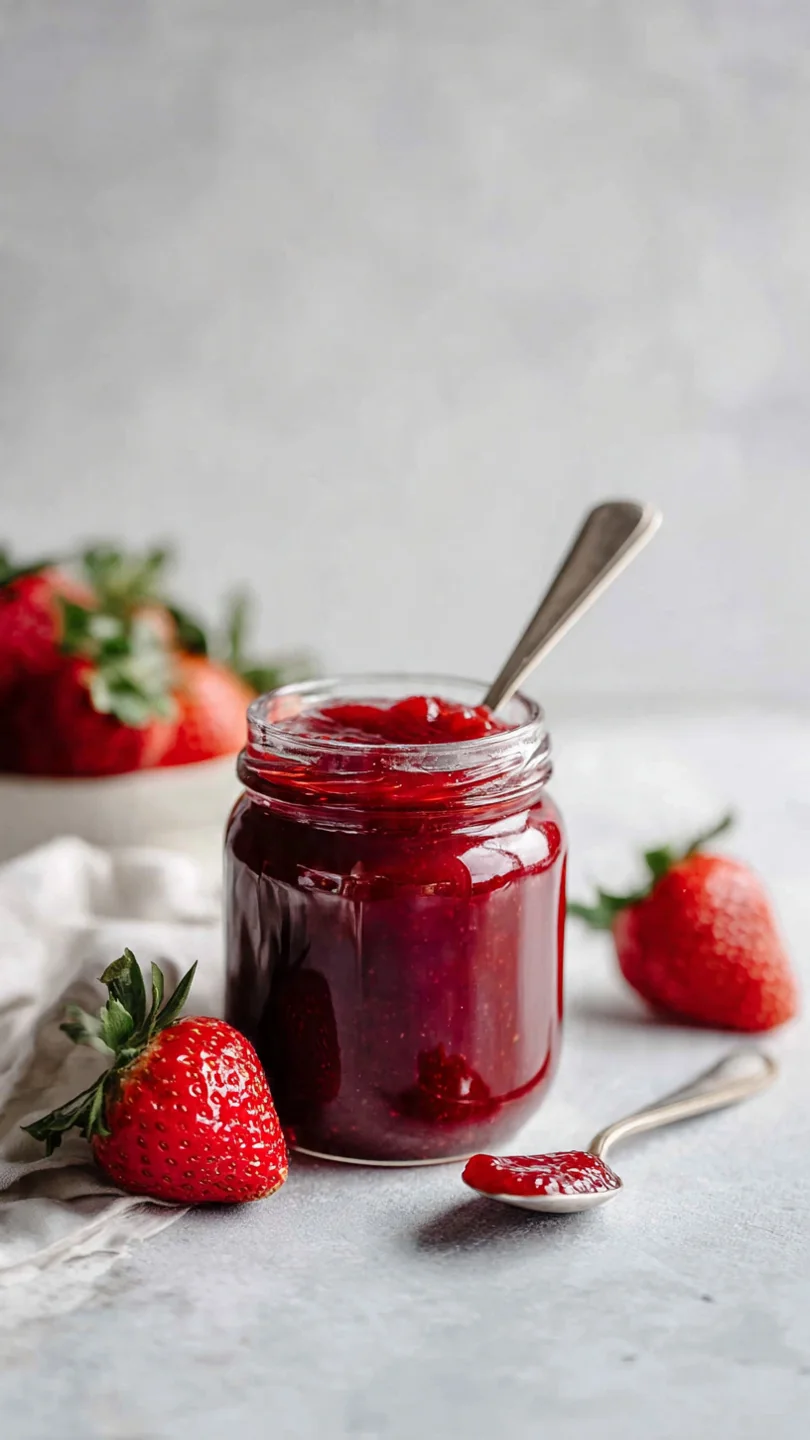
There’s something deeply satisfying about turning a basket of ripe, fragrant strawberries into jars of glistening, ruby-red jam. It captures the essence of summer in a spoonful—a sweet, slightly tart flavor that’s infinitely better than anything from a grocery store shelf. As a chef, I’ve made countless batches of preserves, and this recipe represents the perfect balance of simplicity and technique.
It focuses on amplifying the natural berry flavor, achieving that ideal soft set that spreads like a dream, and ensuring your efforts are safely preserved for months of enjoyment. Let’s make some jam.
- Pure, Intense Flavor: By using a high ratio of fruit to sugar and a maceration step, this jam tastes profoundly of strawberries, not just sweetness.
- Perfect Texture Every Time: With clear visual and temperature cues, you’ll achieve a consistent, spreadable set—no more runny or rubbery jam.
- Simple, Clean Ingredients: Just berries, sugar, and lemon juice. No commercial pectin, artificial flavors, or preservatives.
- Rewarding & Educational: Mastering this basic recipe builds confidence for all future preserving projects.
- Thoughtful Homemade Gift: A jar of this jam, with a personalized label, is a gift people truly cherish.
- Shelf-Stable Results: Proper water bath canning means your jam is safe to store at room temperature until opened.
Ingredients You’ll Need
Let’s gather our ingredients—this is where the magic starts. The simplicity here is intentional, allowing the star ingredient to truly shine. Quality matters, so seek out the freshest, most aromatic strawberries you can find.
Their natural pectin and acidity are key to a great set.
- Fresh Strawberries: Aim for 4 cups after they are hulled and lightly crushed. Look for ripe, deeply red berries with a strong strawberry scent. Avoid white shoulders or mushy spots. The variety matters less than the ripeness and fragrance.
- Granulated Sugar: This acts as both a sweetener and a preservative. I do not recommend reducing the amount, as it is crucial for the jam’s safety, texture, and shelf life.
- Fresh Lemon Juice: This is non-negotiable. The acid from the lemon juice helps extract the fruit’s natural pectin, brightens the flavor, and ensures a safe pH level for canning. Bottled juice lacks the necessary fresh acidity.
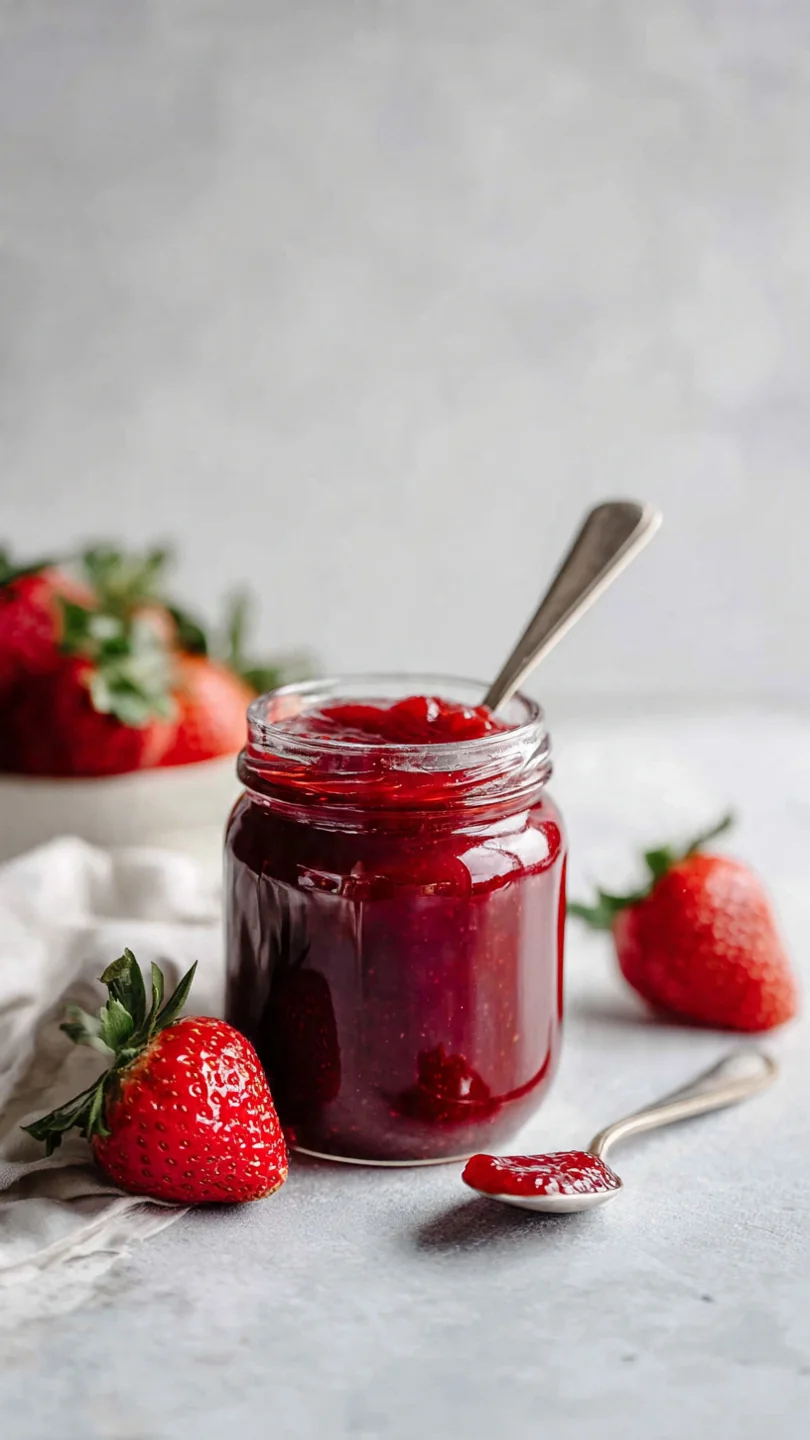
Note: You’ll find the complete list of ingredients, along with their exact measurements, in the printable recipe card at the bottom of this post.
Kitchen Equipment Needed
You don’t need a fully outfitted canning kitchen, but a few key tools will make the process smoother and safer. A heavy-bottomed pot is essential for even heat distribution and preventing scorched jam. If you’re planning to can the jam for shelf storage, a large stockpot for the water bath, a jar lifter, and a canning funnel are invaluable.
A candy thermometer takes the guesswork out of achieving the perfect set.
How to Make Strawberry Jam Recipe
Step 1: Macerate the Berries
Start by washing, hulling, and crushing your strawberries directly in your large pot. I use a potato masher for this—you want a rough crush with some smaller pieces for texture. Stir in all the sugar and the lemon juice.
Now, walk away. Let this mixture sit for at least 30 minutes. Trust me, this maceration time is a game-changer.
It draws the juices out of the berries, creating a syrup that helps dissolve the sugar evenly and starts the pectin release, leading to a better set and more complex flavor.
Step 2: Dissolve and Boil
Place your pot over medium-high heat. Stir the mixture almost constantly as it comes up to temperature. Your goal is to dissolve every single grain of sugar before it reaches a boil.
This prevents crystallization. You’ll see the mixture go from grainy to glossy. Once it reaches a full, rolling boil that cannot be stirred down, you’re ready to start the cooking timer.
This initial vigorous boil is crucial.
Step 3: Cook to the Set Point
Reduce the heat just enough to maintain a steady, active boil. A gentle simmer won’t evaporate enough water. Cook for 15-20 minutes, stirring frequently to prevent sticking.
The jam will foam up—this is normal. You’ll notice the bubbles change from fast and frothy to slower, larger, and more “glassy.” This is a visual cue it’s thickening. The most reliable method is to use a candy thermometer.
Cook until the jam reaches 220°F (104°C) at sea level. Tip from me: adjust this temperature up by 1°F for every 500 feet above sea level you are.
Step 4: Test and Skim
Even with a thermometer, I always do the wrinkle test. Place a small plate in the freezer before you start. When you think the jam is ready, drop a teaspoonful onto the cold plate.
Let it cool for a minute, then push it with your finger. If the surface wrinkles, it’s set. If your finger just slides through liquid, cook for 2-3 more minutes and test again.
Once perfect, remove the pot from the heat. Use a spoon to skim off any light pink foam from the surface for a clearer, more beautiful jam.
Step 5: Jar, Process, and Cool
Working quickly, ladle the hot jam into your sterilized jars using a canning funnel, leaving 1/4-inch of headspace. Wipe the rims meticulously with a clean, damp cloth to ensure a good seal. Apply the lids and bands, tightening only until fingertip-tight—don’t crank them down.
Process the jars in a boiling water bath for 10 minutes. Remove them with a jar lifter and place them on a towel-lined counter. Now, the hard part: let them cool completely, undisturbed, for 12-24 hours.
You’ll hear the satisfying ping of lids sealing as they cool. Step back and admire your beautiful, shelf-stable summer.
- Pectin Power: The riper the strawberry, the less natural pectin it contains. If your berries are very ripe and sweet, adding 1-2 tablespoons of commercial pectin can guarantee a firm set without extending the cook time and sacrificing fresh flavor.
- The Foam Question: The foam that forms is just trapped air and protein. Skimming it off gives a prettier, clearer jam, but it’s perfectly safe to eat. A tiny pat of butter (about 1/2 teaspoon) added during cooking can help reduce foaming.
- Avoid Stirring After Filling: Once the jam is in the jars, do not stir or jostle them. This prevents fruit from floating to the top and ensures an even distribution in the finished product.
- Altitude Adjustment: As mentioned, the set temperature changes with altitude. More importantly, for water bath canning, you must increase processing time by 5 minutes for every 3,000 feet above 1,000 feet in elevation. Consult your local extension office for precise guidelines.
Recipe Variations
- Vanilla Bean Strawberry Jam: Split one vanilla bean and scrape the seeds into the pot with the berries and sugar. Add the pod as well, removing it before ladling into jars. The floral notes of vanilla are a stunning complement.
- Balsamic & Black Pepper: Stir in 2 tablespoons of high-quality balsamic vinegar and 1/2 teaspoon of freshly cracked black pepper during the last 5 minutes of cooking. This creates a sophisticated, savory-sweet jam perfect for cheese boards.
- Low-Sugar Strawberry Jam: For a less sweet preserve, replace half the granulated sugar with a no-sugar-needed pectin formulated for low-sugar recipes. Follow the pectin package instructions precisely, as the cooking method differs.
- Strawberry-Rhubarb Jam: Replace 2 cups of the strawberries with 2 cups of chopped fresh rhubarb. The rhubarb adds a wonderful tang and extra natural pectin for a fantastic set.
- Spiced Strawberry Jam: Add the zest of one orange and 1/4 teaspoon of ground cardamom or a cinnamon stick to the pot during cooking. Remove the cinnamon stick before jarring.
What to Serve With This Recipe
This jam is the ultimate breakfast champion, transforming simple toast, biscuits, or scones. For a next-level weekend treat, swirl it into plain Greek yogurt or spoon it over pancakes and waffles. Beyond breakfast, it’s a secret weapon in the kitchen.
Use it to glaze roasted chicken or pork during the last 10 minutes of cooking. It makes an incredible filling for layer cakes or a topping for cheesecake. For a quick appetizer, pair it with creamy goat cheese and crackers.
A jar also makes a perfect hostess gift or holiday present.
Storage & Make-Ahead Instructions
- Properly Canned Jars: Sealed, processed jars are shelf-stable for up to 1 year. Store them in a cool, dark, dry place. Once opened, refrigerate and use within 3 weeks.
- Refrigerator Jam: If you choose not to process the jars in a water bath, the jam must be treated as refrigerator jam. Let it cool in the jars, then store immediately in the refrigerator for up to 3 weeks.
- Freezing: For long-term storage without canning, you can freeze the jam. Allow it to cool completely, then ladle into freezer-safe containers, leaving 1/2-inch headspace for expansion. It will keep for 6-8 months. Thaw in the refrigerator.
- Identifying Spoilage: Before opening any stored jar, check the seal. The lid should be concave and not move when pressed. Upon opening, look for any off odors, mold, or fermentation. When in doubt, throw it out.
Frequently Asked Questions
Q: Can I use frozen strawberries?
A: Absolutely. Thaw them completely and drain off any excess liquid before measuring. Using frozen berries is a great way to make jam year-round, though the flavor will be slightly less bright than with peak-season fresh berries.
Q: My jam didn’t set. What can I do?
A: Don’t despair! You have two options. First, you can simply call it “strawberry sauce” and enjoy it over ice cream or pancakes.
Second, you can re-cook it. Pour the runny jam back into the pot, add 1-2 tablespoons of commercial pectin (mixed with a little of the jam first), and bring back to a full boil for 1-2 minutes, then re-jar.
Q: Why is there liquid on top of my jam in the jar?
A: This is called “fruit float” and is common. It happens when the fruit pieces separate from the syrup. It’s purely cosmetic and safe.
To minimize it, let the jam rest off the heat for 5 minutes after cooking, stirring occasionally, before ladling into jars. This allows the fruit to distribute more evenly.
Q: Do I really need to process the jars in a water bath?
A: For true shelf stability at room temperature, yes, the water bath processing is a critical safety step. It destroys any potential spoilage microorganisms and creates the vacuum seal. Skipping it means your jam must be refrigerated and used quickly.
Q: Can I reduce the amount of sugar?
A: I don’t recommend it in this particular recipe. Sugar is a preservative, and reducing it affects safety, texture, and set. If you want less sugar, seek out a recipe specifically formulated for low-sugar preserving, which uses special pectins.
Q: How do I know if my jars are sealed?
A: After the 24-hour cooling period, press down on the center of each lid. If it doesn’t flex up and down and is firmly sucked down, it’s sealed. You can also remove the band and try to lift the jar by the lid alone (carefully!).
A sealed lid will hold.
Q: What’s the white stuff on the lid of my stored jam?
A: This is likely just a harmless mineral deposit from hard water that was on the jar rim before processing. If it’s only on the outside of the lid or jar, it’s fine. If you see any unusual substance inside the jar or on the jam itself, discard it.
Final Thoughts
Making your own strawberry jam is one of the most rewarding projects in home cooking. It connects you to the seasons, teaches foundational techniques, and yields a product that is unbeatably delicious. This recipe strips the process down to its essentials, giving you the framework and confidence to succeed on your first try.
Remember, the perfect jar of jam isn’t just about a recipe—it’s about the care you put into selecting the berries, the patience during the maceration, and the attention to the set point. Once you taste that first spoonful of your own creation, you’ll understand why homemade will always be best. I hope you’ll give it a try.
Please share your results and tag me—I love seeing your preserving successes!
Classic Strawberry Jam
Equipment
- Large, heavy-bottomed pot (6-8 quart)
- Canning jars, lids, and bands (half-pint size)
- Jar lifter and canning funnel
- Candy thermometer
- Long-handled wooden spoon
- Large pot for water bath canning
Ingredients
- 4 cups fresh strawberries hulled and crushed (about 2 pounds/900g)
- 3 cups granulated sugar
- 2 tbsp fresh lemon juice from about 1 medium lemon
Instructions
- Prepare the strawberries by washing, hulling, and crushing them in a large, heavy-bottomed pot. Stir in the sugar and lemon juice. Let the mixture macerate for 30 minutes to draw out the natural juices, which helps create a better set and more intense flavor.
- Place the pot over medium-high heat and bring the mixture to a full, rolling boil that cannot be stirred down. Stir frequently to prevent scorching. This initial boil helps dissolve all the sugar completely before you start timing the cooking process.
- Once boiling vigorously, reduce heat to maintain a steady, active boil. Cook for 15-20 minutes, stirring often. The jam will foam up initially; this is normal. You’ll know it’s done when it thickens, the bubbles become slower and glassier, and it reaches 220°F (104°C) on a candy thermometer.
- Test the set by placing a small spoonful on a chilled plate. Let it cool for a minute, then push it with your finger. If it wrinkles, it’s ready. If not, cook for 2-3 more minutes and test again. Skim off any foam from the surface with a spoon.
- Ladle the hot jam immediately into sterilized half-pint jars, leaving 1/4-inch headspace. Wipe the rims, apply lids and bands, and process in a boiling water bath for 10 minutes to seal. Remove and let cool undisturbed for 12-24 hours before checking seals and storing.
Can I use mini jars with screw lids?