
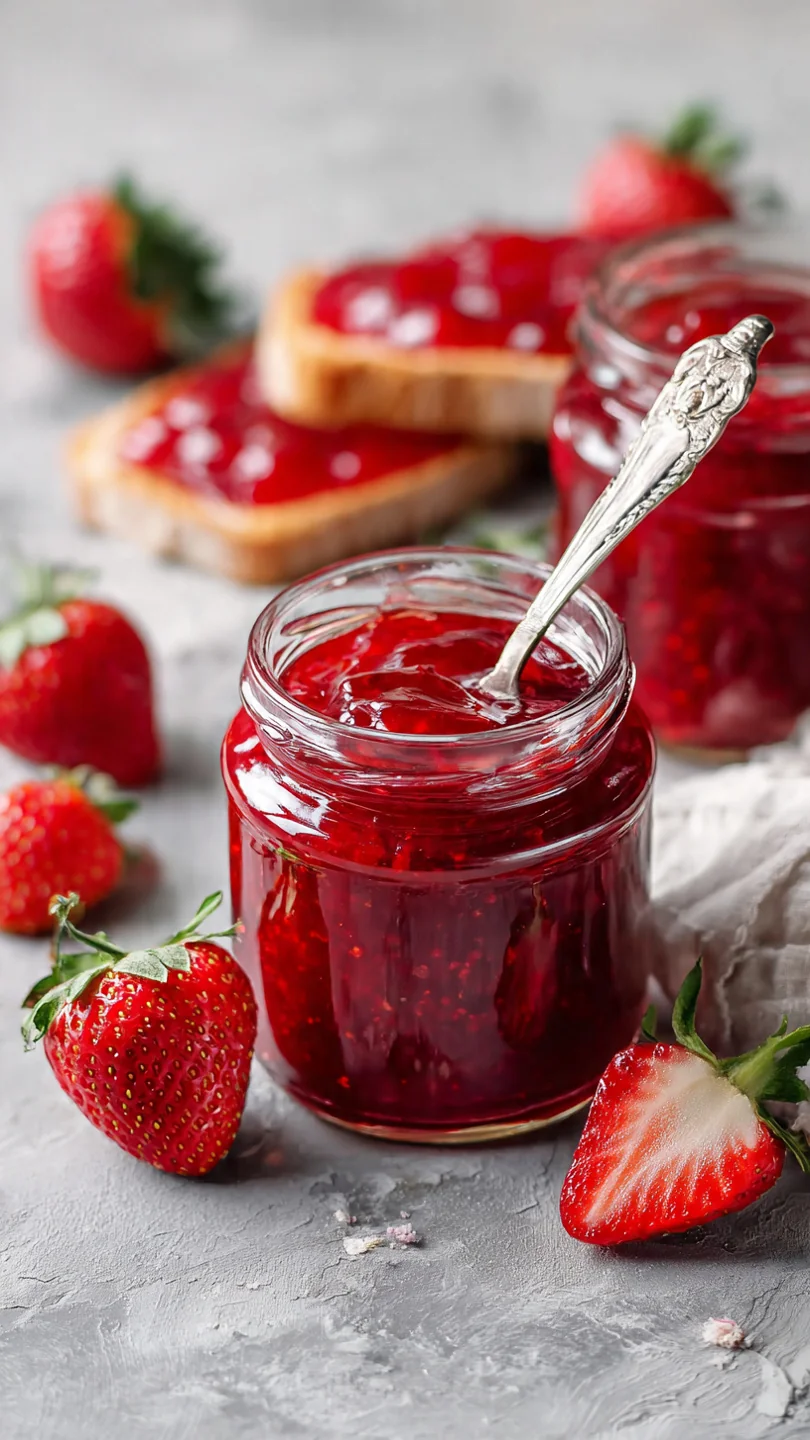
There’s something truly magical about transforming a pile of fresh, fragrant strawberries into jars of gleaming red jam. It’s a process that captures the essence of summer in a spoonful, offering a taste of sunshine long after the season has passed. As a chef, I’ve made gallons of jam, but this small-batch, classic formula remains my absolute favorite for its pure, unadulterated strawberry flavor and beautifully soft set.
It’s simpler than you think, and the reward—spreading that vibrant, homemade preserve on your morning toast—is immeasurable. Let’s make the best strawberry jam you’ve ever tasted.
- Pure, Intense Flavor: This recipe uses no commercial pectin or extra additives, allowing the true, bright taste of ripe strawberries to shine through without being masked by gelatinous textures.
- Simple & Approachable: With just three core ingredients and straightforward steps, this method demystifies jam-making, making it perfect for first-time preservers.
- Small-Batch Brilliance: Making just a few jars means you can enjoy peak-season fruit without committing to a massive, all-day canning project, and it’s easy to customize flavors.
- Perfect Texture: Learn the professional techniques for achieving that ideal, spreadable gel—not too runny, not too firm—that clings perfectly to your bread.
- Shelf-Stable Satisfaction: The included water-bath canning instructions ensure your jam is safely preserved for pantry storage, giving you homemade gifts or pantry staples for months.
- Total Control: You decide the exact level of sweetness, and you know every single ingredient that goes into each jar, from berry to sugar.
Ingredients You’ll Need
Let’s gather our ingredients—this is where the magic starts. The beauty of this jam lies in its simplicity, so sourcing the best quality components is key. You truly only need three things, but each one plays a critical role.
- Fresh Strawberries: The star of the show. Look for ripe, in-season berries that are deeply red and fragrant. Avoid white shoulders or mushy spots. The flavor of your jam will be a direct reflection of your berries’ quality. Frozen berries can work in a pinch, but thaw and drain them well first, as they release more water.
- Granulated Sugar: This does more than just sweeten. Sugar is a crucial preservative and, through a process called inversion when heated with acid, helps create the jam’s gel structure. I don’t recommend reducing the sugar significantly in this pectin-free recipe, as it can affect both set and shelf life.
- Fresh Lemon Juice: Our essential acid source. It brightens the flavor, balances the sweetness, and provides the necessary acidity for the natural pectin in the strawberries to activate and create a gel. Always use fresh juice; bottled often has preservatives that can interfere with setting.
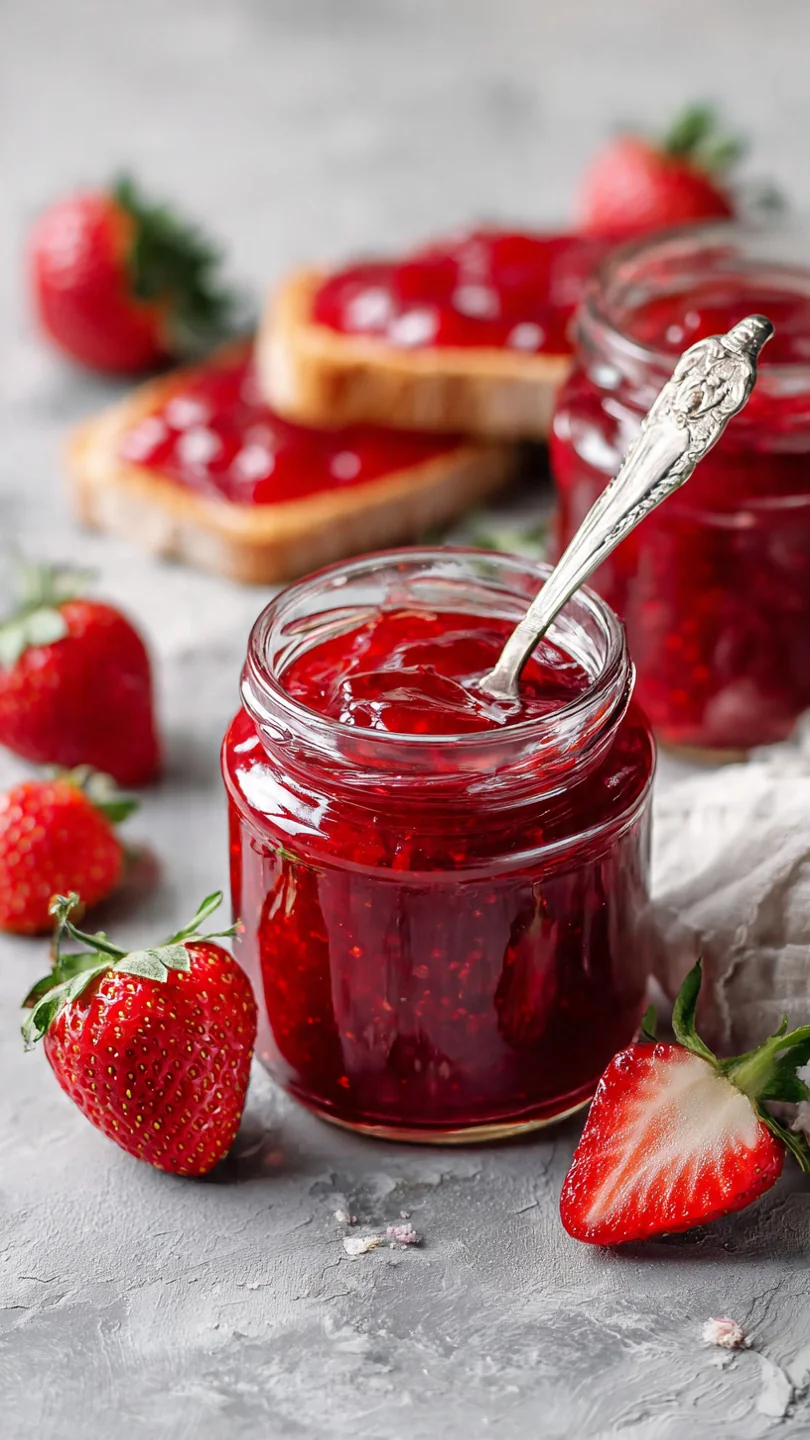
Note: You’ll find the complete list of ingredients, along with their exact measurements, in the printable recipe card at the bottom of this post.
Kitchen Equipment Needed
You don’t need a fully outfitted professional kitchen to make exceptional jam. A few key pieces of reliable equipment will make the process smooth and successful.
The most important item is a large, heavy-bottomed pot (like a Dutch oven). The heavy base distributes heat evenly, preventing the sugary fruit from scorching during the long cooking time. A candy thermometer is my number-one recommended tool for foolproof results, as it takes the guesswork out of knowing when the jam has reached the gel stage (220°F or 104°C).
For canning, you’ll need clean 8-ounce canning jars with new lids and bands, a canning funnel to fill them neatly, a ladle, and a large pot with a rack for the boiling water bath. A jar lifter is also very helpful for safely transferring hot jars.
How to Make Strawberry Jam Recipe
Step 1: Prep and Macerate the Berries
Begin by washing, hulling, and crushing your strawberries. I like to use a potato masher for this—you want a chunky pulp with plenty of texture, not a puree. Place the crushed berries in your heavy pot and stir in the sugar and fresh lemon juice.
Now, here’s a chef’s secret: let this mixture sit for 30 minutes. This maceration time draws the juices out of the berries and begins dissolving the sugar, creating a syrup that will cook more evenly. Trust me, this step maximizes flavor and helps prevent crystallized sugar later.
Step 2: Bring to a Boil
After the berries have macerated, place the pot over medium-high heat. Stir frequently as the mixture heats up to ensure all the sugar dissolves. You’ll see it go from a grainy, fruity mass to a glossy, liquid syrup.
Bring it to a full, rolling boil—a boil that cannot be stirred down. This is important for reaching the correct temperature. Once it’s boiling vigorously, reduce the heat to maintain a steady, active simmer.
You should see constant bubbles across the entire surface.
Step 3: Cook to the Gel Stage
This is where patience and attention pay off. Cook the jam at a steady simmer for 20-25 minutes, stirring every few minutes to prevent sticking. A foam, which is just trapped air and impurities, will rise to the top; skim it off with a spoon for a clearer final product.
Tip from me: watch for the bubbles to change. They will become slower, thicker, and more glassy. The surefire way to know it’s done is when the mixture reaches 220°F (104°C) on your candy thermometer.
This is the gel stage for jam at sea level.
Step 4: Test for the Set
If you don’t have a thermometer, use the classic plate test. Before you start cooking, place a few small plates in the freezer. When you think the jam is ready, drop a small spoonful onto a chilled plate and return it to the freezer for 2 minutes.
Take it out and push the edge of the jam with your finger. If the surface wrinkles and the jam doesn’t immediately flood back to fill the line, it’s set. If it’s still runny, cook for another 3-5 minutes and test again.
Step 5: Jar and Process for Storage
Once set, remove the pot from the heat and let the jam rest for 5 minutes. This brief rest allows the fruit to settle throughout the syrup, so it doesn’t all float to the top of your jar. Stir it occasionally.
Meanwhile, have your sterilized jars ready. Using a ladle and funnel, fill the hot jars with jam, leaving 1/4 inch of headspace at the top. Wipe the rims clean with a damp cloth, place the lids on, and screw on the bands until fingertip-tight.
For shelf-stable preserves, process the jars in a boiling water bath for 10 minutes. Then, remove them and let them cool completely on a towel. The satisfying pop you’ll hear as they seal is the sound of success.
- The Sugar Ratio is Key: In this pectin-free recipe, sugar is a primary gelling agent. Reducing it by more than 1/4 cup can result in a runny jam that may not set properly or store safely without refrigeration.
- Don’t Stir Too Vigorously: While you need to stir to prevent burning, avoid vigorous stirring once the jam is boiling hard. Excessive agitation can break down the fruit too much and incorporate air, which may affect the set.
- Altitude Adjustment: If you live above 1,000 feet, the gel point temperature changes. Increase the target temperature by 1°F for every 500 feet above sea level (e.g., 221°F at 1,000 ft, 222°F at 2,000 ft).
- Acid Check: If your strawberries are very sweet and not very tart, you can increase the lemon juice by up to 1 tablespoon. The acid is non-negotiable for a good gel and safe pH level for canning.
Recipe Variations & Customizations
- Vanilla Bean Strawberry Jam: Split one vanilla bean pod lengthwise and scrape the seeds into the berries during maceration. Add the empty pod to the pot while cooking for an incredible aromatic depth.
- Balsamic & Black Pepper: Stir in 1 tablespoon of high-quality balsamic vinegar and 1/2 teaspoon of freshly cracked black pepper during the last 5 minutes of cooking for a sophisticated, sweet-savory twist.
- Rosemary-Infused: Add two 4-inch sprigs of fresh rosemary to the pot while cooking. Remove them before jarring for a subtle, herbal note that pairs beautifully with cheese and crackers.
- Low-Sugar Refrigerator Jam: For immediate use, you can reduce the sugar to 1 1/2 cups. The jam will have a softer set and must be stored in the refrigerator and used within 3 weeks.
- Mixed Berry Jam: Substitute 1 cup of the strawberries with other berries like raspberries or blueberries. Keep the total fruit volume at 4 cups for consistent results.
What to Serve With This Recipe
This strawberry jam is far more versatile than just a toast-topper. For a simple, elegant dessert, spoon it over vanilla ice cream or panna cotta. It’s the perfect filling for layer cakes, thumbprint cookies, or swirled into cheesecake batter.
For a cheese board, pair it with creamy brie or a sharp aged cheddar on crackers. At breakfast, layer it with yogurt and granola, or use it to sweeten your oatmeal. It also makes a glorious glaze for grilled chicken or pork when thinned with a little vinegar.
Storage & Make-Ahead Instructions
- Properly Canned Jars: Jars that have been processed in a water bath and have sealed (the lid is concave and does not flex when pressed) can be stored in a cool, dark pantry for up to 1 year. Once opened, refrigerate and use within 3 weeks.
- Refrigerator Jam: If you skip the water-bath canning, simply pour the hot jam into clean jars, let cool, cover, and refrigerate. It will keep for 3-4 weeks.
- Freezing: For long-term storage without canning, let the jam cool completely, then transfer it to freezer-safe containers, leaving 1/2-inch headspace for expansion. It will keep frozen for 6-8 months. Thaw in the refrigerator.
- Make-Ahead Strategy: Jam is the ultimate make-ahead condiment. I recommend making a batch at the peak of strawberry season to enjoy throughout the year. The flavor is best if consumed within the first 6-8 months of canning.
Frequently Asked Questions
Q: Can I use frozen strawberries?
A: Yes, but thaw them completely and drain off any excess liquid in the package before measuring. Frozen berries are often softer, so your jam may have a slightly less chunky texture.
Q: My jam didn’t set. What can I do?
A: Don’t despair! You have two options. First, you can simply call it “strawberry sauce” and enjoy it over pancakes or ice cream.
Second, to re-cook it, pour it back into the pot, add 1-2 tablespoons of fresh lemon juice, and boil again to 220°F, then re-jar.
Q: Do I have to process the jars in a water bath?
A: For shelf-stable storage at room temperature, yes, the water bath is essential for food safety. If you plan to keep the jam in the refrigerator and use it within a month, you can skip this step after filling the jars.
Q: Why is there liquid on top of my jam after it sets?
A: This is called “weeping” or “syneresis” and can happen if the jam was stirred after it was removed from the heat or if the set was slightly soft. It’s purely cosmetic and safe to eat—just stir it back in when you open the jar.
Q: Can I reduce the sugar to make it healthier?
A: Significantly reducing sugar affects gelling, preservation, and flavor balance. For a lower-sugar option, use the “refrigerator jam” variation mentioned above or look for a recipe specifically formulated with low-sugar pectin.
Q: How do I know if a jar has sealed properly?
A: After the jars have cooled for 12-24 hours, press down on the center of the lid. If it doesn’t move or make a clicking sound, it’s sealed. If it pops up and down, it did not seal.
Refrigerate that jar and use it first.
Q: What’s the white stuff floating in my jam?
A: This is likely sugar crystals, which can form if the sugar wasn’t fully dissolved before boiling or if the jam was stirred after reaching the gel stage. It’s not harmful but can create a gritty texture.
Final Thoughts
Making your own strawberry jam is one of the most rewarding projects in home cooking. It connects you to the rhythm of the seasons and fills your kitchen with an unforgettable aroma. This recipe, honed through years of testing, gives you the tools and confidence to create preserves with a perfect balance of sweetness, fruitiness, and that beautiful, tender set.
The process is as satisfying as the result. So, grab the best strawberries you can find and give it a try. I promise, once you taste that first spoonful of your own homemade jam, you’ll understand why the store-bought version just can’t compare.
I’d love to hear how your jam turns out—share your results or any creative variations you tried in the comments below!
Classic Small-Batch Strawberry Jam
Equipment
- Large, heavy-bottomed stainless steel or enameled pot (6-8 quart)
- Canning funnel
- Ladle
- Clean 8-ounce canning jars with lids and bands
- Candy thermometer (highly recommended)
- Jar lifter (for water bath canning)
- Large pot with rack (for water bath canning)
Ingredients
- 4 cups fresh strawberries hulled and crushed (about 2 pounds or 900g)
- 2 cups granulated sugar
- 2 tbsp fresh lemon juice from about 1 medium lemon
Instructions
- Prepare the strawberries by washing, hulling, and crushing them in a large, heavy-bottomed pot. Add the sugar and lemon juice, stir to combine, and let the mixture macerate for 30 minutes to draw out the juices.
- Place the pot over medium-high heat and bring the mixture to a full, rolling boil, stirring frequently to prevent scorching. Once boiling, reduce heat to maintain a steady, vigorous simmer.
- Cook the jam, stirring often, for 20-25 minutes. Use a spoon to skim off any foam that rises to the surface. The jam is ready when it reaches 220°F (104°C) on a candy thermometer or passes the plate test.
- To perform the plate test, place a small spoonful of jam on a chilled plate and freeze for 2 minutes. Drag your finger through it; if it wrinkles and holds the line without running back together, it’s set.
- Remove the pot from the heat and let the jam rest for 5 minutes, stirring occasionally. This helps distribute the fruit and prevents it from all floating to the top in the jar. Ladle the hot jam into sterilized jars, leaving 1/4-inch headspace.
- For shelf-stable preserves, process the filled jars in a boiling water bath for 10 minutes. Remove and let cool completely on a towel-lined counter. You should hear the satisfying ‘pop’ of the lids sealing as they cool.