
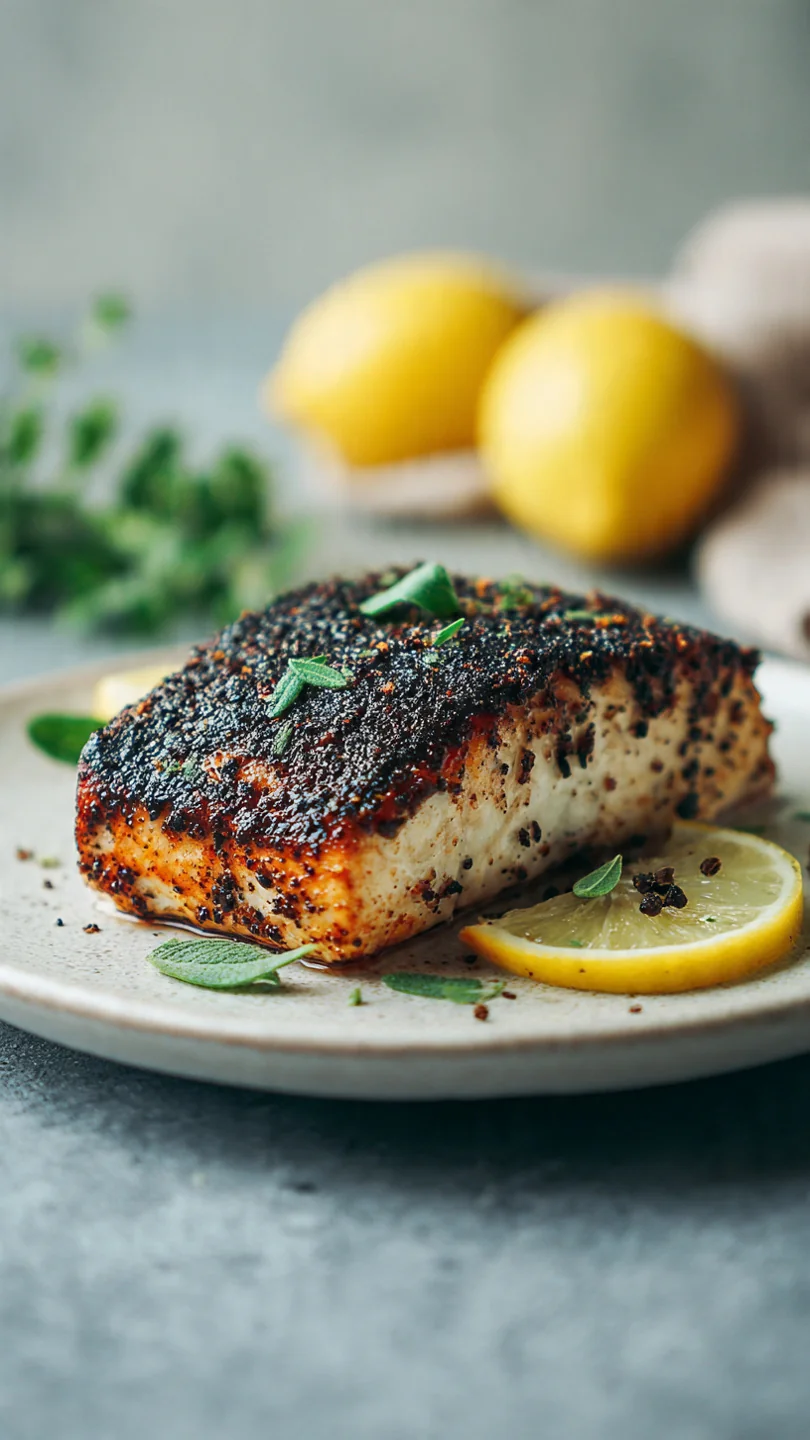
There’s something incredibly satisfying about the sizzle of fish hitting a scorching hot pan, followed by the aromatic bloom of toasted spices. Blackened mahi mahi is that perfect weeknight hero: it feels indulgent and restaurant-worthy, yet comes together in less time than it takes to decide what to order for delivery. This isn’t about burning the fish; it’s about creating a deeply flavorful, crispy crust that locks in the tender, sweet flesh of the mahi mahi.
As a chef, I love this technique because it’s all about bold flavor with minimal fuss, and it consistently delivers impressive results. Let’s get that skillet smoking.
This recipe is a staple in my home kitchen for good reason. It checks all the boxes for a successful, stress-free dinner.
- 20-Minute Marvel: From fridge to plate in under 20 minutes, making it perfect for busy weeknights.
- Pantry-Powered Flavor: The bold spice blend is made from common dried herbs and spices you likely already have.
- Restaurant-Quality at Home: Mastering the high-heat sear gives you a professional, crispy-blackened crust that’s deeply aromatic.
- Health-Conscious & Lean: Mahi mahi is a fantastic source of lean protein, and this cooking method uses minimal added fat.
- Endlessly Adaptable: Easily adjust the heat level or swap spices to match your taste or what’s in your cupboard.
- Minimal Cleanup: You’re essentially using one pan, a bowl, and a few tools, making cleanup a breeze.
Ingredients You’ll Need
- Let’s gather our ingredients. The magic here is in the transformation of simple, dried spices through high heat. You don’t need a long list of fresh herbs or specialty items to achieve incredible depth.
- Mahi Mahi: Look for firm, skinless fillets that are about 1-inch thick. This thickness is ideal—it allows time for a dark crust to form without overcooking the center. If your fillets are thinner, reduce the cook time by a minute or two per side.
- Paprika: This is the flavor and color backbone. I highly recommend smoked paprika (sometimes labeled pimentón) for a deeper, almost bacony note, but sweet paprika works perfectly.
- Garlic & Onion Powder: These provide a savory, umami base that doesn’t burn as quickly as fresh garlic or onion would in the intense heat.
- Dried Oregano & Thyme: Classic herbal notes that are essential to the blackening profile. Rubbing them between your palms before adding to the bowl will help release their oils.
- Cayenne Pepper: This is your heat control. Start with 1/2 teaspoon for a mild kick, or go up to a full teaspoon (or more) for true fire. The spice level is completely customizable.
- Salt & Black Pepper: Fine sea salt or kosher salt and freshly cracked black pepper are non-negotiable for seasoning.
- Unsalted Butter: Melted butter helps the spice rub adhere and adds rich flavor. For a dairy-free or higher-heat option, avocado oil is an excellent substitute.
- Lemon & Fresh Herbs: These are your finishers. The bright, acidic squeeze of lemon is the perfect counterpoint to the rich, spicy crust, and a sprinkle of fresh parsley or cilantro adds a pop of color and freshness.
Kitchen Equipment Needed
You don’t need fancy gear, but the right pan is non-negotiable for success.
- Cast-Iron Skillet (12-inch): This is the ideal tool. It retains and distributes heat evenly, gets screaming hot, and helps form that perfect crust. A heavy-bottomed stainless steel pan is a good second choice.
- Thin, Flexible Metal Spatula: Often called a fish spatula, this tool is invaluable for getting under the delicate crust without breaking the fillet.
- Instant-Read Thermometer: The most reliable way to know your fish is perfectly cooked (145°F) without guessing or cutting into it.
- Small Mixing Bowl & Pastry Brush: For mixing the spices and applying the butter.
How to Make Blackened Mahi Mahi Recipe
Step 1: Prep the Fish and Make the Spice Blend
Start by laying your mahi mahi fillets on a clean cutting board and patting them aggressively dry with paper towels. Believe me, any surface moisture will steam the fish instead of searing it and will prevent the spices from sticking. While your fish is drying, combine all the dried spices—paprika, garlic powder, onion powder, oregano, thyme, cayenne, salt, and pepper—in a small bowl.
Give it a good stir with a fork to break up any clumps and ensure even distribution.
Step 2: Season the Fillets
Brush each fillet generously on all sides with the melted butter or your chosen oil. This buttery layer is what will toast the spices and create that signature crust. Now, dredge each buttered fillet in the spice blend, pressing gently to make sure every millimeter is coated.
Don’t be shy; you want a substantial, even layer. Set them aside on a plate while you heat the pan.
Step 3: Heat the Pan Properly
Place your cast-iron or heavy skillet over medium-high heat and let it preheat for a full 3-4 minutes. You want it very hot. A good test is to flick a tiny drop of water into the pan—it should skitter and evaporate almost instantly.
You may see a faint wisp of smoke. This is correct. Do not add any extra oil or butter to the pan.
Tip from me: The butter on the fish is sufficient and adding more will likely cause excessive smoking.
Step 4: Sear the First Side
Carefully place the seasoned fillets in the hot, dry pan. They should let out a confident, immediate sizzle. Now, this is critical: do not touch them.
Do not poke, peek, or move them for a full 4-5 minutes. This undisturbed time allows the Maillard reaction to work its magic, transforming the spices and fish surface into a dark, crispy, flavorful crust. If you move them too soon, you’ll tear that crust and it won’t re-form properly.
Step 5: Flip and Finish Cooking
After 4-5 minutes, slide your thin spatula carefully underneath a fillet. The crust should release easily from the pan. If it sticks, give it another 30 seconds.
Flip each fillet—you should see a beautiful, dark brown, almost black crust. Cook on the second side for 3-4 minutes. The fish is done when it’s opaque throughout and flakes easily with gentle pressure from a fork.
For absolute precision, an instant-read thermometer inserted into the thickest part should read 145°F.
Step 6: Rest and Serve Immediately
Transfer the cooked blackened mahi mahi to a clean plate or serving platter. Let it rest for just 2-3 minutes. This short rest allows the hot juices to settle back into the flesh, ensuring every bite is moist.
Serve right away, garnished with a generous sprinkle of fresh chopped parsley or cilantro and plenty of lemon wedges. The bright lemon juice is the perfect final touch.
A few chef-level insights will guarantee your success every single time.
- The Dry Fish Rule: I can’t stress this enough. Moisture is the enemy of searing. Take an extra 30 seconds to pat the fillets bone-dry; it makes all the difference between a steamed spice paste and a crisp crust.
- Pan Temperature is Key: If your pan isn’t hot enough, the fish will stew and the spices will taste raw and gritty. If it’s too hot, the spices will burn before the fish cooks through. Medium-high heat on a preheated cast iron is the sweet spot.
- Embrace the Smoke: This is a “blackened” recipe—it will create some smoke. Turn on your hood fan, open a window, and disable your smoke detector temporarily (safely!). It’s part of the process.
- Don’t Crowd the Pan: Cook in batches if necessary. Overcrowding drops the pan temperature dramatically and causes the fish to steam instead of sear.
- The Spatula Matters: A thick, blunt spatula will shatter your beautiful crust. A thin, flexible metal one slides right underneath, preserving every crispy bit.
Recipe Variations
- This recipe is a fantastic template. Once you master the basic technique, feel free to play with the flavors.
- Lemon-Pepper Blackened: Replace the cayenne with an extra teaspoon of black pepper and add the zest of one lemon to the spice mix for a bright, peppery crust.
- Jerk-Inspired: Add 1 tsp allspice, 1/2 tsp nutmeg, and 1/2 tsp cinnamon to the spice blend, and use a neutral oil instead of butter for a Caribbean twist.
- Coconut-Crusted: For the binder, use melted coconut oil and add 1/4 cup of unsweetened shredded coconut to the spice mix for a tropical, slightly sweet variation.
- Cajun “Dirty” Rice Bowl: Serve the blackened mahi mahi flaked over a bowl of Cajun-style rice with sautéed bell peppers, onions, and a drizzle of hot sauce.
- Taco Night: Flake the cooked fish into warm corn tortillas and top with a crunchy cabbage slaw, avocado crema, and pickled red onions.
- Creamy Sauce Pairing: Balance the heat with a quick sauce. Mix 1/2 cup of Greek yogurt or sour cream with a squeeze of lemon, a minced garlic clove, and some chopped dill.
What to Serve With This Recipe
Blackened mahi mahi is a robust main that pairs beautifully with simple, fresh sides that can cut through the richness and spice.
For a light meal, a big, crisp salad is perfect. A simple arugula salad with shaved fennel, orange segments, and a citrus vinaigrette works wonderfully. For something more substantial, creamy, cooling sides are ideal.
Think cilantro-lime rice, a classic potato salad, or creamy coleslaw. For vegetables, quick sautéed greens like spinach or kale, grilled asparagus, or roasted sweet potato wedges are all excellent choices. A cold, crisp beer like a lager or pilsner, or a citrus-forward white wine like Sauvignon Blanc, makes for the perfect beverage pairing.
Storage & Make-Ahead Instructions
- This dish is truly best served immediately, but you can prep components ahead.
- Make-Ahead Spice Blend: You can mix the dry spice blend in a larger batch and store it in an airtight container in your pantry for up to 3 months. This makes whipping up dinner even faster.
- Storing Leftovers: Allow any leftover cooked fish to cool completely, then store it in an airtight container in the refrigerator for up to 2 days.
- Reheating: Reheat gently to avoid drying out. The best method is in a 300°F oven for about 10 minutes, or until just warmed through. You can also reheat in a covered skillet over very low heat with a tiny splash of water or broth. Avoid the microwave, as it will make the crust soggy.
- Freezing: I do not recommend freezing the cooked fish, as the texture will become watery. However, you can freeze the raw, seasoned fillets. Place them on a parchment-lined sheet pan until solid, then transfer to a freezer bag. Cook from frozen, adding a few extra minutes to the cook time.
Frequently Asked Questions
Q: Can I use a different type of fish?
A: Absolutely. Any firm, thick white fish will work. Halibut, swordfish, cod, or salmon are all great choices.
Adjust cooking time slightly based on thickness.
Q: My spices are burning and smoking too much. What did I do wrong?
A: This usually means your heat is too high. The pan should be hot, but not nuclear. Try medium-high heat and ensure you’re using a heavy pan that distributes heat evenly.
Also, make sure your spice blend doesn’t contain any sugar, which burns instantly.
Q: Is blackened the same as burnt?
A: Not at all! “Blackened” refers to the dark color from the toasted spices and the Maillard reaction (caramelization), not charred, bitter carbon. It should be deeply flavorful and aromatic, not acrid.
Q: Can I bake this instead of pan-searing?
A: You can, but you won’t get the same crust. For baking, place seasoned fillets on a parchment-lined sheet pan and broil on high for 6-8 minutes, watching carefully to prevent burning.
Q: How can I make this less spicy for my family?
A: Simply omit the cayenne pepper entirely. The other spices provide plenty of flavor without heat. You can also serve with a cooling yogurt sauce on the side for those who want it milder.
Q: Why is my fish sticking to the pan?
A: The fish will naturally release when the crust is fully formed. If you try to flip it too early, it will stick. Ensure your pan is properly preheated and that you let the fish cook undisturbed for the full time.
Q: What’s the best way to tell if the fish is done without a thermometer?
A: Gently press the top of the fillet with your finger or the back of a fork. It should feel firm and flake apart easily. The flesh will be opaque all the way through.
Final Thoughts
This blackened mahi mahi recipe is a perfect example of how a few simple techniques can elevate basic ingredients into something spectacular. It’s the kind of dish that builds confidence in the kitchen—teaching you about heat control, the importance of patience while searing, and how to build layers of flavor with spices. The result is consistently impressive: tender, flaky fish encased in a crackling, aromatic crust that’s packed with personality.
I encourage you to make this recipe your own. Adjust the heat, try different fish, or pair it with your favorite summer sides. Once you experience that satisfying sizzle and smell the spices blooming, you’ll understand why this is a forever recipe in my rotation.
Give it a try this week, and don’t forget to come back and let me know how it turned out. Share your creations online and tag me—I love seeing your kitchen wins
Blackened Mahi Mahi
Equipment
- 12-inch cast-iron skillet or heavy-bottomed stainless steel pan
- Thin, flexible metal spatula (fish spatula is ideal)
- Small mixing bowl
- Pastry brush or your fingers
- Instant-read thermometer (recommended)
Ingredients
- 4 fillets Mahi Mahi 6-8 ounces each, skinless, about 1-inch thick
- 1 tbsp Paprika Smoked paprika is ideal for deeper flavor
- 2 tsp Garlic powder
- 1 tsp Onion powder
- 1 tsp Dried oregano
- 1 tsp Dried thyme
- 1/2 to 1 tsp Cayenne pepper Adjust for your preferred spice level
- 1/2 tsp Salt Fine sea salt or kosher salt
- 1/2 tsp Black pepper Freshly ground
- 3 tbsp Unsalted butter Melted, or use a high-smoke-point oil like avocado oil
- 1 Lemon Cut into wedges, for serving
- 2 tbsp Fresh parsley or cilantro Chopped, for garnish
Instructions
- Pat the mahi mahi fillets completely dry with paper towels. This is crucial for the spices to adhere and for proper searing. In a small bowl, combine the paprika, garlic powder, onion powder, oregano, thyme, cayenne, salt, and black pepper. This is your blackening spice blend.
- Brush both sides of each mahi mahi fillet generously with the melted butter or oil. This acts as the glue for the spices. Evenly coat each fillet on all sides with the spice mixture, pressing gently to help it stick. You want a thorough, generous coating.
- Heat a large cast-iron skillet or heavy-bottomed stainless steel pan over medium-high heat for 3-4 minutes until it’s very hot. You should see a light wisp of smoke. Do not add oil to the pan. Trust me, the butter on the fish is enough.
- Carefully place the seasoned fillets in the hot, dry skillet. They should sizzle immediately. Cook undisturbed for 4-5 minutes, until the underside forms a dark, crispy crust. Do not move them during this time to allow the crust to develop properly.
- Using a thin, flexible spatula, carefully flip the fillets. Cook for another 3-4 minutes on the second side, or until the fish is opaque throughout and flakes easily with a fork. The internal temperature should reach 145°F. Tip from me: The fish will continue to cook slightly after removal.
- Immediately transfer the blackened mahi mahi to a clean plate. Let it rest for 2-3 minutes. This allows the juices to redistribute. Serve hot, garnished with fresh herbs and plenty of lemon wedges for squeezing over the top.