
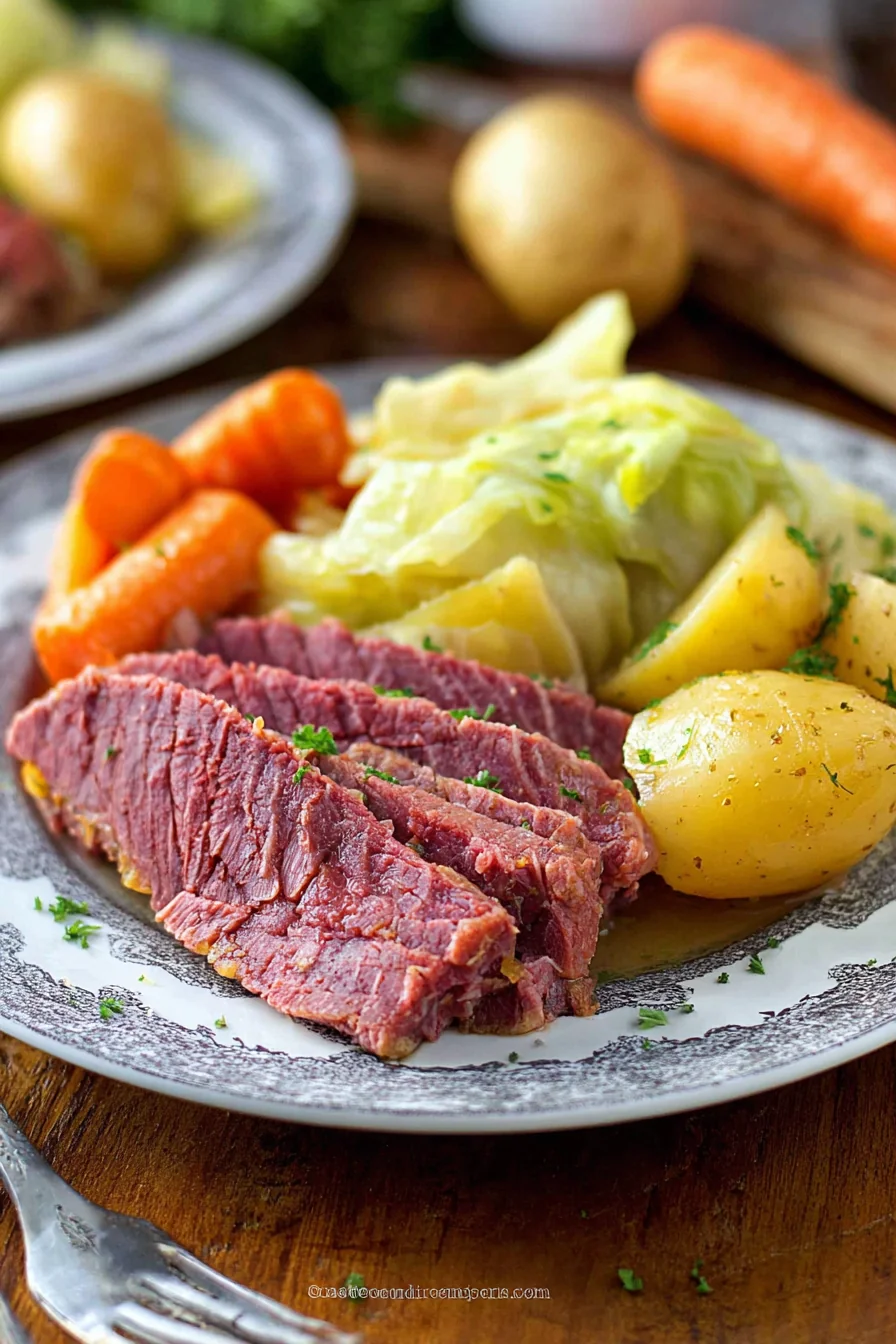
Corned beef and cabbage is a beloved dish, especially during St. Patrick’s Day celebrations, but it’s hearty and delicious enough to enjoy year-round. This recipe takes the classic preparation and enhances it with professional techniques to ensure maximum flavor and tenderness.
Whether you’re a seasoned cook or trying this dish for the first time, this guide will help you create a memorable meal.
Why You’ll Love This Recipe
- Hearty and Satisfying: This dish is a complete meal in itself, with tender corned beef, flavorful vegetables, and a rich cooking liquid.
- Flavorful and Comforting: The combination of spices, brown sugar, and apple cider vinegar creates a deep, satisfying flavor profile.
- Easy to Prepare: Despite the cooking time, the recipe is straightforward and requires minimal hands-on effort.
- Versatile: Perfect for a family dinner, a holiday feast, or even meal prep for the week.
- Nutrient-Rich: Packed with protein from the beef and essential vitamins and minerals from the vegetables.
- Gluten-Free and Dairy-Free: Suitable for a variety of dietary needs.
Ingredients & Preparation Notes
- Corned beef brisket: Look for a well-marbled piece for the best flavor and tenderness. Rinse before cooking to reduce saltiness.
- Green cabbage: Choose a firm, heavy head for the best results. Cut into wedges to ensure even cooking.
- Red potatoes: These hold their shape well during cooking and add a nice color to the dish.
- Carrots: Cut into chunks for even cooking and to maintain texture.
- Onion and garlic: These aromatics add depth to the cooking liquid.
- Beef broth: Use a high-quality broth for the best flavor. Low-sodium options allow for better control of saltiness.
- Whole black peppercorns: Add a subtle heat and flavor to the dish.
- Brown sugar: Balances the savory elements with a touch of sweetness.
- Apple cider vinegar: Adds a tangy note that cuts through the richness of the beef.
For substitutions, you can use white vinegar instead of apple cider vinegar, and you can replace beef broth with chicken or vegetable broth if needed.
Professional Tips & Techniques
- Braising: Braising the corned beef in the oven ensures even cooking and a moist environment. The low and slow method breaks down the collagen in the meat, resulting in a tender, flavorful dish.
- Temperature Control: Maintain a consistent oven temperature of 325°F (163°C) to ensure the meat cooks evenly without drying out.
- Resting Time: Allowing the corned beef to rest after cooking is crucial. It helps the juices redistribute, making the meat more tender and flavorful.
- Vegetable Timing: Add the vegetables in stages to prevent overcooking. Potatoes and carrots need more time than cabbage, so they go in first.
- Visual Cues: The corned beef is done when it’s fork-tender. The vegetables should be tender but not mushy.
Recipe Variations
- Vegetarian Version: Replace the corned beef with a large block of tofu or seitan, and use vegetable broth instead of beef broth.
- Gluten-Free Option: Ensure your spice packet and beef broth are gluten-free. Most corned beef is naturally gluten-free, but always check the label.
- Spicy Kick: Add a few dried chilies or a dash of hot sauce to the cooking liquid for a spicier flavor.
- Herb Infusion: Include fresh herbs like thyme or rosemary in the cooking liquid for an aromatic twist.
- Sweet and Sour: Increase the brown sugar and apple cider vinegar for a more pronounced sweet and tangy flavor.
- Smoked Flavor: Use smoked paprika in the cooking liquid for a smoky undertone.
- Winter Variation: Substitute the cabbage with Brussels sprouts or kale for a seasonal twist.
- Slow Cooker Method: Prepare the dish in a slow cooker for 8-10 hours on low, adding the vegetables in the last 2-3 hours of cooking.
Serving Suggestions
- Family Dinner: Serve the corned beef and cabbage with a side of crusty bread to soak up the flavorful cooking liquid.
- Holiday Feast: Pair with traditional Irish soda bread and a pint of Guinness for an authentic St. Patrick’s Day meal.
- Elegant Presentation: Arrange the sliced beef and vegetables on a platter, garnished with fresh parsley for a more upscale look.
- Side Dishes: Accompany with roasted root vegetables or a simple green salad to balance the richness of the dish.
- Condiments: Offer a selection of mustards, horseradish sauce, or a tangy vinaigrette to enhance the flavors.
- Leftovers: Use leftover corned beef in sandwiches, hash, or as a topping for salads.
Storage & Make-Ahead Tips
- Refrigeration: Store leftovers in an airtight container in the refrigerator for up to 3 days.
- Freezing: You can freeze the corned beef and vegetables separately for up to 3 months. Thaw in the refrigerator before reheating.
- Make-Ahead: Prepare the dish up to the point of adding the vegetables. Refrigerate the partially cooked beef and finish the next day.
- Reheating: Reheat gently on the stovetop or in the oven, adding a bit of broth to prevent drying out.
Frequently Asked Questions
Q: Can I make this ahead of time?
A: Yes, you can prepare the corned beef up to the point of adding the vegetables, then finish cooking the next day.
Q: How do I know when the corned beef is done?
A: The corned beef is done when it’s fork-tender and reaches an internal temperature of 145°F (63°C).
Q: Can I use a slow cooker for this recipe?
A: Yes, cook on low for 8-10 hours, adding the vegetables in the last 2-3 hours of cooking.
Q: What can I do with leftovers?
A: Use leftover corned beef in sandwiches, hash, or as a topping for salads.
Q: Is there a vegetarian version of this dish?
A: Yes, replace the corned beef with tofu or seitan and use vegetable broth.
Q: Can I make this dish gluten-free?
A: Yes, ensure your spice packet and beef broth are gluten-free, and most corned beef is naturally gluten-free.
Q: What if I don’t have apple cider vinegar?
A: You can use white vinegar as a substitute, though the flavor will be slightly different.
Q: Can I add other vegetables to this dish?
A: Yes, you can add Brussels sprouts, kale, or other root vegetables, adjusting cooking times as needed.
Conclusion
Corned beef and cabbage is a timeless dish that’s both comforting and flavorful. With the professional techniques outlined in this recipe, you can elevate this classic to new heights. The slow braising method ensures tender, juicy beef, while the carefully timed addition of vegetables guarantees a perfect texture.
Whether you’re celebrating St. Patrick’s Day or simply looking for a hearty meal, this corned beef and cabbage recipe is sure to satisfy. Give it a try, and don’t forget to share your results on social media and let us know how it turned out.
Enjoy your delicious meal!

Corned Beef and Cabbage
Equipment
- Dutch oven or heavy pot with lid
- Sharp knife
- Cutting board
- Tongs
Ingredients
- 3-4 lbs Corned beef brisket with spice packet
- 1 head Green cabbage cored and cut into wedges
- 6 Medium red potatoes halved
- 4 Carrots peeled and cut into chunks
- 1 large Onion peeled and quartered
- 4 cloves Garlic smashed
- 4 cups Beef broth
- 1 tbsp Whole black peppercorns
- 2 tbsp Brown sugar
- 2 tbsp Apple cider vinegar
Instructions
- Preheat your oven to 325°F (163°C). Rinse the corned beef brisket under cold water to remove excess salt, then pat dry with paper towels.
- Place the brisket in a large Dutch oven or heavy pot. Add the spice packet that comes with the brisket, along with the peppercorns, brown sugar, and apple cider vinegar. Pour in the beef broth until the brisket is mostly covered.
- Bring the liquid to a boil on the stovetop, then cover the pot and transfer it to the preheated oven. Cook for 3 hours, turning the brisket halfway through.
- After 3 hours, add the potatoes, carrots, onion, and garlic to the pot. Ensure the vegetables are partially submerged in the cooking liquid. Cover and return to the oven for another 45 minutes.
- Add the cabbage wedges to the pot, nestling them among the other ingredients. Cover and cook for an additional 30 minutes, or until the cabbage is tender.
- Remove the pot from the oven and let the corned beef rest for 15 minutes before slicing against the grain. Serve the sliced beef with the cooked vegetables and some of the cooking liquid as a sauce.