
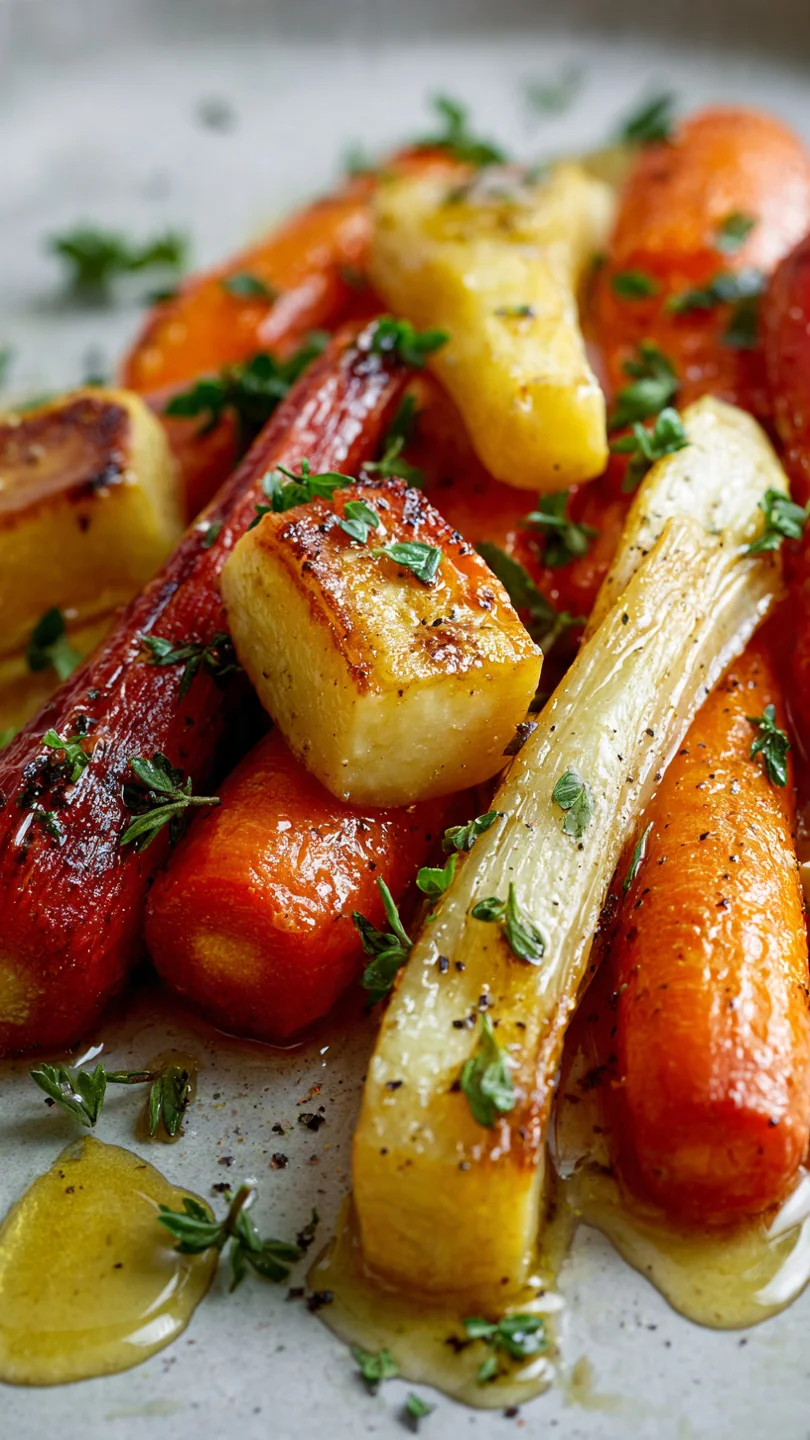
There’s a quiet magic that happens in a hot oven when humble root vegetables meet a simple glaze of honey and herbs. What emerges is a side dish that feels both rustic and elegant—sweet, savory, tender, and caramelized all at once. As a chef, I love recipes that deliver maximum flavor with minimal fuss, and these honey roasted carrots and parsnips are a perfect example.
They’re my go-to for busy weeknights when I need something wholesome and fast, and they’re impressive enough to earn a permanent spot on my holiday table. Let me show you how to achieve that perfect balance of natural sweetness and savory depth.
This recipe is a staple in my kitchen for so many practical reasons. Here’s why I think you’ll make it again and again:
- One-pan convenience: Everything roasts together on a single sheet pan, meaning minimal active time and even easier cleanup.
- Big flavor, fast: In about 35 minutes, you transform basic pantry ingredients into a side dish with complex, caramelized sweetness and aromatic herbs.
- Diet-flexible: It’s naturally vegetarian, gluten-free, and dairy-free, making it a safe and delicious choice for almost any gathering.
- Versatile pairing: These vegetables complement everything from a simple weeknight roast chicken to an elaborate holiday feast.
- Kid-friendly appeal: The natural sweetness from roasting and honey makes even vegetable-resistant eaters more likely to take a bite.
- Make-ahead friendly: You can prep the vegetables and mix the glaze hours ahead, so all you have to do is toss and roast when it’s time to eat.
Ingredients You’ll Need
- Let’s gather our ingredients—this is where simple pantry staples come together to create something truly special. The key is choosing good-quality, fresh produce.
- Carrots: Look for firm, bright orange carrots without soft spots. I prefer medium-sized ones as they’re easier to cut into even sticks.
- Parsnips: These are the secret weapon! They look like pale carrots and have a wonderful, slightly nutty and sweet flavor that intensifies when roasted. Choose parsnips that are firm, not limp or rubbery.
- Extra virgin olive oil: This coats the vegetables, helps them roast evenly, and adds a fruity depth. A good, basic extra virgin olive oil is perfect here.
- Honey: The star of the glaze. It caramelizes beautifully in the oven. For a deeper flavor, try using a darker honey like wildflower or buckwheat.
- Garlic: Freshly minced garlic infuses the oil with savory flavor that clings to every vegetable piece. Don’t use garlic powder for this—fresh is essential.
- Fresh thyme: Its earthy, slightly lemony flavor is a classic pairing with root vegetables. If you only have dried, use half the amount.
- Kosher salt & black pepper: Kosher salt adheres better to the vegetable surfaces than fine table salt. Freshly cracked pepper adds a subtle bite.
- Fresh parsley: This is an optional but lovely finishing touch for a pop of color and fresh flavor.
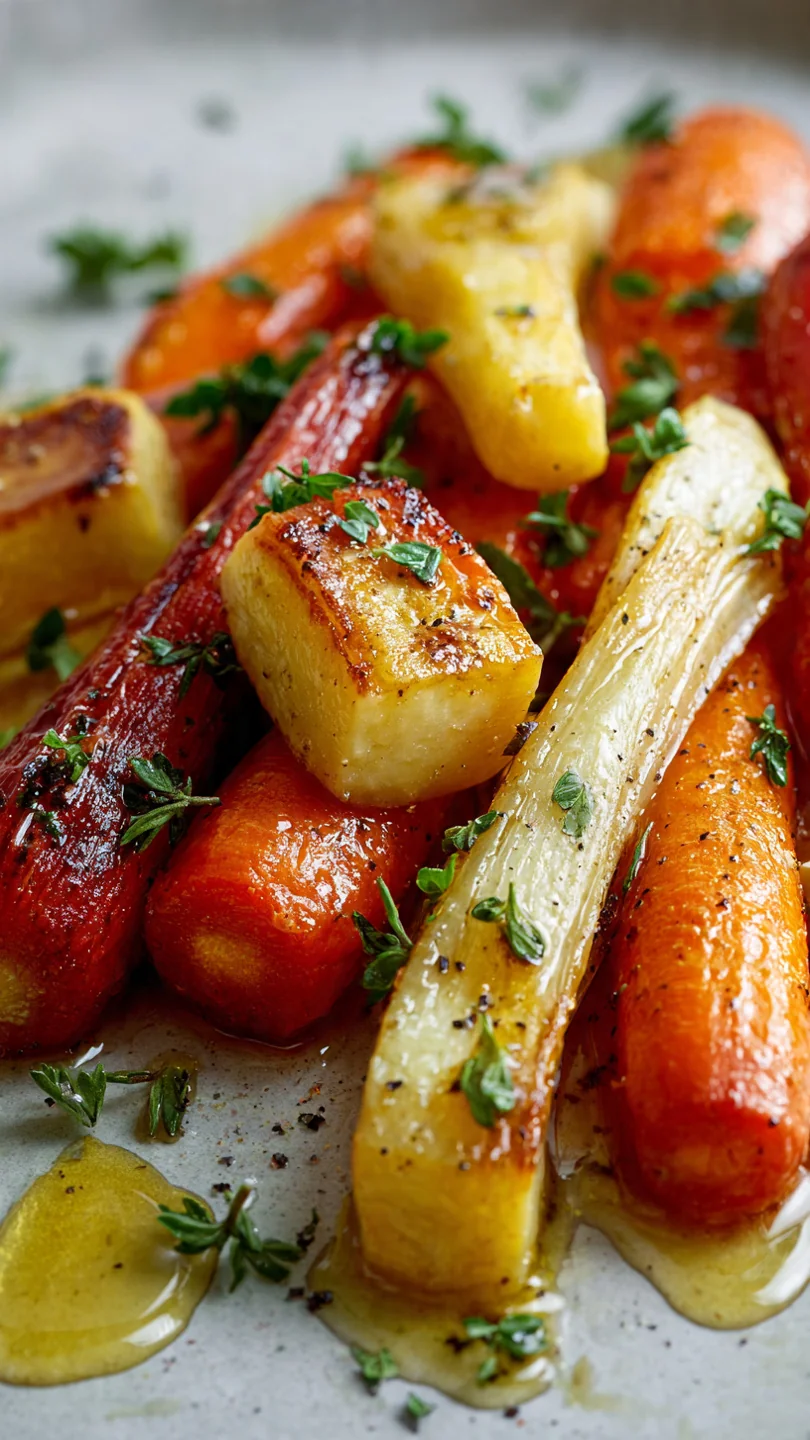
Note: You’ll find the complete list of ingredients, along with their exact measurements, in the printable recipe card at the bottom of this post.
Kitchen Equipment Needed
You don’t need any fancy gadgets for this recipe. Here’s what will make the process smooth:
- A large, rimmed baking sheet: Often called a half-sheet pan (about 18×13 inches). The rim prevents any oil or juices from spilling into your oven.
- Parchment paper or a silicone baking mat: This isn’t strictly necessary, but it prevents sticking and makes cleanup effortless. It also helps with browning.
- A large mixing bowl: Big enough to comfortably toss all the vegetables with the glaze.
- A sharp chef’s knife and sturdy cutting board: For safely and efficiently peeling and cutting the carrots and parsnips into even pieces.
How to Make Honey Roasted Carrots & Parsnips Recipe
Step 1: Heat the Oven & Prep the Pan
Start by preheating your oven to a hot 425°F (220°C). This high temperature is non-negotiable—it’s what causes the natural sugars in the vegetables and the honey to rapidly caramelize, creating those delicious browned edges and deep flavor. While it heats, line your baking sheet with parchment paper.
Believe me, this simple step saves you from scrubbing sticky, baked-on honey later.
Step 2: Make the Glaze & Coat the Vegetables
In your large bowl, combine the olive oil, honey, minced garlic, thyme, salt, and pepper. Whisk it vigorously until the honey is fully dissolved into the oil, creating a cohesive, fragrant glaze. Add all your carrot and parsnip sticks to the bowl.
Now, use your hands (the best tools!) or a large spoon to toss and tumble the vegetables until every single piece is glistening and evenly coated. This ensures consistent flavor and browning.
Step 3: Arrange for Success
Pour the coated vegetables onto your prepared baking sheet and spread them out into a single, uncrowded layer. This is my top professional tip: give them space. If the pan is too crowded, the vegetables will steam in their own moisture and become soggy instead of achieving that perfect roasted texture.
If needed, use two pans.
Step 4: Roast to Caramelized Perfection
Slide the pan into the hot oven and set your timer. After about 12 minutes, the magic will have started—you’ll smell the garlic and herbs. Carefully remove the pan and, using a spatula, flip and stir the vegetables.
This exposes new surfaces to the hot pan, guaranteeing even browning on all sides. Tip from me: don’t skip this stir!
Step 5: Garnish and Serve Immediately
Return the pan to the oven for another 8-13 minutes. They’re done when easily pierced with a fork and adorned with beautiful, dark caramelized spots. Transfer them to a serving dish, sprinkle with fresh parsley for a bright finish, and taste for seasoning.
Serve them hot, straight from the oven, when the glaze is at its most glorious.
A few insights from my years in professional kitchens will help you master this recipe every single time.
- Cut for even cooking: Take the extra minute to cut your carrots and parsnips into uniform sizes. Thicker pieces take longer to cook, while thinner ones can burn. Aim for sticks about 1/2-inch thick.
- Don’t skimp on the oil: The oil is a necessary conductor of heat. It ensures the vegetables roast and caramelize instead of drying out or burning in spots.
- The single-layer rule: I can’t stress this enough. Overcrowding is the #1 reason roasted vegetables turn out limp. If your pan is small, roast in two batches or use two pans.
- Trust the brown bits: The honey and vegetable sugars will darken and sometimes stick a bit to the parchment. This is flavor, not failure! Those sticky, caramelized bits are delicious.
Recipe Variations
- This recipe is a wonderful canvas for your own creativity. Here are some of my favorite tested variations.
- Maple & Rosemary: Swap the honey for pure maple syrup and use fresh rosemary instead of thyme for a warm, autumnal flavor.
- Spicy Honey: Add 1/4 to 1/2 teaspoon of crushed red pepper flakes to the glaze for a sweet-heat combination that’s incredibly addictive.
- Citrus Twist: Add the zest of one orange or lemon to the glaze. The bright citrus notes cut through the sweetness beautifully.
- Balsamic Glaze: Substitute one tablespoon of the honey with good balsamic vinegar. It adds a wonderful tangy complexity.
- Herb Garden: Use a mix of fresh herbs like thyme, rosemary, and a little chopped sage for a more robust herbal profile.
What to Serve With This Recipe
These honey roasted carrots and parsnips are the ultimate versatile side. Their sweet-savory profile makes them a perfect partner for so many mains.
For a simple family dinner, I love serving them alongside a juicy roasted chicken or pan-seared pork chops. The vegetables’ sweetness complements the savory meat perfectly. For a vegetarian feast, pair them with a creamy lentil loaf or a wholesome grain salad like farro or quinoa.
During the holidays, they are a stunning and flavorful alternative to traditional candied yams next to your roast turkey or holiday ham. A crisp, dry white wine like a Sauvignon Blanc or a light-bodied red like Pinot Noir makes for an excellent beverage pairing.
Storage & Make-Ahead Instructions
- While best served fresh, you can absolutely plan ahead with this dish.
- Storage: Allow leftovers to cool completely, then transfer them to an airtight container. They will keep in the refrigerator for up to 4 days.
- Reheating: To restore their texture, reheat in a 350°F oven or toaster oven for about 10-15 minutes until warmed through. Avoid the microwave, as it will make them soft and steamy.
- Make-Ahead: You can peel and cut the carrots and parsnips up to a day in advance. Store them submerged in cold water in the refrigerator to prevent browning. The glaze can also be mixed and kept at room temperature for a few hours. When ready to cook, just drain the vegetables, pat them very dry (this is important!), toss with the glaze, and roast.
Frequently Asked Questions
Q: Can I use baby carrots instead of whole carrots?
Yes, you can. Use a 1-pound bag of whole baby carrots (not “baby-cut” which are often wet). Because they are small, check them a few minutes earlier as they may cook faster than cut sticks.
Q: My parsnips have a very woody core. What should I do?
This is common in larger, older parsnips. Simply cut the parsnip in half lengthwise and use the tip of your knife to remove the tough, fibrous core before cutting it into sticks.
Q: Can I make this recipe vegan?
Absolutely. Substitute the honey with an equal amount of pure maple syrup or agave nectar. The caramelization will be slightly different but still delicious.
Q: Why are my vegetables not browning?
The most likely culprit is an overcrowded pan, which causes steaming. Next time, use a larger pan or two separate ones. Also, ensure your oven is fully preheated to the correct temperature.
Q: Can I add other vegetables to the mix?
You can, but choose vegetables with similar densities and cooking times. Sweet potatoes, rutabaga, or turnips cut to the same size would work well. Avoid watery vegetables like zucchini.
Q: How do I know when they are done cooking?
The vegetables should be easily pierced with the tip of a knife or a fork, and the edges should have visible, darkened caramelized spots. They will also smell wonderfully sweet and fragrant.
Q: Is it okay if the honey darkens and sticks to the pan?
Yes, this is completely normal and desirable! That caramelization is packed with flavor. The parchment paper will contain most of it, and any sticky bits can be discarded with the paper.
Final Thoughts
This recipe for honey roasted carrots and parsnips embodies what I love most about cooking: transforming a few simple, wholesome ingredients into a dish that feels special. It’s reliable enough for a Tuesday night yet elegant enough for your most cherished gatherings. The process is straightforward, but the result—tender, caramelized vegetables with a glossy, sweet-savory glaze—always feels like a small triumph.
I encourage you to try this recipe exactly as written first, then have fun experimenting with the variations. Once you experience how easy it is to achieve that perfect roast, you’ll find yourself making it again and again. I’d love to hear how it turns out for you!
Share your results, your own twists, or any questions in the comments below. And if you found this guide helpful, please consider sharing it with a friend who might be looking for the perfect, foolproof side dish. Happy roasting
Delicious Honey Roasted Carrots & Parsnips
Equipment
- Large rimmed baking sheet (half-sheet pan)
- Parchment paper or silicone baking mat
- Large mixing bowl
- Sharp chef’s knife and cutting board
Ingredients
- 1 lb carrots peeled, cut into 2-inch sticks of even thickness
- 1 lb parsnips peeled, cut into 2-inch sticks of even thickness
- 2 tbsp extra virgin olive oil
- 2 tbsp honey
- 3 cloves garlic minced
- 1 tsp fresh thyme leaves or 1/2 tsp dried thyme
- 1/2 tsp kosher salt plus more to taste
- 1/4 tsp black pepper freshly ground
- 1 tbsp fresh parsley chopped, for garnish (optional)
Instructions
- Preheat your oven to 425°F (220°C). This high heat is crucial for achieving caramelization without steaming the vegetables. While it heats, line a large, rimmed baking sheet with parchment paper for easy cleanup.
- In a large bowl, whisk together the olive oil, honey, minced garlic, thyme, salt, and pepper. Add the carrot and parsnip sticks to the bowl. Using your hands or a large spoon, toss everything together until every piece is evenly and thoroughly coated with the honey-oil mixture.
- Spread the vegetables out in a single, even layer on your prepared baking sheet. Make sure they aren’t crowded or overlapping. This space allows hot air to circulate, ensuring they roast instead of steam, which is the secret to that beautiful golden-brown color.
- Roast in the preheated oven for 20-25 minutes. Halfway through the cooking time, at about the 12-minute mark, take the pan out and give the vegetables a good flip and stir with a spatula. Trust me, this ensures even browning on all sides.
- The vegetables are done when they are fork-tender and have deep, caramelized spots. Remove from the oven, transfer to a serving dish, and garnish with fresh parsley. Taste and add an extra pinch of salt if needed. Serve immediately while hot and glistening.