
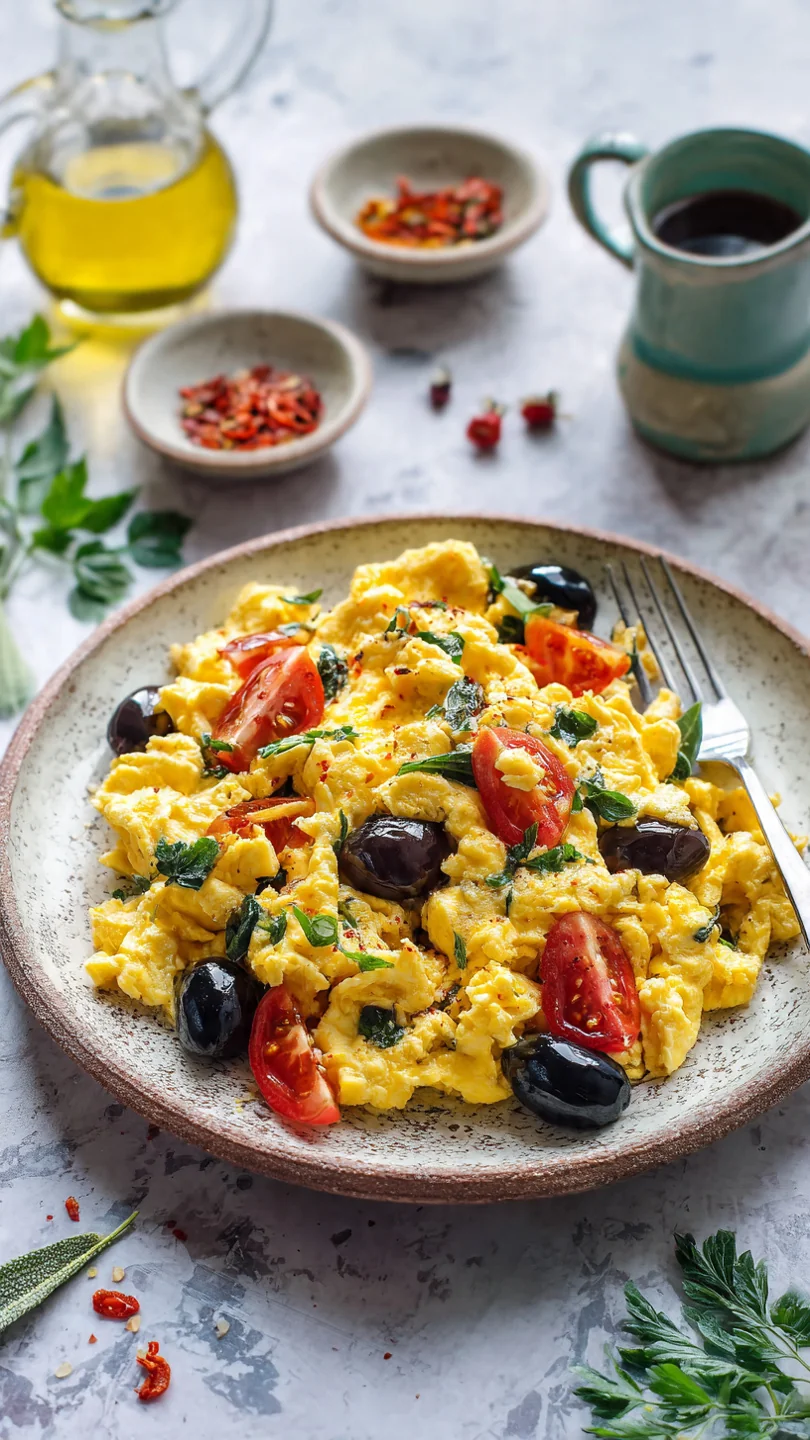
There’s a quiet magic in a skillet of perfectly cooked scrambled eggs. But when you infuse them with the bright, sun-drenched flavors of the Mediterranean—salty feta, sweet tomatoes, and a garden of fresh herbs—that simple breakfast transforms into a vibrant, satisfying meal that feels like a mini-vacation. As a chef, I’ve always believed the best recipes are those that deliver maximum flavor with minimal effort and time.
This is one of those recipes. In just 15 minutes, you can create a protein-packed dish that’s far more exciting than your standard eggs, perfect for a leisurely weekend brunch or a surprisingly quick weekday morning. Let’s make your breakfast routine anything but ordinary.
This recipe is designed to be a reliable, delicious upgrade to your cooking repertoire. Here’s what makes it special:
- Big flavor, fast: By using potent ingredients like feta, sun-dried tomatoes, and fresh herbs, you get a complex, restaurant-quality taste in the time it takes to brew coffee.
- One-pan convenience: Everything cooks in a single skillet, meaning less cleanup and more time to enjoy your meal.
- Diet-flexible: Naturally gluten-free and vegetarian, it’s easy to adapt for keto, dairy-free, or other dietary needs with simple swaps.
- Perfect texture: My professional technique ensures your eggs turn out consistently creamy and soft, never dry or rubbery.
- Endlessly customizable: Think of this as a master formula. Once you learn the base technique, you can swap in your favorite vegetables, cheeses, and herbs based on what’s in season or in your fridge.
Ingredients You’ll Need
- Let’s gather our ingredients. This is where simple pantry staples come together to create something truly special. The beauty of this recipe lies in the quality and balance of its components: the richness of eggs, the salty punch of feta, the umami sweetness of tomatoes, and the freshness of herbs.
- Eggs: The star. I recommend large eggs at room temperature if possible; they incorporate more air and cook up slightly fluffier.
- Milk or cream: A small amount adds richness and helps create a tender texture. Any fat percentage works, or use a dairy-free alternative.
- Kosher salt & black pepper: Seasoning fundamentals. I prefer kosher salt for its clean taste and easier control.
- Extra virgin olive oil: For sautéing. Its fruity notes are a cornerstone of Mediterranean flavor.
- Garlic: Freshly minced garlic forms the aromatic base. Don’t skip it.
- Fresh baby spinach: It wilts down quickly, adding color, nutrients, and a mild flavor.
- Sun-dried tomatoes (oil-packed): These are my secret weapon. They’re intensely sweet and tangy compared to fresh tomatoes, especially off-season. Be sure to drain them well.
- Feta cheese: Use a block of feta in brine for the best texture and flavor, and crumble it yourself. It’s tangier and creamier than pre-crumbled.
- Fresh dill & chives: The herbal finish. Dill offers a bright, grassy note, while chives add a mild onion flavor. Fresh is non-negotiable here for the best aroma.

Note: You’ll find the complete list of ingredients, along with their exact measurements, in the printable recipe card at the bottom of this post.

Kitchen Equipment Needed
You don’t need any fancy tools for this recipe, just a few basics. A 10-inch non-stick skillet is ideal—it gives the eggs enough room to cook evenly without steaming. A silicone spatula is perfect for gently folding the eggs without scratching your pan.
You’ll also need a medium mixing bowl, a whisk or fork for beating the eggs, and a cutting board and chef’s knife for prepping your ingredients. Having everything measured and chopped before you start cooking (your mise en place) is the single best tip for a stress-free, quick cooking process.
How to Make Mediterranean Scrambled Eggs Recipe
Step 1: Prep and Whisk the Egg Base
In your mixing bowl, crack the eggs and add the milk, salt, and pepper. Now, here’s a tip from my restaurant days: whisk them just until the yolks and whites are fully blended and the mixture is uniform in color. You’re not trying to make them frothy.
Over-whisking incorporates too much air, which can lead to tough, dry eggs. A smooth, homogenous liquid is your goal. Set this bowl right by the stove.
Step 2: Build the Flavor Foundation
Heat the olive oil in your non-stick skillet over medium heat. Add the minced garlic and let it sizzle for just 20-30 seconds until incredibly fragrant. You’ll smell it—that’s your cue.
Immediately add all the fresh spinach. Trust me, it looks like a lot, but it wilts down dramatically. Stir constantly for about a minute until the spinach is just wilted and bright green.
This quick sauté removes excess moisture from the greens and infuses the oil with garlic flavor, creating a delicious base for the eggs.
Step 3: Cook the Eggs Low and Slow
This is the most critical step. Reduce the heat to medium-low. Pour your whisked egg mixture directly over the wilted spinach.
Let it sit, untouched, for 15-20 seconds to allow a thin layer to set on the bottom. Then, using your spatula, gently push the eggs from the edges toward the center. Tilt the pan so the uncooked, runny egg flows back onto the hot surface.
Believe me, patience here pays off in creamy texture.
Step 4: Add the Mix-Ins at the Right Time
Watch the eggs carefully. When they are about 70% set—still quite wet and glossy on top but with formed curds—it’s time for the fun part. Sprinkle in the chopped sun-dried tomatoes and half of the crumbled feta.
Gently fold them into the eggs. Adding the cheese now, rather than at the end, allows it to soften and integrate its salty flavor throughout without completely melting away.
Step 5: Finish with Herbs and Serve
Remove the skillet from the heat immediately. The eggs will continue to cook from the pan’s residual heat, which is how you avoid overcooking. Now, fold in the fresh dill and chives.
The heat will wilt them perfectly, releasing their incredible aroma. Give it one final taste and add a tiny pinch more salt or pepper only if needed. Spoon the eggs onto warm plates, top with the remaining feta and an extra sprinkle of herbs, and serve right away.
A few chef-level insights will guarantee perfect results every single time.
- Temperature is everything: Cooking eggs over medium-low heat is non-negotiable. High heat causes the proteins to contract violently, squeezing out moisture and creating a rubbery, dry scramble. Low and slow keeps them tender.
- The “soft-set” cue: Remove the pan from the heat when the eggs still look slightly underdone to you. They will finish setting on the plate. This is the secret to custardy, moist scrambled eggs.
- Pre-salting caution: Avoid whisking salt into your eggs more than a few minutes before cooking. Salt can begin to break down the egg proteins, leading to a weepy, watery texture. Seasoning just before cooking is best.
- Fresh vs. dried herbs: For this recipe, fresh herbs are essential. Dried dill or chives lack the vibrant, aromatic punch needed to balance the rich eggs and feta.
Recipe Variations & Customizations
- This recipe is a fantastic canvas. Once you’ve mastered the basic method, try these delicious twists.
- Greek Style: Swap the spinach for chopped kale, add a pinch of dried oregano with the garlic, and use Kalamata olives instead of sun-dried tomatoes.
- Spicy Harissa Kick: Stir 1-2 teaspoons of harissa paste into the whisked eggs for a smoky, North African-inspired heat.
- Dairy-Free/Vegan: Use a plant-based milk, omit the feta, and add a handful of nutritional yeast with the herbs for a cheesy, umami flavor. For a fully vegan version, use a tofu scramble base.
- Spring Vegetable: In spring, use tender asparagus tips and fresh peas instead of spinach and tomatoes. Finish with lots of fresh mint.
What to Serve With This Recipe
These scrambled eggs are a complete meal on their own, but they love good company. For a classic brunch, serve them with toasted sourdough or warm pita bread to scoop up every last bit. A simple side of sliced avocado with a squeeze of lemon adds creaminess and healthy fats.
If you’re building a bigger spread, pair them with crispy roasted potatoes or a fresh fruit salad. For drinks, a glass of freshly squeezed orange juice, a bloody mary, or a strong American coffee are all perfect matches. This dish is ideal for weekend brunches, holiday mornings, or even a quick and elegant “breakfast-for-dinner” solution.
Storage & Make-Ahead Instructions
- Scrambled eggs are always best served immediately, but you can manage leftovers successfully.
- Storage: Cool leftovers completely, then store in an airtight container in the refrigerator for up to 2 days.
- Reheating: Gently reheat in a skillet over low heat with a tiny splash of water or milk to refresh the moisture. Microwaving tends to make them tough and rubbery.
- Make-Ahead Prep: You can chop the garlic, tomatoes, and herbs the night before and store them separately in the fridge. Whisk the eggs and have all your ingredients measured and ready to go for a truly 5-minute cook time in the morning.
Frequently Asked Questions
Q: Can I use egg whites only?
A: Absolutely. Substitute 4 whole eggs with 1 cup of liquid egg whites. Be aware they cook faster and can be less rich, so you may want to add an extra tablespoon of feta for flavor.
Q: My eggs turned out watery. What happened?
A: This is usually due to one of two things: adding salt too early before cooking (as mentioned in the tips), or not draining the sun-dried tomatoes well enough. Pat them dry with a paper towel before chopping.
Q: Can I freeze these scrambled eggs?
A: I don’t recommend it. Eggs don’t freeze well for scrambling; the texture becomes grainy and watery upon thawing and reheating.
Q: What’s the best pan to use if I don’t have non-stick?
A: A well-seasoned cast iron or carbon steel skillet can work. Ensure it’s very well-seasoned and use a bit more fat (oil or butter) to prevent sticking.
Q: Can I use fresh tomatoes instead of sun-dried?
A: You can, but the flavor and texture will be different. Fresh tomatoes (like cherry tomatoes, halved) release a lot of water. Add them in Step 2 with the spinach to cook off some of that moisture first.
Q: Is there a substitute for feta?
A: Goat cheese (chèvre) would be a fantastic, creamy alternative. For a milder flavor, try ricotta salata or even a few dollops of plain Greek yogurt stirred in at the very end.
Q: How do I know when the eggs are done?
A: Look for a soft, custardy set with no visible runny liquid. They should still look slightly glossy and wet when you take them off the heat, as they will continue to cook.
Final Thoughts
This Mediterranean Scrambled Eggs recipe is more than just a breakfast—it’s a testament to how a handful of quality ingredients and a simple, careful technique can create something truly delightful. It embodies my cooking philosophy: food should be both nourishing and a joy to eat, without requiring hours in the kitchen. I’ve tested this method countless times to ensure it delivers creamy, flavorful, and impressive results every time you make it.
So, the next time you’re staring into the fridge wondering what to make, remember this recipe. In the time it takes for your toast to pop, you can have a vibrant, protein-packed meal that will brighten your morning. I encourage you to make it your own—try the variations, use what you have, and most importantly, enjoy the process.
If you give this recipe a try, I’d love to hear how it turned out for you. Share your creations and tag me, or leave a comment below. Happy cooking

Mediterranean Scrambled Eggs Recipe
- Author: Maren
- Prep Time: 5 minutes
- Cook Time: 10 minutes
- Total Time: 15 minutes
- Yield: 2 servings
- Category: Breakfast
- Cuisine: Mediterranean
Description
Light, fluffy scrambled eggs infused with the vibrant flavors of the Mediterranean—creamy feta, sweet sun-dried tomatoes, fresh spinach, and herbs. A quick, healthy, and satisfying meal ready in just 15 minutes.
Ingredients
Instructions
-
In a medium bowl, whisk together the eggs, milk, salt, and pepper until just combined and uniform in color. Avoid over-whisking, as this can incorporate too much air and make the eggs tough. Set this mixture aside near your stove.
-
Heat the olive oil in a 10-inch non-stick skillet over medium heat. Add the minced garlic and sauté for about 30 seconds until fragrant—be careful not to let it brown. Immediately add the fresh spinach and stir until it just wilts, about 1 minute. This step builds a flavor base without overcooking the delicate greens.
-
Reduce the heat to medium-low. Pour the whisked egg mixture into the skillet over the wilted spinach. Let it sit undisturbed for 15-20 seconds to allow the bottom to set slightly. Then, using a silicone spatula, gently push the eggs from the edges toward the center, allowing the uncooked liquid to flow to the hot pan.
-
When the eggs are about 70% set (still slightly wet and glossy), fold in the chopped sun-dried tomatoes and half of the crumbled feta cheese. Continue to cook gently, folding occasionally, until the eggs are softly set but still moist. This is the key to creamy, not dry, scrambled eggs.
-
Remove the skillet from the heat immediately. The residual heat will finish cooking the eggs. Gently fold in the fresh dill and chives. Taste and adjust seasoning with a pinch more salt or pepper if needed. Transfer to plates, top with the remaining feta and a sprinkle of fresh herbs, and serve hot.
Notes
- Chef's Tips:
- For the creamiest texture, cook eggs low and slow. High heat makes them rubbery.
- Don't season the eggs with salt too far in advance of cooking, as it can break down the proteins and make them watery.
- Serve immediately with toasted crusty bread or pita to soak up the delicious juices.
- Food Safety:
- Cook eggs until they are no longer runny and reach an internal temperature of 160°F (71°C) for safety.
- Refrigerate leftovers within 2 hours of cooking.


