
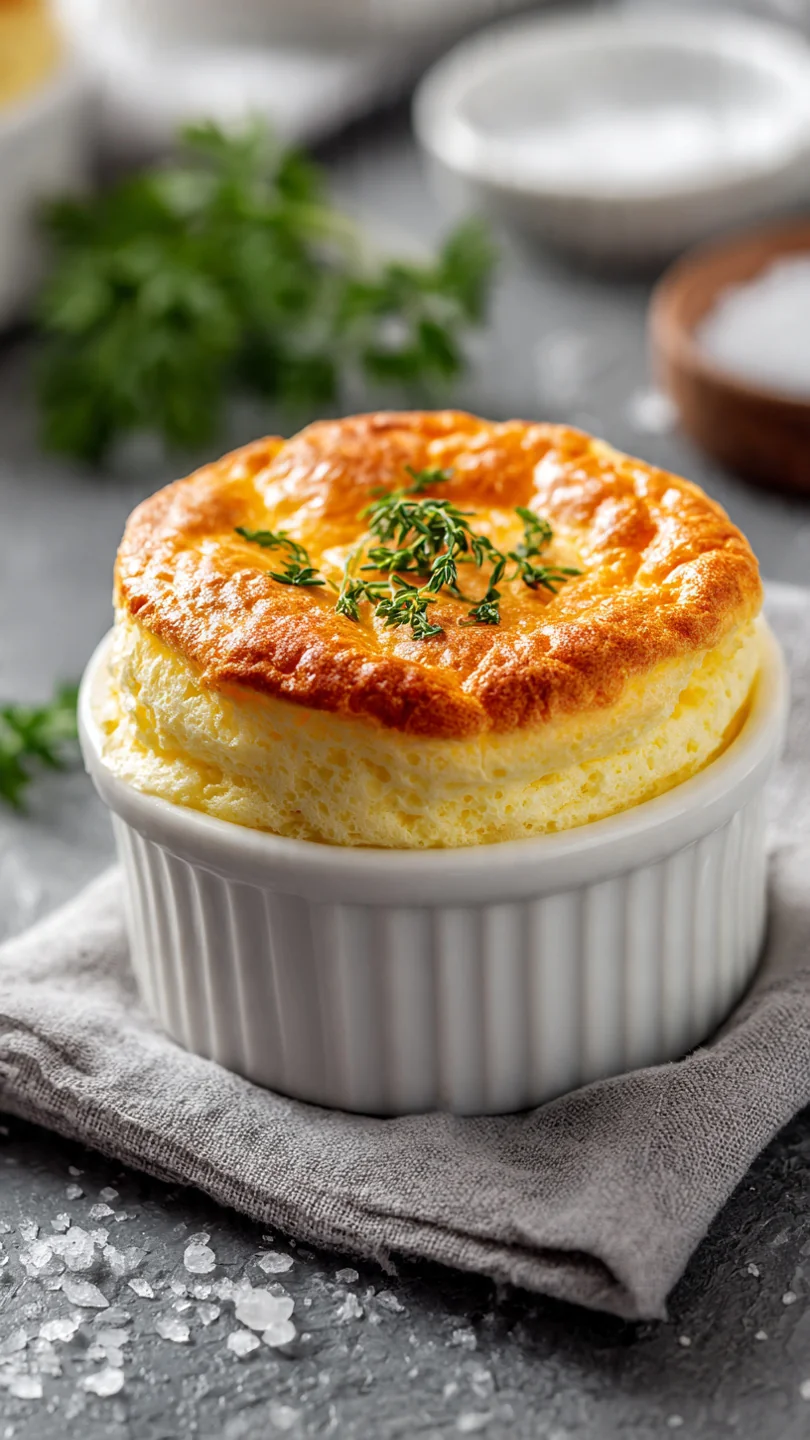
There’s a moment of pure magic in the kitchen when you peer through the oven door and see your soufflé standing tall, a golden crown rising proudly above its dish. It’s a sight that feels both triumphant and deeply satisfying. For years, soufflés were shrouded in an aura of intimidating difficulty, a test reserved for professional chefs.
But I’m here to tell you that with a clear understanding of a few key principles, a perfect cheese soufflé is absolutely within your reach. This recipe breaks down the science into simple, actionable steps. The result is a cloud-like creation with a crisp, cheesy exterior giving way to a tender, almost molten interior rich with the nutty depth of Gruyère.
It’s elegant enough for a dinner party yet simple enough for a luxurious weekend lunch. Let’s conquer this classic together.
- Guaranteed Rise: This method focuses on the crucial techniques—a stable base and properly whipped egg whites—that ensure your soufflé climbs high every time.
- Deep, Complex Flavor: Using a combination of Gruyère and Parmigiano creates a sophisticated taste that’s far more interesting than a single cheese.
- Elegant & Impressive: Nothing makes a guest feel more special than being presented with a perfectly puffed soufflé. It’s culinary theater at its finest.
- Surprisingly Straightforward: While it requires attention, the process is logical and broken into manageable stages. Trust the recipe and your oven.
- Versatile Foundation: Master this savory base, and you unlock the technique for countless sweet and savory variations.
Ingredients You’ll Need
Let’s gather our ingredients—this is where we build the flavor and structure. Quality matters here, especially with the cheese. A good, aged Gruyère will give you that signature nutty, slightly sweet flavor that defines a classic soufflé.
The Parmigiano isn’t just for the batter; we use it to coat the ramekins, creating a delicious, non-stick crust that adds a salty crunch to every bite. Using cold milk for the béchamel is a little pro trick—it virtually guarantees a lump-free sauce. And please, take the extra five minutes to let your egg whites come to room temperature; they’ll incorporate more air and give you a stronger, more stable foam, which is the very engine of your soufflé’s rise.

Note: You’ll find the complete list of ingredients, along with their exact measurements, in the printable recipe card at the bottom of this post.

Kitchen Equipment Needed
You don’t need specialized gear, but a few key tools make success easier. The most important are four 8-ounce (1-cup) ramekins. Their straight sides help guide the upward rise.
A hand mixer or stand mixer is essential for achieving the stiff, glossy egg white peaks efficiently. You’ll also need a medium saucepan and whisk for the béchamel base, a large flexible spatula for gentle folding, and a fine grater (like a Microplane) for the cheese—larger shreds can sink. A baking sheet makes transferring the filled ramekins in and out of the oven safe and simple.
How to Make French Cheese Soufflé Recipe
Step 1: Prepare the Ramekins
Preheat your oven to 375°F (190°C) with a rack in the lower third. This position helps the bottom cook fully without over-browning the top. Now, take your softened butter and generously coat the insides of each ramekin, getting into every crevice.
Tip a bit of the finely grated Parmigiano into one and tilt and tap it around until the butter is completely covered in cheese. Dump the excess into the next ramekin and repeat. Believe me, this cheesy lining is a game-changer for both flavor and release.
Step 2: Build the Flavor Base
This thick béchamel, called a panade, is the foundation that will hold the air bubbles. Melt the butter in your saucepan over medium heat. Whisk in the flour and cook for a full 2 minutes, stirring constantly.
You’re toasting the flour to cook out its raw taste—it should smell nutty, not look brown. Now, gradually whisk in the cold milk. It will seize up at first, but keep whisking; it will smooth out as it heats.
Bring it to a simmer and cook until very thick, about 2-3 minutes. Remove from heat and whisk in the dry mustard, cayenne, and salt. Let it cool for just 2 minutes.
Step 3: Incorporate Yolks and Cheese
In a small bowl, whisk your egg yolks until smooth. To prevent them from scrambling, we need to temper them. While whisking the warm béchamel vigorously, slowly drizzle in about a quarter cup of it into the yolks.
Now, whisk this warmed yolk mixture back into the main saucepan. It should be smooth and thick. Stir in all the grated Gruyère and the remaining Parmigiano until fully melted and incorporated.
Transfer this rich, cheesy base to a large mixing bowl. It needs to be lukewarm before you add the egg whites.
Step 4: Whip the Egg Whites to Perfection
This is the most critical step. Ensure your bowl and beaters are impeccably clean and free of any grease, as fat inhibits whipping. Add the room-temperature egg whites and cream of tartar (or lemon juice) to the bowl.
The acid stabilizes the foam. Start on medium-low speed until foamy, then increase to medium-high. Beat until you have stiff, glossy peaks.
Tip from me: The peaks should stand straight up when you lift the beaters, and the foam should not slide if you tilt the bowl. Do not overbeat to a dry, grainy texture.
Step 5: The Gentle Art of Folding
Now comes the fun part where we marry the dense base with the airy foam. Add about one-third of the whipped whites to the cheese base. Stir this in quite vigorously—this first addition lightens the base and makes folding the rest much easier.
Now, using your large spatula, add half of the remaining whites. Use a gentle, deliberate motion: cut down through the center, scrape along the bottom, and lift up and over, rotating the bowl as you go. Repeat with the last of the whites until just combined.
A few faint streaks of white are okay; it’s better than deflating the batter by overmixing.
Step 6: Bake and Serve with Pride
Immediately divide the airy batter among your prepared ramekins, filling them to about 1/4-inch from the top. Here’s a pro trick: run your clean thumb around the inside rim of each ramekin, wiping away batter and creating a shallow moat. This helps the soufflé rise straight up with a classic “top hat” shape.
Place the ramekins on a baking sheet and transfer to the oven. Trust me, do not open the door for at least 20 minutes. They’re done when magnificently puffed, deeply golden brown, and the center has just a slight jiggle when you gently shake the baking sheet.
Serve at once—soufflés wait for no one.
- Room Temperature is Key: Cold egg whites won’t whip to their full volume. Separate your eggs straight from the fridge (it’s easier when cold), but let the whites sit on the counter for 20-30 minutes before whipping.
- The “No-Peek” Rule: The structure of a soufflé is incredibly delicate during the first 75% of its bake time. Opening the oven door introduces a rush of cooler air that can cause it to collapse prematurely. Use the oven light to check progress.
- Stiff, Not Dry Peaks: When whipping egg whites, stop when the peaks are stiff and glossy. If they start to look clumpy, dry, or separate, you’ve gone too far and the foam will be less stable.
- Fold with Confidence: Folding isn’t about being timid; it’s about being efficient. Use a large, wide spatula and incorporate the whites in as few strokes as possible to preserve the precious air bubbles you worked so hard to create.
- Serve Immediately: A soufflé is a fleeting masterpiece. Have your guests seated and your salad dressed before you take it out of the oven. The dramatic fall is part of its charm, but you want to enjoy it at its peak.
Recipe Variations
- Herb & Shallot: Sauté 2 tbsp of finely minced shallot in the butter before adding the flour. Fold 1 tbsp each of finely chopped chives and parsley into the cheese base.
- Goat Cheese & Thyme: Use 3 oz of creamy goat cheese and 1 oz of Parmigiano. Add 1 tsp of fresh thyme leaves to the béchamel.
- Gluten-Free: Substitute the all-purpose flour with an equal amount of a fine gluten-free flour blend (like Cup4Cup). The béchamel may thicken slightly faster.
- Spring Vegetable: Fold 1/2 cup of lightly sautéed and finely chopped asparagus, spinach, or leeks into the base after the cheese has melted.
What to Serve With This Recipe
A cheese soufflé is rich and decadent, so it pairs beautifully with simple, clean, and acidic accompaniments that cut through the richness. My absolute favorite is a tart green salad with a sharp vinaigrette—think mixed greens with a lemon-Dijon dressing. For a more substantial meal, serve it alongside roasted tomatoes or sautéed mushrooms.
For a non-alcoholic option, a sparkling water with a twist of lemon is ideal. This dish is perfect for a leisurely weekend brunch, a light dinner, or as the elegant starter to a multi-course meal.
Storage & Make-Ahead Instructions
Let’s be honest: a soufflé is best served immediately. However, you can do some prep ahead. You can prepare the cheese base (through Step 3) up to a day in advance.
Press plastic wrap directly onto the surface and refrigerate. Let it come to room temperature for an hour before gently re-whisking and proceeding with whipping and folding the egg whites. Leftover baked soufflé will collapse and become dense.
If you must save it, cool completely, cover, and refrigerate for up to 2 days. Reheat gently in a 300°F oven for 10-15 minutes to re-crisp the exterior, though it will not rise again. I do not recommend freezing, as the texture of the egg foam does not survive thawing and reheating well.
Frequently Asked Questions
Q: Can I make the entire soufflé ahead of time and just bake it later?
A: Unfortunately, no. The whipped egg whites will begin to deflate and separate from the base if left to sit. The best make-ahead strategy is to prepare the cheese base up to a day in advance, then whip the whites and fold just before baking.
Q: What can I use instead of Gruyère?
A: Comté, Emmental, or a good-quality Swiss cheese are excellent direct substitutes. For a stronger flavor, try a combination of sharp cheddar and a little Parmigiano.
Q: My soufflé collapsed as soon as I took it out of the oven. What did I do wrong?
A: Some settling is natural, but a dramatic collapse often means it was slightly underbaked, the oven door was opened too early, or the egg whites were under-whipped or deflated during folding. Ensure a hot oven, no peeking, and proper stiff peaks.
Q: How do I know it’s done without opening the oven?
A: Rely on your timer and visual cues through the window. At 22-25 minutes, it should be deeply golden brown and puffed about 1.5-2 inches above the rim. A slight jiggle in the very center when you gently shake the oven rack is perfect—it will carry-over cook.
Q: Can I make one large soufflé instead of individuals?
A: Yes, use a 1.5-quart soufflé dish. Butter and cheese-coat it as directed. The baking time will increase to 35-40 minutes.
The “moat” trick is even more important here for an even rise.
Q: Is cream of tartar necessary?
A: It’s highly recommended as it stabilizes the egg white foam, giving you a wider window between soft and over-whipped peaks. If you don’t have it, 1/2 teaspoon of fresh lemon juice works as a good substitute.
Q: My soufflé rose unevenly/lopsided. Why?
A: This is usually due to an oven with hot spots or the ramekins being placed too close to the oven walls. Bake on a centered rack and use a baking sheet. Also, ensure your batter is evenly divided and the “moat” is uniform.
Final Thoughts
Mastering the cheese soufflé is one of those kitchen accomplishments that fills you with a real sense of confidence. It proves that understanding technique is far more powerful than relying on mystery. This recipe gives you that understanding—from the stability of the panade to the architecture of the whipped egg whites.
Don’t let the classic fear hold you back. Embrace the process, respect the few key rules, and you will be rewarded with one of the most elegant and delicious dishes in the French repertoire. I promise, the moment you present that golden, towering soufflé at your table, any effort will be instantly forgotten, replaced by pure delight.
Give it a try this weekend, and please come back to rate the recipe and share your success. Bon appétit

Classic French Cheese Soufflé
- Author: Maren
- Prep Time: 25 minutes
- Cook Time: 25 minutes
- Total Time: 50 minutes
- Yield: 4 servings
- Category: Appetizer
- Cuisine: French
Description
A light, airy, and deeply flavorful cheese soufflé with a golden crust and a tender, molten interior. This recipe demystifies the technique for a guaranteed impressive rise.
Ingredients
Instructions
-
Preheat oven to 375°F (190°C) with a rack in the lower third. Generously butter the insides of four 8-oz (1-cup) ramekins. Add a tablespoon of grated Parmigiano to one and tilt to coat the bottom and sides, tapping out excess into the next ramekin. Repeat. This creates a flavorful, non-stick crust.
-
Make the béchamel base (panade). In a medium saucepan, melt the 3 tbsp butter over medium heat. Whisk in the flour and cook, stirring constantly, for 2 minutes until it smells nutty but is not browned. Gradually whisk in the cold milk. Bring to a simmer, whisking until very thick, about 2-3 minutes. Remove from heat and whisk in dry mustard, cayenne, and salt. Let cool for 2 minutes.
-
Temper the egg yolks. Whisk the egg yolks in a small bowl. While whisking the warm béchamel, slowly drizzle in about 1/4 cup of the béchamel to gently warm the yolks. Then, whisk the yolk mixture back into the main saucepan. Stir in the grated Gruyère and remaining Parmigiano until melted and smooth. Transfer to a large bowl. The base should be thick and lukewarm.
-
Whip the egg whites to stiff peaks. In a scrupulously clean, grease-free bowl, use a hand mixer to beat the egg whites and cream of tartar on medium-low until foamy. Increase speed to medium-high and beat until stiff, glossy peaks form that hold their shape when the beaters are lifted. Do not overbeat to a dry, clumpy stage.
-
Fold the whites into the base. Add about 1/3 of the whipped whites to the cheese base and stir vigorously to lighten it. This makes folding easier. Using a large flexible spatula, gently fold in the remaining whites in two additions, cutting down to the bottom and lifting up, rotating the bowl, until just combined with minimal white streaks.
-
Bake immediately. Gently divide the batter among the prepared ramekins, filling to about 1/4-inch from the top. Run your thumb around the inside rim of each ramekin to create a 'moat'—this encourages an even, top-hat rise. Place ramekins on a baking sheet and bake for 22-25 minutes without opening the oven door. They are done when deeply golden brown, puffed, and just set with a slight jiggle in the center.
-
Serve at once. Soufflés wait for no one. Bring them straight to the table, presenting their impressive height. Serve immediately with a simple green salad for a perfect light lunch or elegant starter.
Notes
- Chef's Tips:
- Room temperature egg whites whip to greater volume. Separate eggs cold, then let whites sit for 30 minutes.
- Do not open the oven door during the first 20 minutes of baking. The rush of cold air can cause collapse.
- Serve in the ramekins. A soufflé is a fleeting moment of culinary theater—enjoy it immediately.
- Food Safety:
- Eggs are not fully cooked to a firm set; consume immediately. Not recommended for pregnant individuals, the elderly, or immunocompromised.
- Leftovers (if any) must be refrigerated within 2 hours and reheated to 165°F.


