
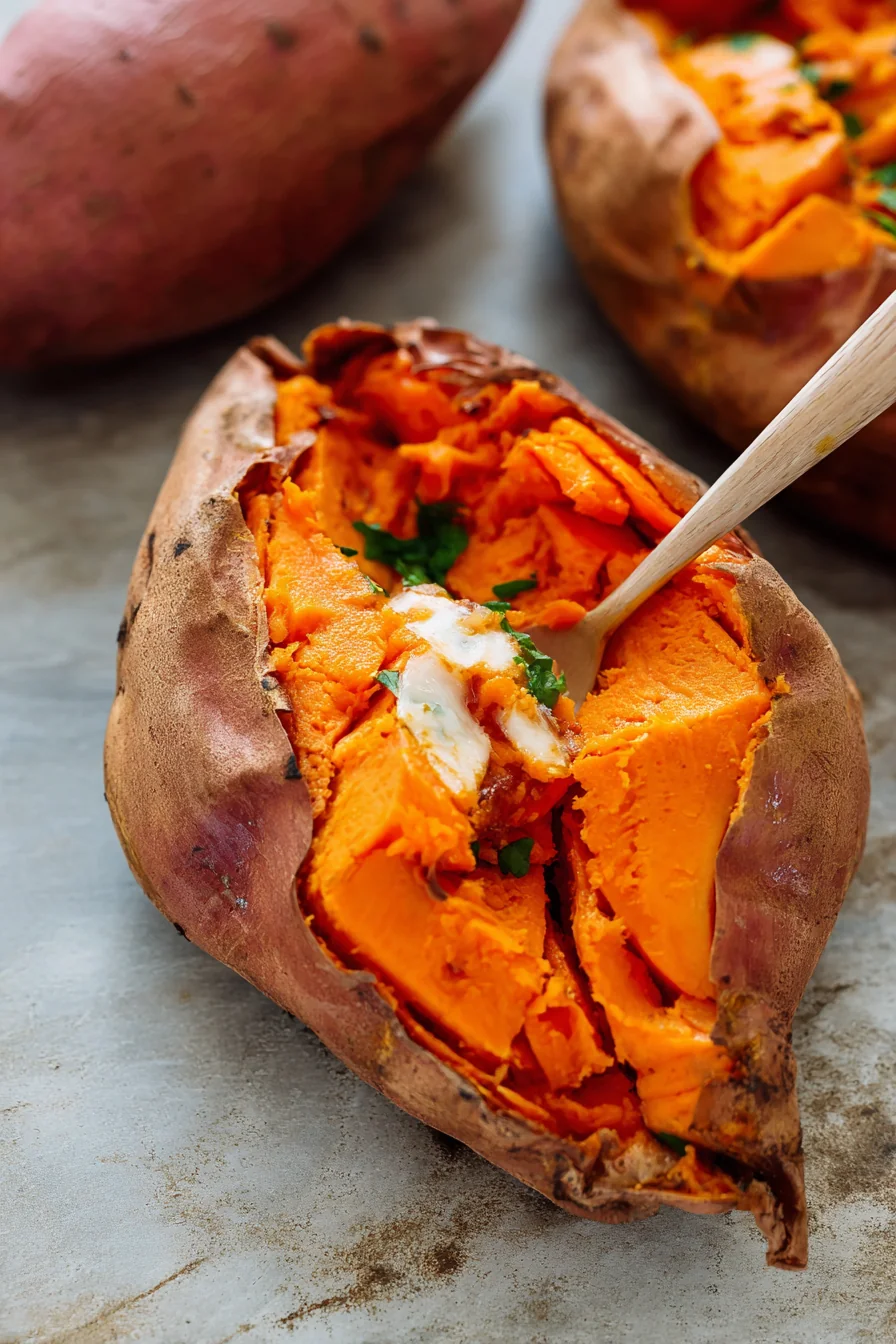
Sweet potatoes are a versatile and nutritious root vegetable that can be prepared in numerous ways to complement a variety of dishes. Whether you’re roasting, baking, or boiling them, understanding the best techniques can transform this humble ingredient into a delicious and satisfying meal. In this guide, we’ll explore how to cook a sweet potato to perfection, offering professional tips and variations to suit your taste.
Why You’ll Love This Recipe
- Versatility: Sweet potatoes can be enjoyed as a side dish, snack, or even a main course, depending on your preparation method.
- Nutrient-rich: Packed with vitamins A and C, fiber, and antioxidants, sweet potatoes offer significant health benefits.
- Flavorful and satisfying: Their natural sweetness and creamy texture make them a delicious addition to any meal.
- Easy to prepare: With minimal ingredients and simple cooking techniques, you can master this recipe in no time.
- Diet-friendly: This recipe is naturally vegan and gluten-free, making it suitable for a wide range of dietary preferences.
Ingredients & Preparation Notes
- Sweet potatoes: Choose firm, unblemished sweet potatoes for the best results. Look for varieties like Jewel or Beauregard for their sweet flavor and creamy texture.
- Olive oil: Optional for roasting, olive oil helps to crisp the skin and enhance flavor.
- Salt and pepper: Also optional, these seasonings can be adjusted to your taste preferences.
When selecting sweet potatoes, opt for those that are heavy for their size, indicating a higher moisture content and better flavor. If you’re looking for substitutions, you can use yams, though they have a different flavor profile and texture.
Professional Tips & Techniques
- Temperature control: Preheat your oven to 400°F (200°C) for optimal roasting. This temperature allows the sweet potatoes to cook evenly without burning.
- Checking doneness: Use a fork to pierce the sweet potato. It should slide in easily when the potato is fully cooked. The internal temperature should reach 210°F (99°C) for food safety.
- Avoid overcooking: Overcooked sweet potatoes can become mushy. Check them frequently after the 45-minute mark to prevent this.
- Flavor enhancement: For added flavor, consider rubbing the sweet potatoes with a mix of olive oil and spices like cinnamon or paprika before roasting.
Recipe Variations
- Roasted sweet potato wedges: Cut sweet potatoes into wedges, toss with olive oil and spices, and roast at 425°F (220°C) for 30-35 minutes, flipping halfway through.
- Mashed sweet potatoes: Boil sweet potatoes until tender, then mash with butter, milk, and a pinch of nutmeg for a creamy side dish.
- Sweet potato fries: Slice sweet potatoes into thin fries, toss with cornstarch and spices, and bake at 425°F (220°C) for 20-25 minutes, flipping halfway through.
- Sweet potato soup: Combine cooked sweet potatoes with vegetable broth, ginger, and coconut milk for a warming, nutritious soup.
- Stuffed sweet potatoes: Bake sweet potatoes, then scoop out the flesh and mix with black beans, corn, and cheese before stuffing back into the skins and baking until heated through.
- Sweet potato hash: Dice sweet potatoes and sauté with onions, bell peppers, and your favorite spices for a hearty breakfast dish.
- Sweet potato casserole: Layer sliced sweet potatoes with a mixture of brown sugar, pecans, and butter, then bake until bubbly and golden.
- Sweet potato salad: Cube cooked sweet potatoes and toss with spinach, quinoa, and a lemon vinaigrette for a refreshing salad.
Serving Suggestions
- As a side dish: Serve roasted sweet potatoes alongside grilled meats or as part of a vegetarian meal.
- For breakfast: Top a baked sweet potato with scrambled eggs, avocado, and salsa for a nutritious start to the day.
- In a salad: Add diced sweet potatoes to your favorite salad for a boost of flavor and nutrition.
- As a snack: Enjoy sweet potato wedges with a dip like hummus or Greek yogurt.
- In a dessert: Use mashed sweet potatoes as a base for pies, cakes, or cookies, adding spices like cinnamon and nutmeg for a sweet treat.
- Presentation tips: Garnish with fresh herbs like cilantro or parsley, or a sprinkle of chopped nuts for added texture and visual appeal.
Storage & Make-Ahead Tips
- Refrigeration: Store cooked sweet potatoes in an airtight container in the refrigerator for up to 5 days.
- Freezing: Cooked sweet potatoes can be frozen for up to 3 months. Thaw in the refrigerator before reheating.
- Make-ahead: Roast sweet potatoes in advance and reheat in the oven at 350°F (175°C) for 10-15 minutes before serving.
- Food safety: Always cool cooked sweet potatoes to room temperature within two hours of cooking to prevent bacterial growth.
Frequently Asked Questions
Q: Can I make this ahead of time?
Yes, you can roast sweet potatoes ahead of time and reheat them when ready to serve. Store them in the refrigerator and reheat at 350°F (175°C) for 10-15 minutes.
Q: How do I know when sweet potatoes are done cooking?
Use a fork to pierce the sweet potato. It should slide in easily when the potato is fully cooked. The internal temperature should reach 210°F (99°C).
Q: Can I use yams instead of sweet potatoes?
Yes, you can use yams, but keep in mind they have a different flavor and texture. Adjust cooking times as needed.
Q: What are some healthy ways to season sweet potatoes?
Try using spices like cinnamon, paprika, or cumin. A drizzle of olive oil and a sprinkle of salt and pepper can also enhance their natural flavor.
Q: Can I cook sweet potatoes in the microwave?
Yes, you can microwave sweet potatoes. Pierce the skin with a fork, wrap in a damp paper towel, and microwave on high for 5-8 minutes per potato, turning halfway through.
Q: How can I prevent sweet potatoes from becoming mushy?
Avoid overcooking by checking doneness frequently after the 45-minute mark. Remove from the oven as soon as they are tender.
Q: Are sweet potatoes good for a vegan diet?
Yes, sweet potatoes are naturally vegan and can be prepared in many ways to suit a vegan diet.
Q: Can I use sweet potatoes in a dessert?
Absolutely! Mashed sweet potatoes can be used in pies, cakes, and cookies, adding natural sweetness and moisture.
Conclusion
Cooking a sweet potato is a simple yet rewarding task that can be tailored to your taste and dietary needs. With the techniques and variations outlined in this guide, you’ll be able to enjoy sweet potatoes in a variety of delicious ways. Try this recipe and share your results with us on social media.
We’d love to see how you make it your own! Remember, the key to perfect sweet potatoes is understanding their cooking process and experimenting with different flavors and preparations. Enjoy your culinary journey with this versatile root vegetable!

How to Cook a Sweet Potato
Equipment
- Oven
- Baking sheet
- Parchment paper
- Fork
Ingredients
- 4 medium sweet potatoes Choose firm, unblemished potatoes
- 1 tablespoon olive oil Optional, for roasting
- 1 teaspoon salt Optional, for seasoning
- 1/2 teaspoon black pepper Optional, for seasoning
Instructions
- Preheat your oven to 400°F (200°C). Rinse the sweet potatoes under cold water to remove any dirt.
- Pat the sweet potatoes dry with a paper towel. If roasting, rub each potato with olive oil and season with salt and pepper.
- Place the sweet potatoes on a baking sheet lined with parchment paper. Bake for 45-60 minutes, or until tender when pierced with a fork.
- Remove from the oven and let cool for 5 minutes before serving. Slice open and enjoy as desired.