
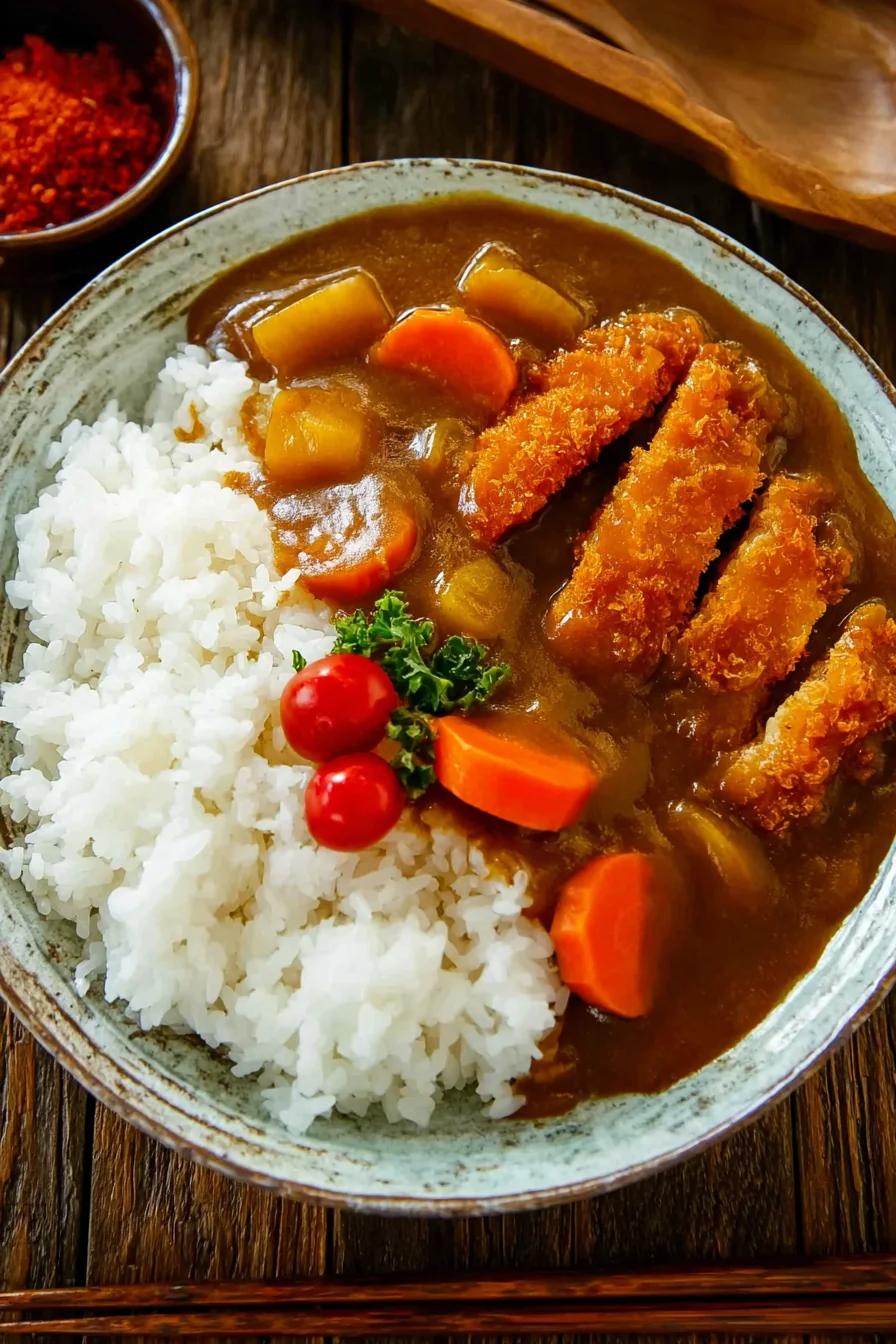
Why You’ll Love This Recipe
- Comfort in a Bowl: Japanese Curry Rice offers the perfect balance of savory, sweet, and mildly spicy flavors, making it a comforting meal for any occasion.
- Easy to Make: With minimal prep and straightforward cooking, this recipe is ideal for busy weeknights.
- Customizable: Easily adapt the recipe to suit your taste by adding different proteins or vegetables.
- Rich in Flavor: The use of Japanese curry roux adds an authentic and deep flavor profile that’s hard to replicate with homemade curry powders.
- Family-Friendly: This dish appeals to both adults and children, making it a great option for family dinners.
- Versatile Serving Options: Serve it over rice, noodles, or even as a filling for sandwiches.
Ingredients & Preparation Notes
- Vegetable oil: Use a neutral oil like canola or grapeseed for best results.
- Onion: Yellow onions work best for their sweet flavor when cooked down.
- Garlic and Ginger: Fresh is best, but you can use jarred minced garlic and ginger if needed.
- Chicken thighs: Bone-in, skinless thighs provide the best flavor and tenderness, but you can use boneless or even chicken breasts if preferred.
- Carrots and Potatoes: These classic curry vegetables add sweetness and texture. Choose fresh, firm vegetables for the best results.
- Water: Adjust the amount to achieve your desired curry consistency.
- Japanese curry roux: Available in various heat levels, choose mild, medium, or hot based on your preference. Look for brands like S&B or House Foods.
- Japanese short-grain rice: Essential for the authentic experience, but you can use any rice you have on hand.
Professional Tips & Techniques
- Sautéing the Aromatics: Cooking the onions until translucent before adding garlic and ginger ensures a sweet base flavor without burning the garlic.
- Browning the Chicken: Don’t rush this step. Browning the chicken adds depth to the curry’s flavor.
- Simmering: Simmering the vegetables until tender but not mushy is key. Check them periodically to avoid overcooking.
- Adding the Roux: Break the roux into smaller pieces for faster and more even melting. Stir constantly to prevent lumps.
- Adjusting Consistency: If the curry is too thick, add a bit more water. If too thin, simmer uncovered to reduce the liquid.
- Visual Cues: The curry is done when the sauce is glossy and coats the back of a spoon.
Recipe Variations
- Vegetarian Option: Replace chicken with tofu or additional vegetables like mushrooms or bell peppers.
- Seafood Curry: Use shrimp or white fish instead of chicken for a lighter, seafood-based curry.
- Spicy Variation: Add sliced chili peppers or a dash of cayenne pepper to the curry for extra heat.
- Katsu Curry: Serve the curry with a breaded and fried chicken or pork cutlet for a restaurant-style experience.
- Coconut Milk: For a creamier curry, substitute half the water with coconut milk.
- Seasonal Vegetables: Incorporate seasonal produce like sweet potatoes, zucchini, or green beans.
- Apple and Honey: Add grated apple and a teaspoon of honey for a sweeter, fruitier curry.
- Curry Udon: Serve the curry over udon noodles instead of rice for a hearty alternative.
Serving Suggestions
- Classic Style: Serve the curry over a bed of Japanese short-grain rice for an authentic experience.
- With Pickles: Accompany the curry with a side of Japanese pickles (tsukemono) to cut through the richness.
- Garnishes: Top the curry with chopped scallions, sesame seeds, or a drizzle of tonkatsu sauce for added flavor.
- Pairing: Pair with a light Japanese beer or a crisp white wine like a Sauvignon Blanc.
- For a Crowd: Double the recipe and serve in a large pot for family gatherings or potlucks.
- Lunch Box Friendly: Pack leftovers in a bento box with rice and veggies for a tasty lunch on the go.
Storage & Make-Ahead Tips
- Refrigeration: Store leftovers in an airtight container in the refrigerator for up to 3-4 days.
- Freezing: Freeze the curry without the rice in freezer-safe containers for up to 3 months. Thaw overnight in the refrigerator before reheating.
- Make-Ahead: Prepare the curry up to the point of adding the roux. Cool and refrigerate, then reheat and add the roux when ready to serve.
- Reheating: Reheat gently on the stove, adding a bit of water if the curry has thickened too much.
Frequently Asked Questions
Q: Can I make this ahead of time?
A: Yes, you can prepare the curry up to the point of adding the roux, then refrigerate and finish it when ready to serve.
Q: What can I use instead of Japanese curry roux?
A: While the roux is key to the authentic flavor, you can make a curry sauce from scratch using curry powder, flour, and butter, though the taste will be different.
Q: Is this recipe spicy?
A: The heat level depends on the curry roux you choose. Mild and medium options are available for those who prefer less spice.
Q: Can I use beef or pork instead of chicken?
A: Absolutely, beef or pork can be used in place of chicken. Adjust cooking times accordingly to ensure tenderness.
Q: How do I make this dish vegetarian?
A: Substitute the chicken with tofu or additional vegetables like mushrooms or bell peppers.
Q: Can I use a different type of rice?
A: Yes, while Japanese short-grain rice is traditional, you can use any rice you have on hand, such as basmati or jasmine.
Q: What if my curry is too thick or too thin?
A: If too thick, add a bit more water. If too thin, simmer uncovered to reduce the liquid until the desired consistency is reached.
Q: How do I store leftovers?
A: Store leftovers in an airtight container in the refrigerator for up to 3-4 days, or freeze for up to 3 months.
Conclusion
Japanese Curry Rice is a versatile and delicious dish that’s easy to make and perfect for any occasion. Its rich, comforting flavors make it a favorite for both adults and children. Give this recipe a try and enjoy the convenience of a homemade curry that rivals your favorite restaurant.
Don’t forget to share your experience and any variations you try on social media, and let us know how it turned out! For an extra touch, serve it with a side of pickled vegetables to balance the richness of the curry.
Japanese Curry Rice
Equipment
- Large pot with lid
- Cutting board and knife
- Measuring cups and spoons
- Wooden spoon or spatula
Ingredients
- 1 tbsp vegetable oil
- 1 large onion sliced
- 2 cloves garlic minced
- 1 inch ginger grated
- 1 lb chicken thighs cut into bite-sized pieces
- 2 large carrots sliced
- 2 medium potatoes peeled and cubed
- 3 cups water
- 1 box Japanese curry roux about 8.4 oz
- 4 cups cooked Japanese short-grain rice for serving
Instructions
- Heat the vegetable oil in a large pot over medium heat. Add the sliced onion and sauté until translucent, about 5 minutes.
- Add the minced garlic and grated ginger to the pot, stirring for another minute until fragrant.
- Increase the heat to medium-high and add the chicken pieces. Cook until lightly browned on all sides, about 5-7 minutes.
- Add the sliced carrots and cubed potatoes to the pot, stirring to combine with the other ingredients.
- Pour in the water and bring the mixture to a boil. Reduce the heat to low, cover, and simmer for 15-20 minutes, or until the vegetables are tender.
- Break the Japanese curry roux into pieces and add them to the pot. Stir until the roux is completely dissolved and the sauce thickens, about 5 minutes.
- Serve the curry over bowls of cooked Japanese short-grain rice.