
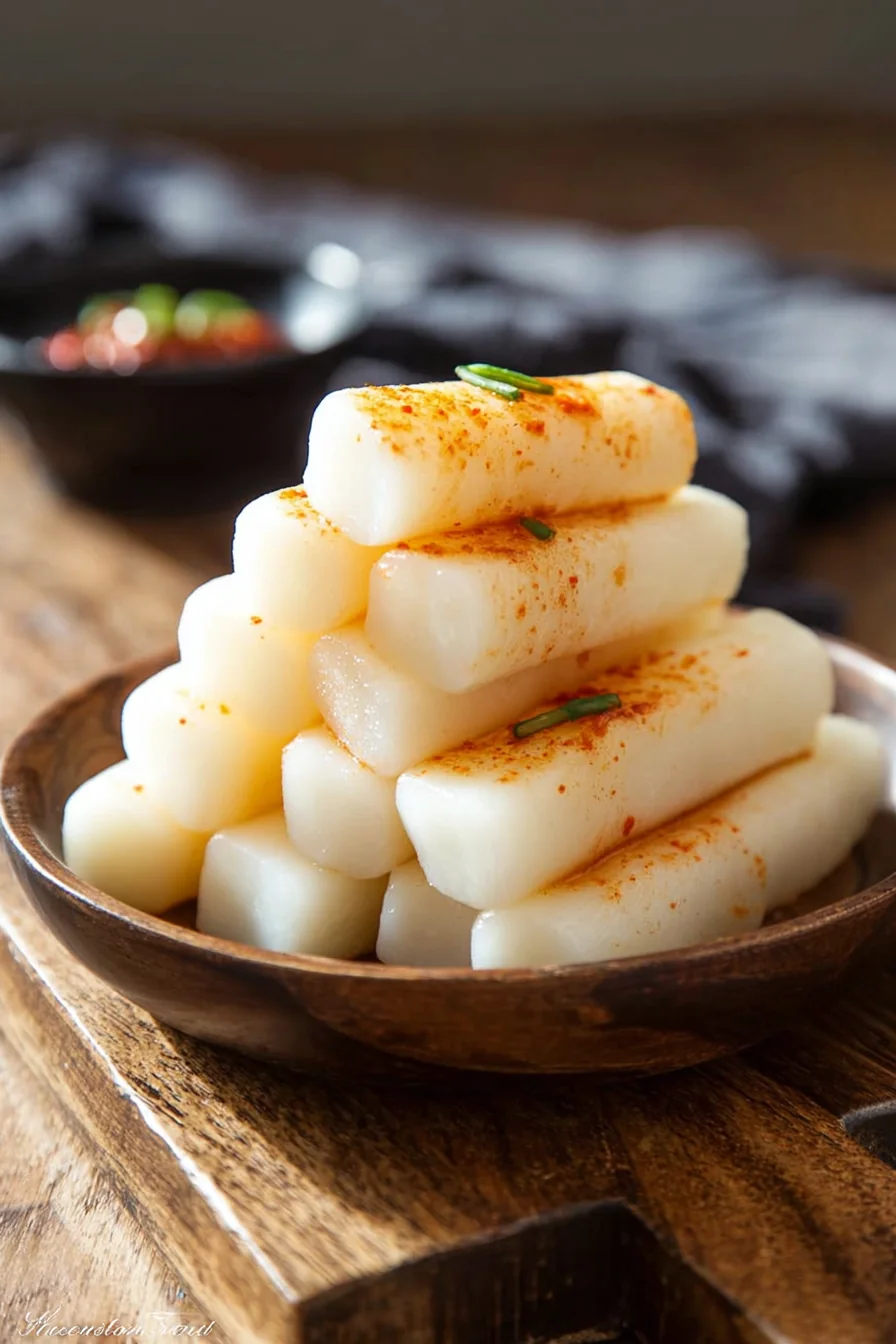
Korean Rice Cakes, or Tteokbokki, are a beloved street food in Korea, known for their chewy texture and spicy-sweet flavor. This dish is not only a delicious treat but also a fun and interactive cooking experience. Whether you’re a fan of Korean cuisine or looking to try something new, mastering Tteokbokki at home is a rewarding endeavor.
Why You’ll Love This Recipe
- Easy to Make: Despite its exotic appeal, Tteokbokki is surprisingly simple to prepare, requiring just a few ingredients.
- Flavorful Marinade: The combination of gochujang, soy sauce, and sugar creates a rich, savory-sweet sauce that coats the rice cakes perfectly.
- Customizable Heat: Adjust the spiciness to your liking with gochugaru, making it suitable for all palates.
- Chewy Texture: The unique texture of rice cakes offers a satisfying chew that’s both fun and delicious.
- Quick Prep: With minimal prep time, you can have a tasty meal ready in under 40 minutes.
- Dietary Friendly: Easily adaptable to vegetarian and gluten-free diets.
Ingredients & Preparation Notes
- Rice Cakes: These are the star of the dish. If using dried rice cakes, soak them for about 30 minutes to soften them before cooking. Fresh rice cakes can be used directly.
- Gochujang: This Korean chili paste is essential for the signature flavor of Tteokbokki. Look for a high-quality brand for the best taste.
- Soy Sauce: Adds depth and umami to the sauce. For a gluten-free version, use tamari.
- Sugar: Balances the spiciness of gochujang and adds a subtle sweetness.
- Garlic: Minced garlic enhances the overall flavor profile.
- Gochugaru: Optional, but adds an extra kick of heat. Adjust to your preference.
- Green Onions: Adds a fresh, mild onion flavor and a pop of color.
- Roasted Seaweed: Used as a garnish, it adds a savory crunch.
For the best results, use high-quality ingredients, especially for the gochujang and soy sauce, as they greatly influence the final taste.
Professional Tips & Techniques
- Sauce Consistency: The sauce should be thick enough to coat the rice cakes but not too thick to become gloopy. Adjust with water if necessary.
- Cooking Temperature: Cook the rice cakes over medium heat to ensure they cook evenly without burning the sauce.
- Stirring: Stir frequently to prevent the rice cakes from sticking to the pan and to ensure even cooking.
- Doneness: The rice cakes are done when they are soft and chewy. Overcooking can make them mushy, so keep an eye on them.
- Flavor Balance: Taste the sauce as it cooks and adjust the seasoning if needed. The balance of sweet, spicy, and savory is key.
Recipe Variations
- Cheese Tteokbokki: Add shredded mozzarella cheese for a creamy, indulgent twist.
- Seafood Tteokbokki: Include shrimp or fish cakes for a seafood flavor.
- Vegetable Tteokbokki: Add sliced vegetables like carrots, zucchini, or cabbage for a healthier version.
- Mild Tteokbokki: Reduce or omit the gochugaru for a milder flavor, perfect for kids.
- Sweet Tteokbokki: Increase the sugar slightly for a sweeter taste.
- Gluten-Free Tteokbokki: Use tamari instead of soy sauce and ensure your gochujang is gluten-free.
- Vegan Tteokbokki: Use a vegan-friendly gochujang and soy sauce.
- Breakfast Tteokbokki: Serve with a fried egg on top for a hearty breakfast option.
Serving Suggestions
- As a Main Dish: Serve Tteokbokki as a main course with a side of kimchi and steamed rice.
- Appetizer: Offer smaller portions as an appetizer at a Korean-themed dinner party.
- Street Food Style: Serve in paper bowls with chopsticks for an authentic street food experience.
- Pair with Banchan: Accompany with various Korean side dishes like pickled radish or spinach.
- Presentation: Garnish with sliced green onions and roasted seaweed for a pop of color and flavor.
Storage & Make-Ahead Tips
- Refrigeration: Store leftovers in an airtight container in the refrigerator for up to 3 days.
- Reheating: Reheat in a pan over medium heat, adding a splash of water if the sauce has thickened too much.
- Freezing: Tteokbokki can be frozen, but the texture of the rice cakes may change slightly upon reheating.
- Make-Ahead: Prepare the sauce in advance and store it in the refrigerator. When ready to cook, simply add the rice cakes and heat through.
Frequently Asked Questions
Q: Can I make this ahead of time?
Yes, you can prepare the sauce ahead of time and store it in the refrigerator. When ready to cook, simply add the rice cakes and heat through.
Q: How can I make Tteokbokki less spicy?
Reduce or omit the gochugaru, and use a milder gochujang. You can also add more sugar to balance the heat.
Q: Can I use fresh rice cakes instead of dried?
Yes, fresh rice cakes can be used directly without soaking. They may cook a bit faster, so keep an eye on them.
Q: What can I substitute for gochujang?
While gochujang is essential for authentic flavor, you can use a mixture of miso paste and sriracha as a substitute in a pinch.
Q: How do I know when the rice cakes are done?
The rice cakes are done when they are soft and chewy. They should not be hard or have a raw taste.
Q: Can I add other proteins to this dish?
Yes, you can add proteins like fish cakes, shrimp, or even sliced beef for added flavor and texture.
Q: Is Tteokbokki suitable for a vegetarian diet?
Yes, as long as you use a vegetarian gochujang and soy sauce, Tteokbokki can be part of a vegetarian diet.
Q: How can I make Tteokbokki gluten-free?
Use tamari instead of soy sauce and ensure your gochujang is gluten-free. Check labels carefully for any hidden gluten.
Conclusion
Korean Rice Cakes, or Tteokbokki, offer a delicious and unique culinary experience that’s easy to master at home. With its perfect balance of flavors and textures, this dish is sure to become a favorite in your recipe collection. Give it a try and share your results on social media!
Remember, the key to great Tteokbokki is in the sauce, so don’t be afraid to adjust it to your taste. Enjoy this delightful Korean street food and bring a bit of Seoul to your kitchen.
Korean Rice Cakes (Tteokbokki)
Equipment
- Large pan or wok
- Stirring spoon
Ingredients
- 1 pound rice cakes Soaked for 30 minutes if using dried cakes
- 3 cups water
- 3 tablespoons gochujang Korean chili paste
- 1 tablespoon soy sauce
- 1 tablespoon sugar
- 2 cloves garlic minced
- 1 tablespoon gochugaru Korean chili flakes, optional for extra heat
- 2 stalks green onions sliced
- 1 sheet roasted seaweed cut into thin strips
Instructions
- Soak the rice cakes in cold water for about 30 minutes if using dried ones. Drain and set aside.
- In a large pan, combine water, gochujang, soy sauce, sugar, and minced garlic. Bring the mixture to a boil over medium heat, stirring until the sauce is well mixed.