
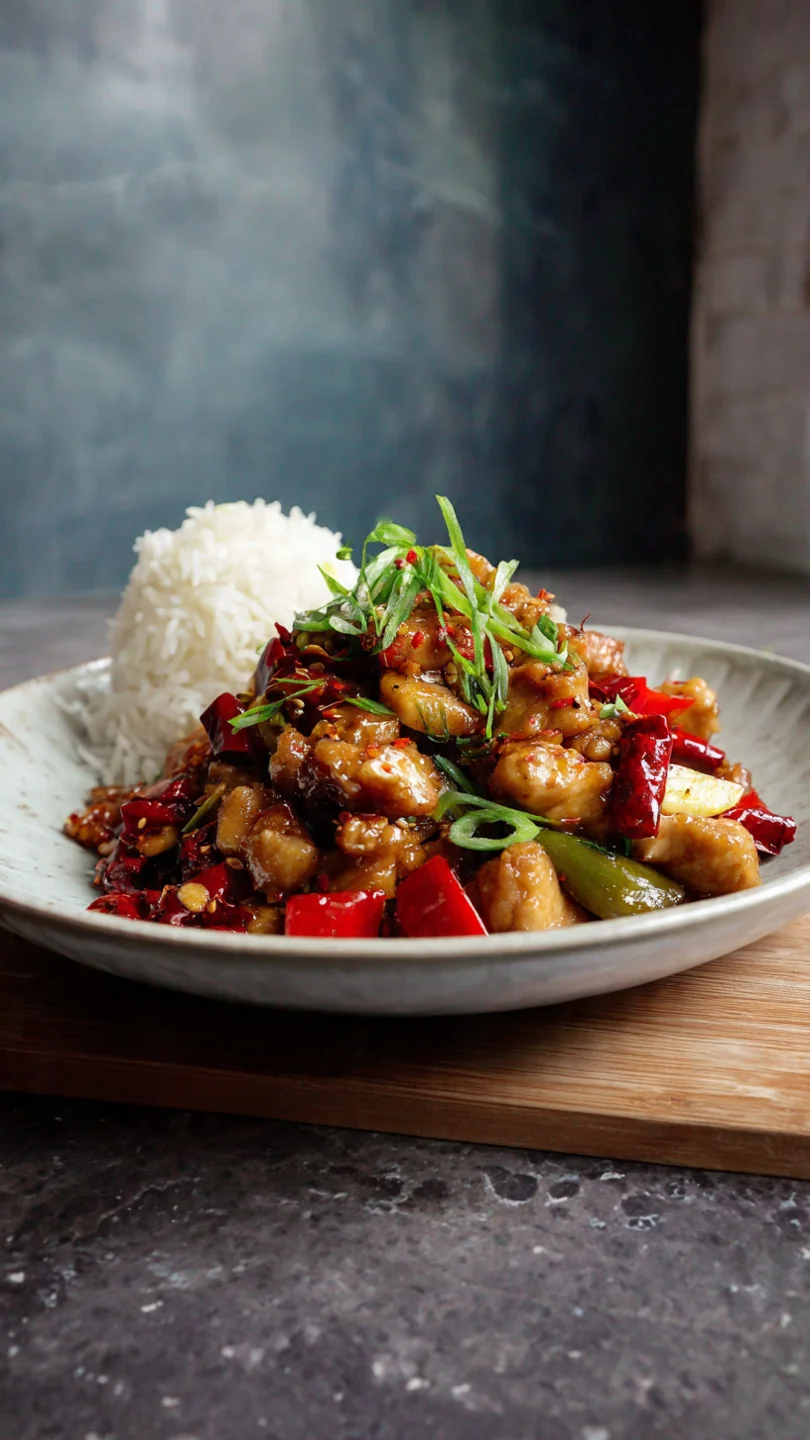
There’s a particular magic to a perfectly executed stir-fry. The sizzle as ingredients hit the scorching hot wok, the rapid transformation of raw components into a cohesive, aromatic dish, and that first bite where sweet, sour, salty, and spicy notes hit your palate in perfect harmony. Kung Pao Chicken is the poster child for this magic.
Forget the gloopy, overly sweet takeout versions. My goal is to show you how to create an authentic, vibrantly flavored Kung Pao Chicken at home that comes together faster than delivery could ever arrive. The result is tender, velvety chicken, a glossy, complex sauce that clings perfectly, and the addictive crunch of peanuts with the subtle tingle of Sichuan peppercorns.
This recipe is designed for success, whether it’s your first or fiftieth stir-fry.
- Authentic Flavor Balance: We use the traditional combination of Chinkiang vinegar, soy, and sugar for that iconic sweet-sour base, elevated with the ‘ma la’ (numbing-spicy) sensation from Sichuan peppercorns.
- Restaurant-Quality Texture: The simple technique of velveting the chicken with cornstarch guarantees juicy, tender bites every single time, just like your favorite Chinese restaurant.
- Faster Than Takeout: From fridge to table in under 30 minutes, this is a weeknight hero. The active cooking time is only about 12 minutes.
- Highly Customizable: Easily adjust the heat level, swap proteins, or make it gluten-free with a few simple substitutions without sacrificing depth of flavor.
- One-Pan Wonder: Cook everything in a single wok or skillet, meaning flavor layers build beautifully and cleanup is a breeze.
Ingredients You’ll Need
- Let’s gather our ingredients—this is where the magic starts. Authenticity in Kung Pao Chicken comes from a few key players, but don’t worry if your pantry isn’t fully stocked with Chinese ingredients; I’ll give you solid alternatives.
The foundation is the chicken. I strongly recommend boneless, skinless chicken thighs over breasts. Thighs have more fat, which means they stay incredibly juicy and forgiving during the high-heat stir-fry process.
For the marinade, you’ll need Shaoxing wine, a Chinese cooking wine that adds a subtle, fermented sweetness. Dry sherry is a perfect substitute. Light soy sauce and a touch of sesame oil round out the marinade, and cornstarch is the critical ingredient for “velveting,” creating a protective coating that seals in moisture.
The sauce is a symphony of five flavors. You’ll need more light soy sauce for saltiness, Chinkiang vinegar for its distinctive malty, sour punch (balsamic vinegar can work in a pinch), hoisin sauce for sweet depth, and granulated sugar to balance the acidity. A final bit of cornstarch mixed with water creates a slurry to thicken the sauce to a glossy, clingy consistency.
The aromatics and garnishes define the dish. Dried red chilies (Sichuan are ideal) provide the heat and a beautiful visual pop. Sichuan peppercorns are non-negotiable for that unique citrusy, tingling numbness.
Fresh garlic and ginger form the aromatic base, while scallions add freshness and color. Finally, roasted, unsalted peanuts give you that essential crunch. Have all your ingredients chopped, measured, and lined up before you turn on the heat—this “mise en place” is the stir-fry cook’s best friend.

Note: You’ll find the complete list of ingredients, along with their exact measurements, in the printable recipe card at the bottom of this post.

Kitchen Equipment Needed
You don’t need a professional kitchen to nail this recipe. A large, heavy-bottomed skillet or Dutch oven will work beautifully if you don’t have a wok. The key is a pan that can hold and distribute high heat efficiently.
You’ll also need a sharp chef’s knife for easy chopping, a few small bowls for organizing your prepped ingredients (this is crucial!), and a wooden spatula or turner that won’t scratch your cooking surface. A pair of tongs is helpful for removing the seared chicken. That’s really it—simple tools for a spectacular result.
How to Make Kung Pao Chicken Recipe
Step 1: Marinate and Velvet the Chicken
In a medium bowl, combine your cubed chicken thighs with the Shaoxing wine, soy sauce, cornstarch, and sesame oil. Use your hands to mix it thoroughly, ensuring every piece is lightly coated in the starchy marinade. Trust me, this 10-minute rest is transformative.
The cornstarch forms a delicate barrier on the chicken that prevents it from seizing up and becoming tough during the fierce heat of stir-frying, a technique called “velveting.” While it marinates, you can calmly prep everything else.
Step 2: Prepare the Sauce and Slurry
Now, let’s build the flavor foundation. In a small bowl, whisk together the light soy sauce, Chinkiang vinegar, hoisin sauce, and sugar until the sugar dissolves. Take a moment to taste it—you should get a powerful hit of salty, sweet, and sour.
In another tiny bowl or cup, mix the cornstarch with cold water until it’s completely smooth with no lumps. This slurry is our thickening agent. Having these ready to go means you won’t be scrambling when the wok is screaming hot.
Step 3: Sear the Chicken
Place your wok or skillet over the highest heat your stove can produce. Let it get seriously hot until a drop of water vaporizes on contact. Add a portion of the neutral oil and swirl it to coat the pan.
Add the marinated chicken in a single layer and resist the urge to stir for a full minute! This creates a flavorful sear. Then, stir-fry vigorously for 3-4 minutes until the chicken is just cooked through but still tender.
Tip from me: remove it to a clean plate now. It will finish cooking later in the sauce, preventing overcooking.
Step 4: Bloom the Chilies and Aromatics
Add the remaining oil to the hot wok. Immediately toss in the dried chilies and Sichuan peppercorns. Stir-fry them for about 30 seconds until incredibly fragrant and the chilies darken slightly—be careful not to burn them, or they’ll turn bitter.
This step, called “blooming,” infuses the oil with their essential flavors. Now add the minced garlic, ginger, and the white parts of the scallions. The sizzle and aroma at this moment are what cooking dreams are made of.
Stir-fry for another 30 seconds until fragrant.
Step 5: Create the Glossy Sauce
Give your pre-mixed sauce another quick stir and pour it into the center of the wok. It will bubble and reduce rapidly. Now, stir your cornstarch slurry (it settles) and drizzle it in while stirring constantly.
Believe me, watching the liquid transform into a thick, glossy, coating sauce in about 60 seconds is deeply satisfying. The sauce should coat the back of a spoon cleanly.
Step 6: Combine, Garnish, and Serve
Return the cooked chicken and any juices on the plate back to the wok. Add the scallion greens and the roasted peanuts. Now comes the fun part: tossing everything together for a final 1-2 minutes until the chicken is reheated and luxuriously coated in that shiny sauce.
The peanuts will soften slightly but retain their crunch. Step back and admire your work, then serve it immediately over fluffy steamed rice.
A few chef-level insights will elevate your stir-fry from good to exceptional.
- The High-Heat Principle: Your wok must be smoking hot before you add any food. If it’s not hot enough, the ingredients will stew in their own juices instead of searing, leading to a soggy, steamed texture. Preheat your pan for a good 3-4 minutes.
- Velveting is Key: Don’t skip the cornstarch in the marinade. This is the single most important technique for achieving the tender, silky texture associated with restaurant stir-fries. It’s a simple step with a dramatic payoff.
- Manage Your Oil Temperature: When you add the dried chilies and Sichuan peppercorns, the oil should be hot but not smoking excessively. If it’s too hot, they’ll burn in seconds and impart a bitter flavor. If the oil isn’t hot enough, their flavors won’t properly release into the oil.
- The Cornstarch Slurry Rule: Always mix cornstarch with cold water to prevent instant clumping. Add it to the bubbling sauce and stir constantly. The sauce will thicken as it comes back to a boil. If it gets too thick, just add a splash of water or chicken stock to loosen it.
Recipe Variations & Customizations
- This recipe is a fantastic template. Feel free to make it your own with these tested variations.
- Vegetarian Kung Pao: Replace the chicken with extra-firm tofu or a mix of king oyster mushrooms and cubed seitan. Press the tofu well and dust it with cornstarch before pan-frying for a crispy exterior.
- Gluten-Free Adaptation: Use tamari or a certified gluten-free soy sauce in place of regular soy sauce, and ensure your hoisin sauce is a gluten-free brand. The flavor profile remains intact.
- Extra Vegetable Boost: Add a cup of diced bell peppers (any color) or zucchini with the aromatics. For leafy greens like bok choy, add them in the final minute of cooking just to wilt.
- Nut-Free Version: Substitute the peanuts with toasted sunflower seeds or cashews (if tree nuts are okay). For a completely nut-free dish, use roasted chickpeas for crunch.
- Adjustable Heat Level: For mild, use 2-3 dried chilies and remove the seeds before adding. For extreme heat, add 1-2 teaspoons of Sichuan chili crisp (Lao Gan Ma) with the sauce.
- Pork or Shrimp: Thinly sliced pork tenderloin or medium-sized peeled shrimp work beautifully. Adjust cooking time—shrimp will only need 1-2 minutes per side.
What to Serve With This Recipe
Kung Pao Chicken is a complete meal when served over a bed of steamed jasmine or white rice, which soaks up the incredible sauce. For a lighter option, try it with cauliflower rice. To create a fuller Chinese-inspired spread, pair it with a simple, clean side to balance the bold flavors.
Quick-pickled cucumber slices or a blanched vegetable like broccoli or gai lan (Chinese broccoli) are perfect. For soup, a light egg drop soup or hot and sour soup makes a great starter. Beverage-wise, a slightly sweet and aromatic jasmine tea or a crisp lager complements the spice and richness beautifully.
Storage & Make-Ahead Instructions
- Proper storage ensures your leftovers taste just as good the next day.
- Refrigerator Storage: Cool the Kung Pao Chicken completely, then transfer it to an airtight container. It will keep well in the refrigerator for up to 3 days. The peanuts will soften slightly, but the flavor will deepen.
- Freezing is Not Recommended: Due to the peanuts and the cornstarch-thickened sauce, this dish does not freeze well. The texture of the peanuts becomes unpleasantly soggy, and the sauce may separate upon reheating.
- Best Reheating Method: Reheat gently in a skillet over medium-low heat with a tiny splash of water or chicken stock to loosen the sauce. Stir frequently until heated through. Avoid the microwave if possible, as it can make the chicken rubbery and overcook the vegetables.
- Make-Ahead Strategy: You can marinate the chicken (up to 24 hours) and prep all the sauce ingredients, aromatics, and garnishes the day before. Store each component separately in the fridge. When ready to cook, everything comes together in minutes.
Frequently Asked Questions
Q: Can I use chicken breasts instead of thighs?
Yes, but be extra vigilant. Chicken breasts cook faster and dry out more easily. Reduce the initial sear and stir-fry time by 1-2 minutes, and consider cutting them slightly larger to compensate.
Q: My sauce turned out too thick. How can I fix it?
No problem! Simply add warm water or chicken stock, one tablespoon at a time, to the wok while stirring over low heat until the sauce reaches your desired consistency.
Q: I can’t find Sichuan peppercorns. What can I use?
While you’ll miss the signature “ma la” tingle, you can add a teaspoon of crushed red pepper flakes when you add the dried chilies for heat, and a strip of lemon or orange zest (removed before serving) for a hint of citrus aroma.
Q: Is this recipe very spicy?
It has a noticeable kick, but the heat is adjustable. The recipe as written provides a medium spice level. For mild, use fewer chilies and remove the seeds.
The real warmth comes from the chilies, while the Sichuan peppercorns provide a tingling sensation, not pure heat.
Q: Can I make this without alcohol?
Absolutely. Substitute the Shaoxing wine with an equal amount of chicken broth or stock, adding an extra 1/4 teaspoon of sugar to balance the flavor.
Q: Why did my chicken stick to the wok?
This usually means the wok wasn’t hot enough before adding the oil and chicken, or you didn’t use enough oil to create a non-stick layer. Ensure your pan is smoking hot and that you’re using a high-smoke-point oil like peanut or vegetable.
Q: How do I know when the chicken is cooked through?
The safest way is to use an instant-read thermometer. Chicken is safe to eat at 165°F (74°C). Visually, it should be opaque all the way through with no pink in the center.
Final Thoughts
Mastering a dish like Kung Pao Chicken at home is one of the most rewarding kitchen experiences. It demystifies takeout favorites and empowers you to control the quality, spice level, and ingredients. This recipe delivers that iconic balance of flavors and textures—tender chicken, glossy sauce, crunchy peanuts, and that addictive Sichuan tingle—all in less time than it takes for a delivery driver to find your house.
The techniques you learn here, from velveting to high-heat stir-frying, are foundational and will improve all your quick-cooking meals. I encourage you to give it a try, make it your own with the variations, and most importantly, enjoy the process and the delicious results. I’d love to hear how your Kung Pao Chicken turns out—share your creation and any questions you have!

Kung Pao Chicken
- Author: Maren
- Prep Time: 15 minutes
- Cook Time: 12 minutes
- Total Time: 27 minutes
- Yield: 4 servings
- Category: Main Course
- Cuisine: Chinese
Description
This authentic Kung Pao Chicken delivers the perfect balance of sweet, sour, salty, and spicy in under 30 minutes. Featuring tender marinated chicken, crunchy peanuts, and a glossy, complex sauce.
Ingredients
Instructions
-
In a medium bowl, combine the cubed chicken, Shaoxing wine, 1 tbsp soy sauce, 1 tbsp cornstarch, and sesame oil. Mix thoroughly until every piece is coated. Let it marinate for at least 10 minutes while you prep the other ingredients. This 'velveting' step with cornstarch is the secret to that silky, restaurant-quality texture.
-
Whisk together the sauce ingredients: 1/4 cup light soy sauce, Chinkiang vinegar, hoisin sauce, and sugar in a small bowl. In a separate tiny bowl, mix the 2 tsp cornstarch with 2 tbsp water to create a smooth slurry. Having everything measured and ready (your 'mise en place') is non-negotiable for a successful, fast stir-fry.
-
Heat your wok or large skillet over high heat until it's smoking lightly. Add 2 tbsp of the neutral oil. Add the marinated chicken in a single layer and let it sear undisturbed for 1 minute to develop color. Then stir-fry for 3-4 minutes until just cooked through. Remove the chicken to a clean plate.
-
Add the remaining 2 tbsp oil to the hot wok. Immediately add the dried chilies and Sichuan peppercorns. Stir-fry for 30 seconds until fragrant—be careful not to burn them. Add the garlic, ginger, and scallion whites, stir-frying for another 30 seconds until aromatic.
-
Give your prepared sauce a quick stir and pour it into the wok. It should bubble and thicken almost immediately. Add the cornstarch slurry and stir constantly for about 60 seconds until the sauce becomes glossy and coats the back of a spoon.
-
Return the cooked chicken and any accumulated juices to the wok. Add the scallion greens and roasted peanuts. Toss everything together for 1-2 minutes until the chicken is heated through and beautifully coated in sauce. Serve immediately over steamed rice.
Notes
- Chef's Tips:
- For a less spicy version, remove the seeds from the dried chilies before adding.
- The key to stir-fry is high heat and constant motion—don't walk away!
- Serve in a shallow bowl to showcase the vibrant sauce and garnishes.
- Food Safety:
- Ensure chicken reaches an internal temperature of 165°F (74°C)
- Do not leave cooked chicken at room temperature for more than 2 hours


