
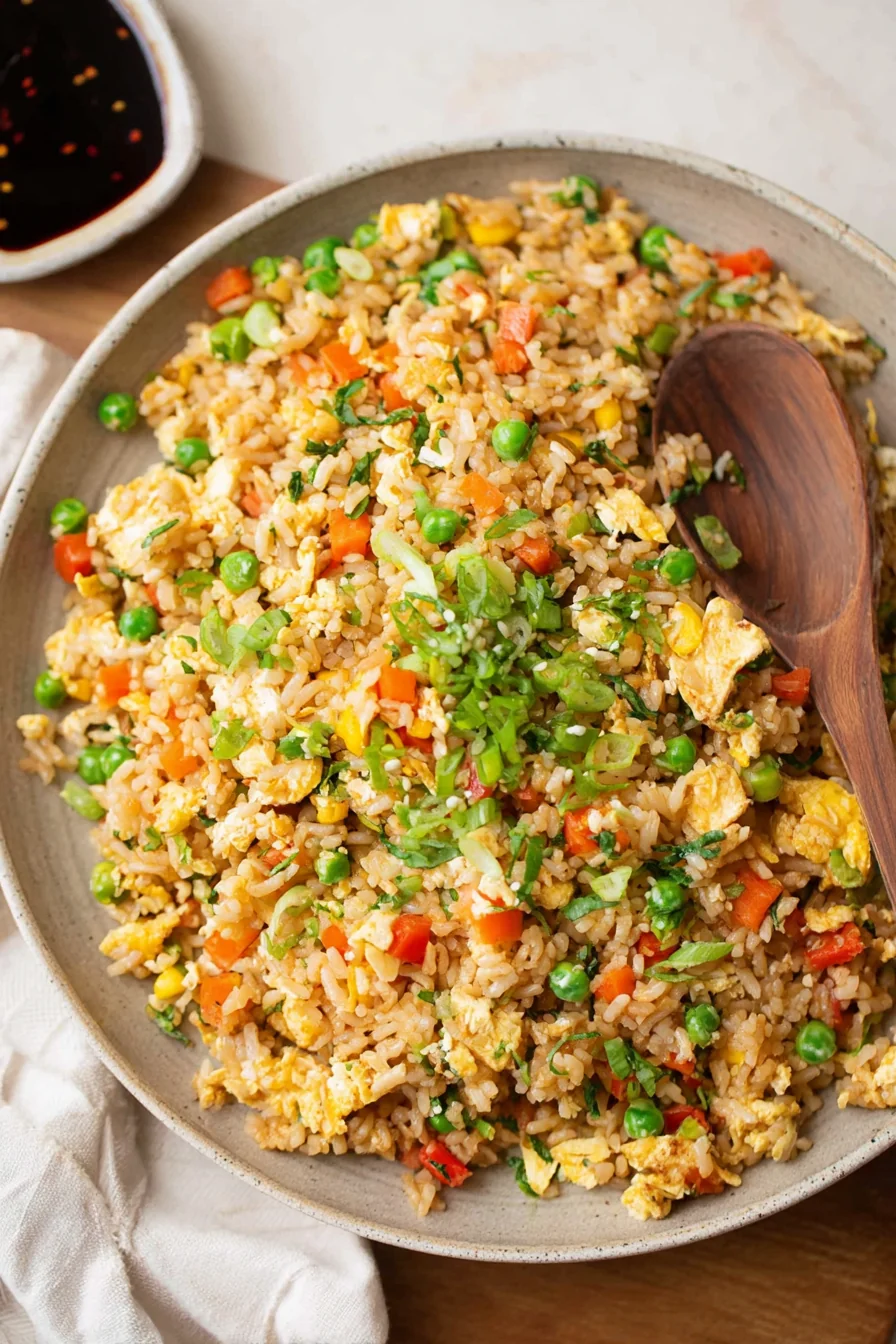
Why You’ll Love This Recipe
- One-pan convenience: This dish is perfect for busy cooks as it requires minimal cleanup.
- Big flavor, fast: With the right combination of ingredients, you can create a restaurant-quality meal in just 30 minutes.
- Waste reduction: Turn your leftovers into something delicious, reducing food waste and saving money.
- Customizable: Easily adapt the recipe to suit your taste or dietary preferences.
- Nutrient-rich: Packed with protein and vegetables, this dish is both satisfying and nutritious.
- Family-friendly: A hit with kids and adults alike, making it a great option for family dinners.
Ingredients & Preparation Notes
- Cooked rice: Use day-old rice for the best texture. Freshly cooked rice can become mushy when stir-fried.
- Mixed vegetables: Choose a variety of colors and textures for a more appealing dish. Frozen mixed vegetables work well and are convenient.
- Cooked protein: Leftover chicken, shrimp, or tofu are great options. Ensure they are reheated to 165°F (74°C) for safety.
- Soy sauce: Opt for low-sodium to control the saltiness of the dish. Tamari is a good gluten-free alternative.
- Vegetable oil: Use a neutral oil with a high smoke point, like canola or peanut oil, for stir-frying.
- Eggs: Beaten eggs add richness and help bind the dish together.
- Garlic: Fresh garlic adds a robust flavor. Mince it finely for even distribution.
- Green onion: Adds a fresh, mild onion flavor and a pop of color.
- Sesame oil: A small amount enhances the flavor, but it’s optional if you don’t have it on hand.
- Salt and pepper: Adjust to taste, keeping in mind the saltiness from the soy sauce.
Professional Tips & Techniques
- Rice Preparation: Day-old rice works best because it has less moisture, resulting in a better texture when stir-fried. If using freshly cooked rice, spread it out on a tray and let it cool in the refrigerator for a few hours.
- Stir-Frying: Use a hot skillet or wok to ensure the ingredients cook quickly and retain their texture. Add ingredients in stages to prevent overcrowding and promote even cooking.
- Temperature Control: Maintain a medium-high heat to achieve the right level of caramelization without burning the ingredients. The skillet should be hot enough to sizzle when the oil is added.
- Seasoning: Add soy sauce gradually, tasting as you go. It’s easier to add more than to correct an overly salty dish.
- Visual Cues: The rice should be slightly crispy on the edges, and the vegetables should be tender but still have a slight crunch. The eggs should be fully cooked but still moist.
Recipe Variations
- Vegetarian Fried Rice: Omit the meat and add more vegetables like bell peppers, broccoli, and snap peas. Use tofu or edamame for added protein.
- Seafood Fried Rice: Use shrimp, scallops, or a mix of seafood. Add a splash of fish sauce for an authentic flavor.
- Spicy Fried Rice: Add chili flakes or sriracha for heat. Include sliced jalapeños or Thai chilies for an extra kick.
- Pineapple Fried Rice: Add diced pineapple for a sweet and tangy twist. Use cashews for crunch and a hint of curry powder for depth.
- Kimchi Fried Rice: Incorporate kimchi for a Korean-inspired version. Top with a fried egg for a traditional touch.
- Herb-Infused Fried Rice: Add fresh herbs like cilantro or basil for a burst of freshness. Consider using lemongrass or kaffir lime leaves for an aromatic variation.
- Low-Carb Fried Rice: Substitute cauliflower rice for traditional rice to reduce carbs. Ensure it’s well-drained to prevent sogginess.
- Breakfast Fried Rice: Add bacon and scrambled eggs, and serve with a drizzle of maple syrup for a unique breakfast twist.
Serving Suggestions
- Family Dinner: Serve as a main dish with a side of steamed or stir-fried vegetables for a complete meal.
- Party Appetizer: Offer as a party appetizer in small portions, garnished with sesame seeds and green onions.
- Lunch Box: Pack in a lunch box with a side of kimchi or pickled vegetables for a satisfying lunch.
- Presentation: Serve in a hollowed-out pineapple for an impressive presentation at gatherings.
- Pairing: Pair with a light soup like miso or egg drop soup for a balanced meal.
- Garnish: Top with a fried egg, sesame seeds, or chopped peanuts for added texture and flavor.
Storage & Make-Ahead Tips
- Refrigeration: Store leftover fried rice in an airtight container in the refrigerator for up to 3 days.
- Freezing: Fried rice freezes well for up to 3 months. Thaw in the refrigerator overnight before reheating.
- Reheating: Reheat in a skillet with a little oil to restore the texture, or microwave with a splash of water to prevent drying out.
- Make-Ahead: Prepare the ingredients ahead of time and store them separately. Assemble and cook the fried rice just before serving for the best results.
Frequently Asked Questions
Q: Can I use freshly cooked rice?
A: While day-old rice is preferred, you can use freshly cooked rice if you spread it out to cool and dry for a few hours in the refrigerator.
Q: What vegetables work best in fried rice?
A: Any vegetables that you enjoy can work well. Common choices include carrots, peas, corn, bell peppers, and broccoli.
Q: Can I make this recipe vegetarian?
A: Absolutely, simply omit the meat and add more vegetables or tofu for a vegetarian version.
Q: How can I make this dish gluten-free?
A: Use tamari instead of soy sauce and ensure all other ingredients are gluten-free.
Q: Can I add other sauces or seasonings?
A: Yes, feel free to experiment with oyster sauce, hoisin sauce, or a dash of fish sauce for added depth of flavor.
Q: What’s the best way to reheat fried rice?
A: Reheat in a skillet with a little oil to restore the texture, or microwave with a splash of water to prevent drying out.
Q: Can I use brown rice instead of white?
A: Yes, brown rice works well but may require a bit more oil and a longer cooking time to achieve the right texture.
Q: How can I prevent the rice from becoming mushy?
A: Use day-old rice and avoid over-stirring. Cook on high heat to quickly sear the rice and maintain its texture.
Conclusion
Leftover fried rice is a versatile and delicious way to use up what you have in your fridge. This chef-tested recipe ensures you get the best results every time, with tips and variations to suit any taste or dietary need. Give it a try and transform your leftovers into a meal that’s both satisfying and sustainable.
Don’t forget to share your creations on social media and let us know how it turned out! Enjoy your meal with a side of your favorite pickled vegetables for an extra burst of flavor.
Leftover Fried Rice
Equipment
- Large skillet or wok
- Spatula
- Measuring cups and spoons
Ingredients
- 2 cups cooked rice preferably day-old
- 1 cup mixed vegetables carrots, peas, corn, etc.
- 1 cup cooked protein chicken, shrimp, tofu, etc.
- 2 tbsp soy sauce low-sodium preferred
- 1 tbsp vegetable oil
- 2 eggs beaten
- 2 cloves garlic minced
- 1 green onion sliced
- 1 tsp sesame oil optional
- to taste salt and pepper
Instructions
- Heat the vegetable oil in a large skillet or wok over medium-high heat. Add the minced garlic and sauté for about 30 seconds until fragrant.
- Add the mixed vegetables to the skillet and stir-fry for 2-3 minutes until they start to soften. Push the vegetables to one side of the skillet.
- Pour the beaten eggs into the other side of the skillet and scramble until just set, about 1-2 minutes. Mix the eggs with the vegetables.
- Add the cooked rice to the skillet, breaking up any clumps. Stir-fry for 2-3 minutes, ensuring the rice is evenly heated.
- Add the cooked protein to the skillet and mix well with the rice and vegetables. Pour in the soy sauce and continue to stir-fry for another 2 minutes.
- Remove the skillet from heat and stir in the sliced green onion and sesame oil, if using. Season with salt and pepper to taste.