
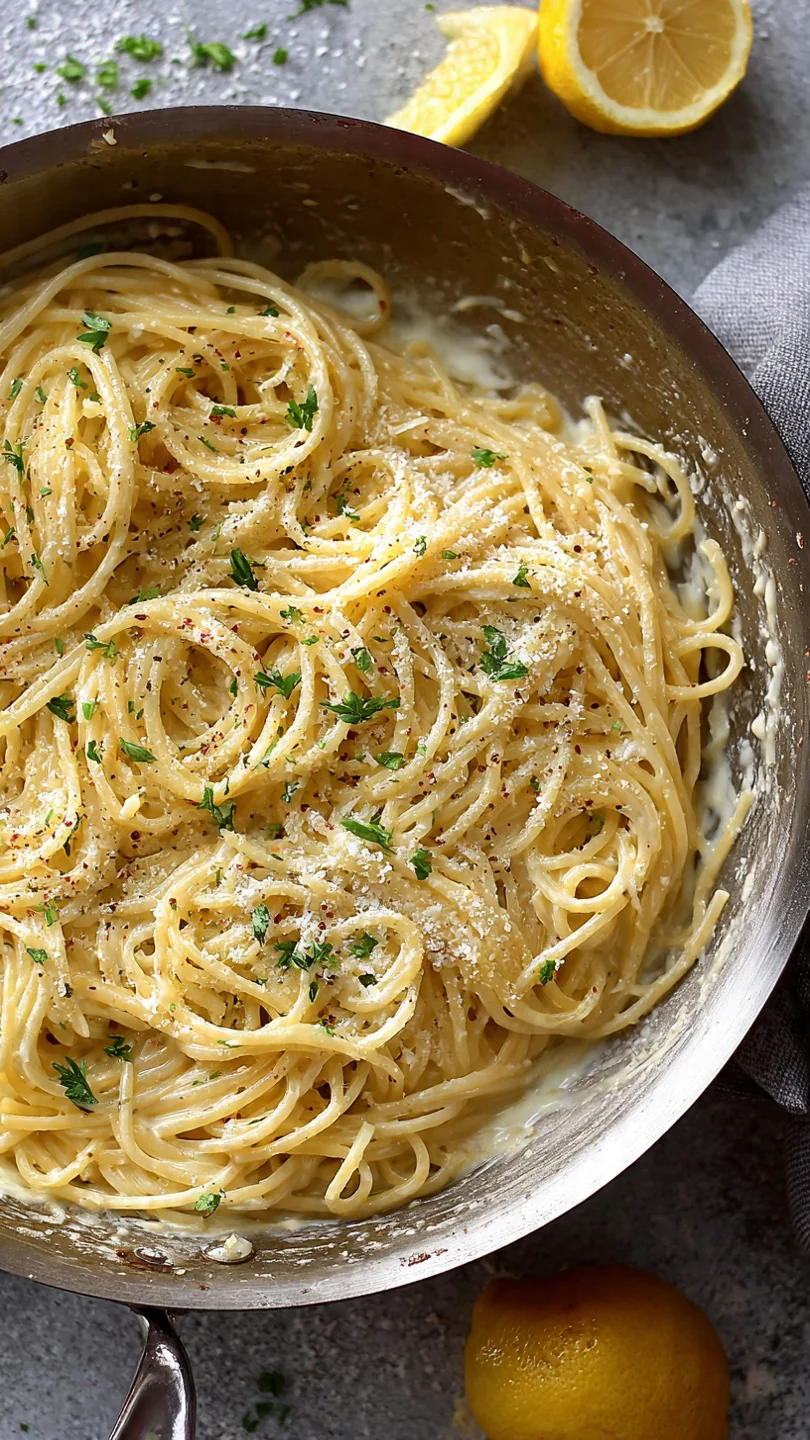
There’s a particular kind of kitchen magic that happens when simple, fresh ingredients are combined with intention. It’s the moment minced garlic sizzles gently in butter, releasing its pungent perfume, followed by the bright, sunny zing of lemon zest cutting through the richness. This lemon butter garlic pasta sauce is that magic, distilled into a 15-minute weeknight wonder.
As a chef, I’ve made countless pasta sauces, but this one holds a special place for its elegant simplicity and consistently dazzling results. It’s the recipe I turn to when I need a dinner that feels indulgent and special but demands minimal effort and pantry staples. You’ll end up with a luxuriously creamy, glossy sauce that clings to every strand of pasta, offering a perfect balance of rich butter, savory garlic, and vibrant citrus in every single bite.
This sauce is more than just a quick dinner; it’s a reliable culinary powerhouse. Here’s why it will become a staple in your rotation.
- 15-Minute Marvel: From stovetop to table in the time it takes to boil water and cook pasta. It’s faster than waiting for delivery.
- Pantry Hero: Built on ingredients you likely already have on hand—butter, garlic, cream, lemon, and Parmesan. No obscure shopping trips required.
- Restaurant-Quality at Home: Using a classic French technique of mounting with butter (monter au beurre) gives this sauce a professional, silky texture and glossy finish that rivals any Italian trattoria.
- Endlessly Customizable: This recipe is a perfect, flavorful base. It welcomes additions like shrimp, chicken, sun-dried tomatoes, or a handful of spinach with open arms.
- Crowd-Pleasing Flavor: The combination of rich, bright, and savory hits all the right notes, making it a guaranteed hit with both adults and kids.
- One-Pan Wonder: The sauce comes together in a single skillet, meaning less cleanup and more time to enjoy your meal.
Ingredients You’ll Need
- Let’s gather our ingredients—this is where the alchemy begins. Each component plays a specific role in building the sauce’s complex flavor and texture. Using high-quality versions of these simple staples makes a noticeable difference.
- Unsalted Butter: The foundation of richness and body. I recommend a high-quality European-style butter (like Kerrygold or Plugrá) for its higher fat content and superior flavor. Using unsalted butter allows you to control the final seasoning perfectly.
- Fresh Garlic: Please, for the love of all that is good, use fresh cloves. Pre-minced jarred garlic lacks the pungent, aromatic punch that defines this sauce. Mince it finely so it melts into the butter seamlessly.
- Heavy Cream: This is non-negotiable for the creamy body. Its high fat content (at least 36%) prevents curdling when the acid from the lemon is added and allows for a stable, luxurious emulsion. Don’t substitute with half-and-half or milk.
- Fresh Lemon: You’ll need both the zest and the juice. The zest contains potent citrus oils that deliver intense lemon fragrance without extra acidity, while the fresh juice provides the necessary bright, tangy kick. Zest the lemon first, then juice it.
- Parmesan Cheese: This is a critical ingredient for savory depth and helping to thicken the sauce. You must grate it yourself from a block. Pre-shredded cheese contains cellulose or other anti-caking agents that will leave your sauce grainy and prevent it from melting smoothly.
- Dried Pasta: A long, sturdy shape like fettuccine, linguine, or spaghetti is ideal for holding onto the creamy sauce. Cook it in well-salted water until al dente—it will finish cooking in the sauce.
- Fresh Parsley: More than just a pretty green sprinkle, the fresh parsley adds a necessary pop of color and a clean, herbal note that balances the richness.
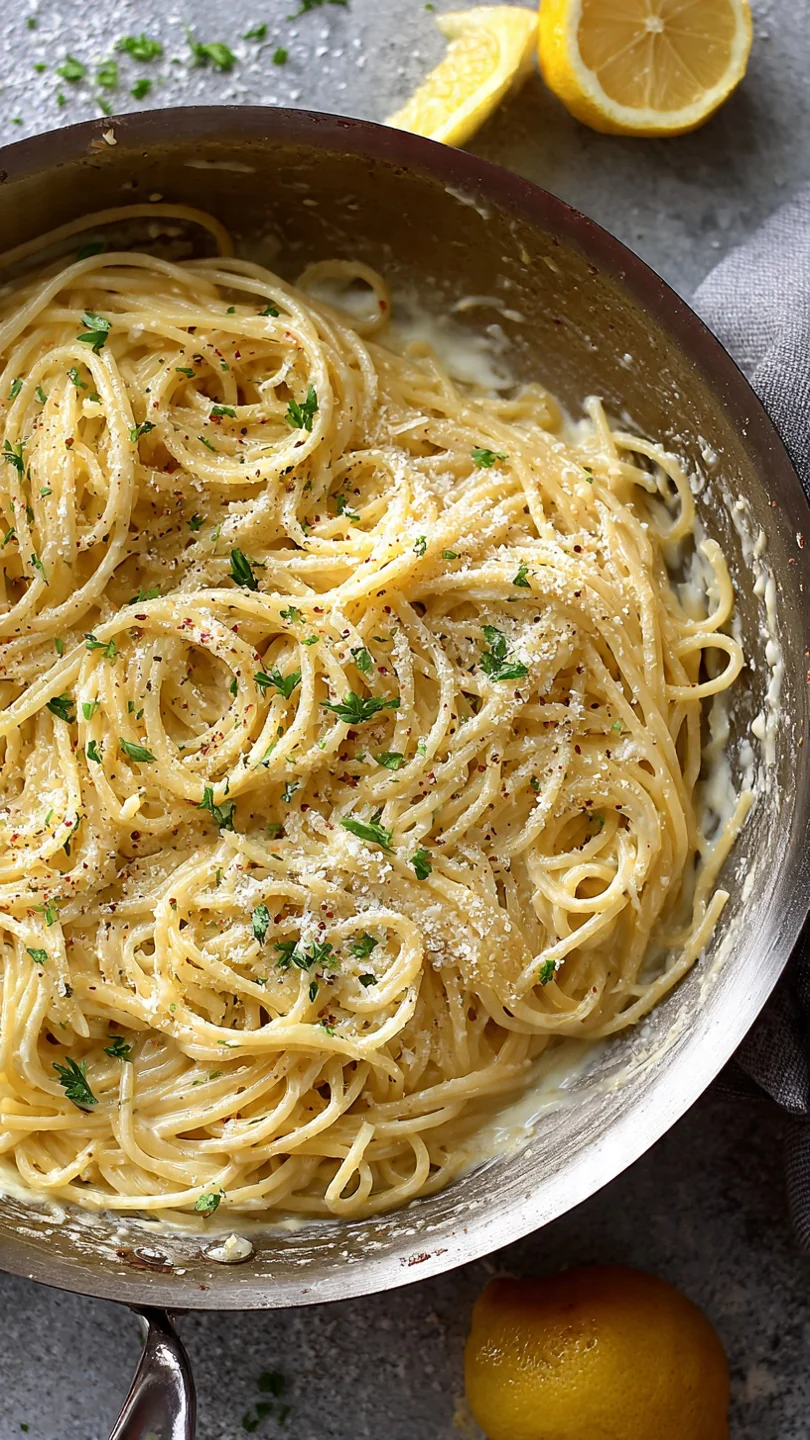
Note: You’ll find the complete list of ingredients, along with their exact measurements, in the printable recipe card at the bottom of this post.
Kitchen Equipment Needed
You don’t need any fancy gadgets for this recipe, just a few reliable kitchen workhorses.
- Large Pot & Skillet: You’ll need a large pot for boiling the pasta and a large skillet (at least 12 inches) or Dutch oven for making the sauce. The skillet needs to be big enough to eventually toss all the pasta with the sauce.
- Whisk: Essential for smoothly incorporating the butter and cheese into the cream base, creating that emulsified, silky texture.
- Tongs: The best tool for efficiently tossing the cooked pasta with the sauce in the skillet, ensuring even coating.
- Fine Grater or Zester: For getting the fluffy, perfect lemon zest without the bitter white pith underneath. The same grater can be used for the Parmesan cheese.
- Juicer or Reamer: To extract the maximum amount of juice from your lemon with minimal effort.
How to Make Lemon Butter Garlic Pasta Sauce Recipe
Step 1: Boil the Pasta & Save the Water
Bring a large pot of water to a rolling boil and salt it generously—it should taste like the sea. This is your only chance to season the pasta itself. Add your dried pasta and cook it according to the package directions for al dente, which means it will still have a slight bite.
Just before you drain it, this is the most important part: carefully scoop out about 1 1/2 cups of the starchy pasta cooking water. Trust me, this liquid is the secret weapon for creating a sauce that perfectly clings to your pasta. Set the water aside and drain the pasta.
Step 2: Gently Cook the Garlic
While the pasta boils, place your large skillet over medium-low heat. Add 4 tablespoons of the butter. Once it’s melted and foaming slightly, add all of your finely minced garlic.
Now, listen to your chef: cook this for only 60 to 90 seconds, stirring constantly. You want the garlic to become incredibly fragrant and soften, but you must avoid letting it take on any golden-brown color. Browned garlic turns bitter and will overpower the delicate balance of your sauce.
Believe me, low and slow is the only way here.
Step 3: Simmer the Cream Base
Pour the heavy cream into the skillet with the garlic butter. Increase the heat to medium and bring the mixture to a gentle simmer. Let it bubble quietly for 2-3 minutes, stirring occasionally.
You’ll notice it will reduce slightly and thicken enough to coat the back of a spoon. This step cooks out the raw cream flavor and concentrates the base, setting the stage for a luxuriously thick sauce.
Step 4: Mount the Sauce with Butter
Here’s the professional trick that makes this sauce shine. Reduce the heat to low. Take your remaining 2 tablespoons of cold butter and whisk it into the simmering cream one tablespoon at a time, making sure each is fully incorporated before adding the next.
This technique, called monter au beurre, finishes the sauce off the direct heat with cold butter, enriching it and giving it an irresistible glossy sheen and velvety mouthfeel.
Step 5: Finish with Lemon & Cheese
Remove the skillet from the heat entirely. This is crucial. Whisk in the lemon zest, lemon juice, grated Parmesan cheese, salt, and pepper.
The sauce will immediately thicken and become cohesive. If it looks too thick or tight, don’t panic—simply whisk in a splash of that reserved pasta water, a few tablespoons at a time, until it reaches a creamy, flowing consistency. The starch in the water acts as a magic binder.
Step 6: Toss, Serve, and Enjoy
Add the drained al dente pasta directly to the skillet with your beautiful sauce. Using tongs, lift, toss, and fold the pasta vigorously for a good 1-2 minutes. Add more pasta water as needed until every single strand is gloriously coated and the sauce clings perfectly.
Step back and admire your work, then dish it immediately into warmed bowls. Garnish with a final flourish of chopped fresh parsley for that perfect finish.
A few chef-driven insights will ensure your sauce is flawless every single time.
- The Garlic Rule: Always add garlic to butter over medium-low or low heat. Garlic burns in a flash over high heat, and burned garlic is irreparably bitter. If you see it browning, you’ve gone too far.
- Temperature Control for Citrus: Never add lemon juice to a dairy-based sauce over direct, active heat. The sudden acid can cause the proteins in the cream to curdle, creating a grainy texture. Always pull the pan off the burner first, then whisk in the juice.
- Pasta Water is Liquid Gold: The starchy water is not just for loosening the sauce; it’s an emulsifier. The starch helps bind the fat (butter and cream) with the water and acid (lemon), creating a stable, smooth, non-greasy sauce that coats instead of pools.
- Grate Your Own Cheese: I cannot stress this enough. Pre-shredded Parmesan will not melt properly. The additives used to keep it from clumping will also keep it from integrating into your sauce, leaving you with a gritty, separated mess.
- Serve Immediately: This is a “toss and serve” sauce. It doesn’t hold well for long periods as the pasta will continue to absorb the liquid. Have your plates warmed and your diners ready to eat for the best experience.
Recipe Variations & Customizations
- This recipe is a fantastic canvas. Here are some of my favorite tested twists.
- Protein Power: Add 1 pound of peeled shrimp or diced chicken breast to the skillet after cooking the garlic. Sauté until just cooked through, then remove and set aside before making the cream sauce. Stir back in at the end.
- Herb Garden: Stir in 1/4 cup of chopped fresh basil, chives, or thyme along with the parsley at the end. For a more robust flavor, add a sprig of rosemary or thyme to the garlic butter, then remove it before adding the cream.
- Spicy Arrabbiata Twist: Infuse the butter with 1/2 to 1 teaspoon of red pepper flakes when cooking the garlic for a warm, tingling heat that complements the lemon beautifully.
- Sun-Dried Tomato & Spinach: Add 1/2 cup of chopped oil-packed sun-dried tomatoes and a few large handfuls of fresh baby spinach to the sauce after adding the cream. Let the spinach wilt before proceeding.
- Vegan/Dairy-Free: Use a high-fat vegan butter and full-fat canned coconut cream. Substitute the Parmesan with 1/4 cup of nutritional yeast and a tablespoon of white miso paste for savory depth. The result is different but deliciously rich.
- Lighter Version: Substitute half the heavy cream with whole milk or half-and-half. The sauce will be slightly less rich and thick, but still very tasty. Do not use only milk, as it may not stabilize properly.
What to Serve With This Recipe
This rich and vibrant pasta is a complete meal on its own, but it pairs wonderfully with simple sides to create a balanced dinner.
For a light start, a simple Arugula Salad with a lemon vinaigrette, shaved Parmesan, and pine nuts echoes the main course’s flavors without competing. A side of Garlic Bread or Grilled Ciabatta is non-negotiable for sopping up every last drop of sauce from the plate. For a vegetable side, Roasted Asparagus or Sautéed Broccolini with a squeeze of lemon makes a perfect, easy companion.
In terms of drinks, a crisp, dry white wine like a Pinot Grigio or Sauvignon Blanc cuts through the richness beautifully, while a sparkling water with lemon is a refreshing non-alcoholic option. This dish is perfect for a casual yet impressive date night at home, a quick family dinner, or even as a elegant main for a small dinner party when you want to spend time with guests, not in the kitchen.
Storage & Make-Ahead Instructions
- This sauce is truly best served immediately, but with the right handling, leftovers can still be enjoyable.
- Refrigeration: Store any leftovers in an airtight container in the refrigerator for up to 3 days. The sauce will solidify when cold.
- Reheating: Gently reheat leftovers in a skillet over low heat. Add a splash of milk, cream, or water and stir frequently until warmed through. Avoid the microwave, as it can cause the sauce to separate.
- Freezing: I do not recommend freezing the completed sauce, as the dairy can separate and become grainy upon thawing.
- Make-Ahead Strategy: You can prep components to speed up dinner. Mince the garlic, zest and juice the lemon, grate the cheese, and chop the parsley ahead of time. Store each separately in the fridge. The actual sauce cooking should be done just before serving.
Frequently Asked Questions
Q: Can I use bottled lemon juice?
A: I strongly advise against it. Fresh lemon juice provides a bright, clean acidity. Bottled juice often has a flat, metallic, or preservative-laden taste that will throw off the delicate flavor balance of this simple sauce.
Q: My sauce looks thin and runny. What did I do wrong?
A: You likely added too much pasta water too quickly. The sauce will also thicken as it cools. To fix it, return the skillet to low heat and let it simmer gently for another minute or two to reduce.
You can also whisk in an extra tablespoon or two of grated Parmesan to help thicken it.
Q: Can I make this sauce without cream?
A: For a creamy texture, the heavy cream is essential. For a lighter, more broth-based sauce, you could try using all butter and about 1 cup of pasta water, vigorously whisking to create an emulsion. It will be more of a limone style sauce rather than a creamy one.
Q: What can I use instead of Parmesan cheese?
A: Pecorino Romano is a fantastic, sharper substitute. For a nuttier flavor, try Asiago. In a pinch, a high-quality Grana Padano will work.
Avoid pre-grated “Italian cheese blend” or non-refrigerated canisters.
Q: The sauce broke and looks greasy. Can I save it?
A: Yes! This usually happens if the heat was too high. Remove the pan from heat.
Add an ice cube or a tablespoon of cold cream and whisk vigorously. The rapid cooling can help re-emulsify the fats and liquids.
Q: Is it necessary to use unsalted butter?
A: Highly recommended. Salted butter varies greatly in salt content by brand. Using unsalted butter lets you control the final seasoning precisely with your kosher salt and the salty Parmesan.
Q: Can I add the pasta water directly from the pot while it’s boiling?
A: Absolutely, and you should! Just use a heatproof measuring cup or ladle to scoop it out before you drain the pasta. It’s hottest and has the most dissolved starch at that moment, making it most effective.
Final Thoughts
This lemon butter garlic pasta sauce embodies what I love most about cooking: transforming a handful of humble ingredients into something truly extraordinary with just a bit of knowledge and care. It’s a recipe that proves you don’t need complicated techniques or a long ingredient list to create a meal that feels special. The harmony of rich butter, aromatic garlic, and sunny lemon, all brought together with a chef’s simple tricks, results in a dish that’s both comforting and elegant.
I’ve served this to everyone from busy families to discerning foodie friends, and it never fails to impress. So, grab your skillet, zest that lemon, and get ready for one of the easiest, most rewarding cooking experiences in your repertoire. I’d love to hear how it turns out for you—tag me on social media or leave a comment with your own variations.
Now, go enjoy your well-deserved delicious dinner
Creamy Lemon Butter Garlic Pasta Sauce
Equipment
- Large pot for boiling pasta
- Large skillet or Dutch oven (at least 12 inches)
- Fine grater or zester
- Juicer or reamer
- Tongs for tossing pasta
- Whisk
Ingredients
- 1 pound dried pasta Long shapes like fettuccine, linguine, or spaghetti work best
- 6 tablespoons unsalted butter Divided; use high-quality European-style butter for best flavor
- 6 cloves garlic Finely minced or pressed
- 1 cup heavy cream Also called double cream; must be at least 36% fat
- 1 large lemon For zest and juice; zest first, then juice
- 1 cup finely grated Parmesan cheese Freshly grated from a block, not pre-shredded
- 1/4 teaspoon freshly ground black pepper Plus more to taste
- 1/4 teaspoon kosher salt Plus more for pasta water
- 1/4 cup fresh parsley Chopped, for garnish
Instructions
- Bring a large pot of generously salted water to a rolling boil. Add the pasta and cook according to package directions for al dente. Before draining, reserve 1 1/2 cups of the starchy pasta cooking water. This liquid gold is key to creating a silky, emulsified sauce.
- While the pasta cooks, melt 4 tablespoons of butter in a large skillet or Dutch oven over medium-low heat. Add the minced garlic and cook, stirring constantly, for just 60-90 seconds until fragrant but not browned. Browning the garlic will make it bitter. Tip from me: low and slow is the way to go for perfect garlic flavor.
- Pour the heavy cream into the skillet with the garlic butter. Increase the heat to medium and bring the mixture to a gentle simmer. Let it cook for 2-3 minutes, stirring occasionally, until it thickens slightly and can coat the back of a spoon.
- Reduce the heat to low. Vigorously whisk in the remaining 2 tablespoons of cold butter, one tablespoon at a time, until fully melted and incorporated. This technique, called mounting with butter (monter au beurre), gives the sauce a beautiful sheen and luxurious mouthfeel.
- Remove the skillet from the heat. Whisk in the lemon zest, lemon juice, grated Parmesan, salt, and pepper. The sauce will thicken immediately. If it seems too thick, whisk in a few tablespoons of the reserved pasta water to loosen it to a creamy, pourable consistency.
- Add the drained al dente pasta directly to the skillet with the sauce. Using tongs, toss and fold the pasta vigorously for 1-2 minutes, adding more reserved pasta water as needed, until every strand is gloriously coated. The starch from the water helps the sauce cling to the pasta. Serve immediately, garnished with fresh parsley.