
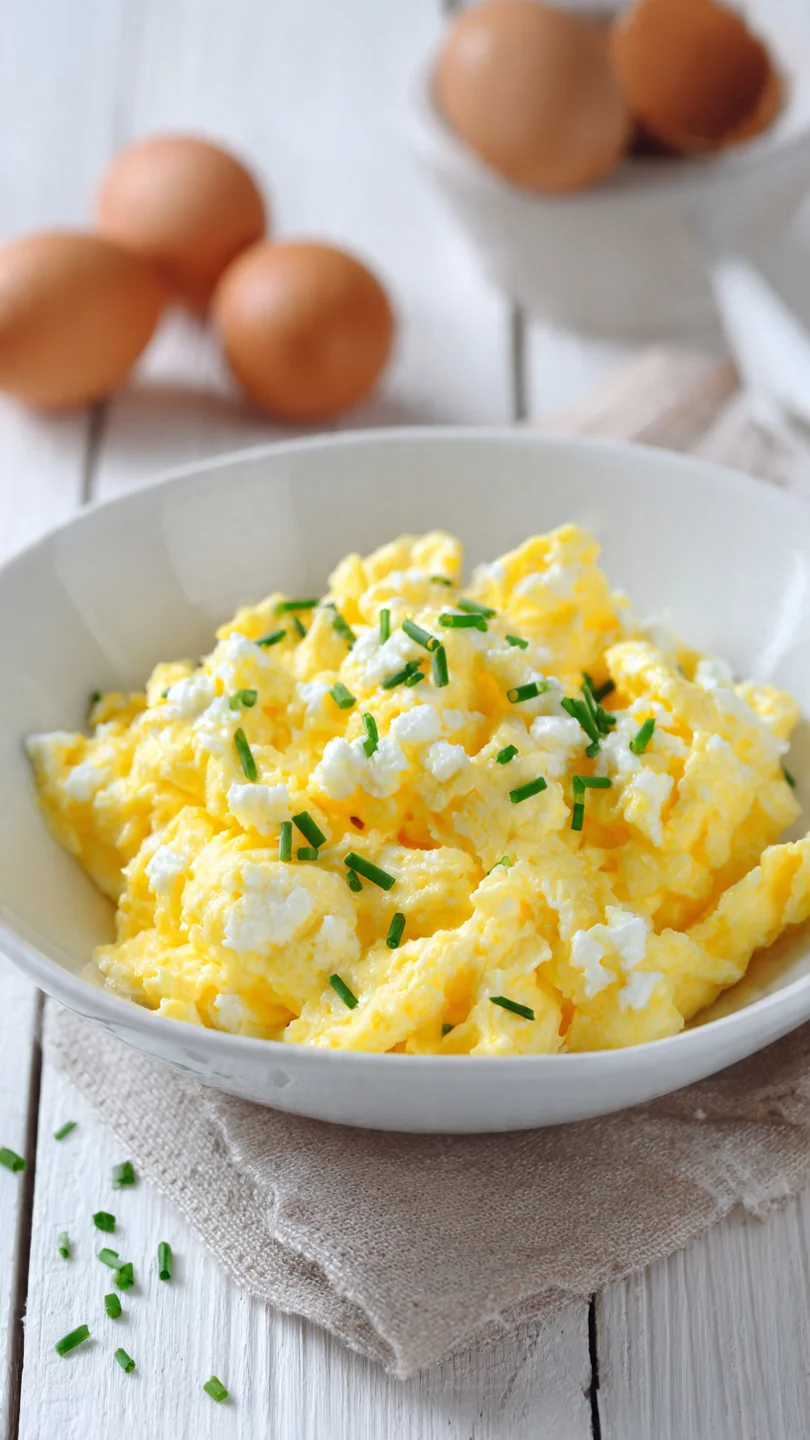
There’s scrambled eggs, and then there are these scrambled eggs. You know the ones I mean—the impossibly fluffy, creamy, cloud-like eggs you might order at a great brunch spot. For years in professional kitchens, we used a splash of cream or crème fraîche to achieve that luxurious texture.
But my secret for home cooks is even simpler, more nutritious, and probably already in your fridge: cottage cheese. This recipe isn’t just about adding a healthy ingredient; it’s a complete technique overhaul that guarantees the most tender, rich, and satisfying scrambled eggs you’ll make at home, all in about 10 minutes. Let’s get cooking.
This recipe turns a basic breakfast staple into something truly special. Here’s what makes it a keeper:
- Next-Level Fluffiness: The cottage cheese integrates into the eggs, creating steam pockets and a consistent creamy structure that prevents rubberiness.
- Protein Powerhouse: With over 20 grams of protein per serving, this breakfast will keep you full and energized all morning.
- Unbeatable Creaminess: Forget dry, crumbly eggs. The small curds of cottage cheese melt into the scramble, delivering a rich, velvety texture without needing heavy cream.
- Quick & Simple: From fridge to plate in 10 minutes with just a handful of ingredients, it’s the ultimate efficient, healthy breakfast.
- Incredibly Versatile: This method is a perfect base. It welcomes endless additions, from fresh herbs to sautéed vegetables, making it easy to customize.
- Meal-Prep Friendly: The mixture can be beaten and stored in the fridge overnight for an even faster morning.
Ingredients You’ll Need
- Let’s gather our simple ingredients—this is where humble pantry staples perform a little magic. The quality of your eggs and dairy makes a noticeable difference here, so opt for the best you can.
- Large Eggs: Four large eggs form the base. Using room-temperature eggs (let them sit out for 15 minutes) helps them cook more evenly and incorporate air more easily for a fluffier result.
- Full-Fat Cottage Cheese: I recommend small-curd, full-fat (4% milkfat) cottage cheese for the richest flavor and creamiest integration. Be sure to give it a quick drain if there’s excess liquid in the container.
- Unsalted Butter: We use butter in two stages: to cook and to finish. Its flavor is irreplaceable, but for a dairy-free version, ghee or a neutral oil like avocado oil works for the cooking fat.
- Kosher Salt & Black Pepper: Kosher salt disperses more evenly than table salt. Freshly cracked black pepper adds a essential aromatic bite.
- Fresh Chives: For garnish, their mild oniony flavor is the perfect fresh finish. Thinly sliced scallions (green parts) are a great substitute.
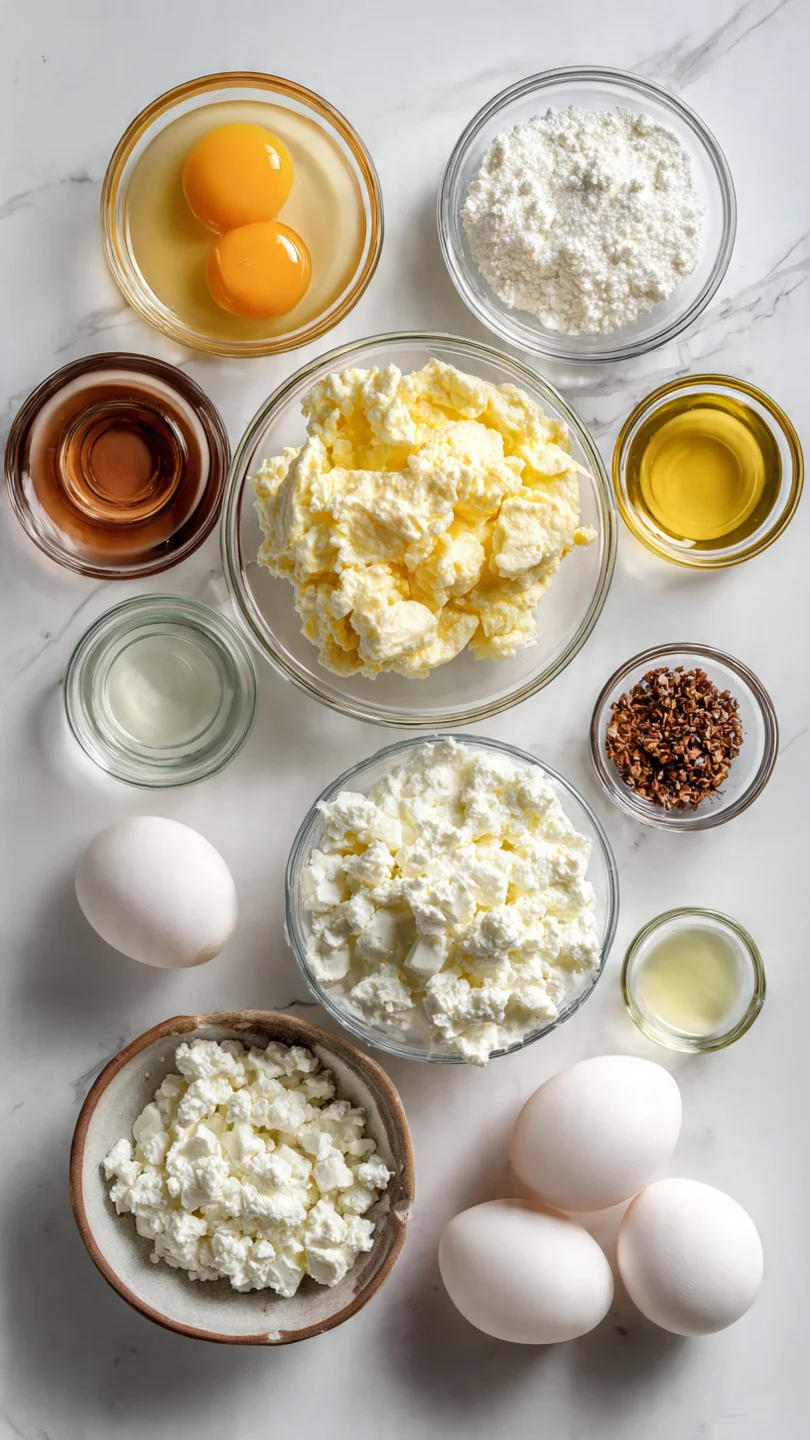
Note: You’ll find the complete list of ingredients, along with their exact measurements, in the printable recipe card at the bottom of this post.
Kitchen Equipment Needed
You don’t need any fancy gadgets for this recipe. A few key tools will set you up for success:
- A Medium Non-Stick Skillet (8 or 10-inch): This is non-negotiable for easy release and cleanup. A well-seasoned cast iron can work, but non-stick is foolproof.
- A Silicone Spatula: Its flexibility is perfect for gently folding the eggs into soft curds without scratching your pan.
- A Medium Mixing Bowl and a Fork or Whisk: For vigorously beating the eggs and cottage cheese together until perfectly blended.
How to Make Scrambled Eggs With Cottage Cheese Recipe
Step 1: Combine Eggs and Cottage Cheese
In your mixing bowl, crack the eggs and add the cottage cheese, salt, and pepper. Now, here’s the crucial part: beat this mixture vigorously with a fork for a full 60 seconds. Trust me, the timer matters.
You want it completely homogenous, with no distinct white blobs of cheese visible and a bit of froth on the surface. This ensures the cottage cheese is fully integrated, which is the secret to a uniformly creamy texture, not pockets of melted cheese.
Step 2: Gently Preheat the Pan
Place your non-stick skillet over medium-low heat. Add half of the butter. We’re not looking for a sizzle; the pan should just be warm enough to melt the butter slowly.
If the butter immediately browns, your pan is too hot. Swirl to coat the bottom. This gentle start is what allows the eggs to cook slowly and evenly, setting the stage for tenderness.
Step 3: Cook With Patience
Pour the egg mixture into the warmed pan. Let it sit undisturbed for about 20-30 seconds, just until you see a thin cooked layer forming at the edges. Now, using your spatula, begin pushing the cooked eggs from the edges toward the center.
Tilt the pan to let the uncooked liquid run into the empty spaces. Tip from me: Use slow, sweeping folds rather than a scrambling or stirring motion. You’re forming large, soft, luxurious curds.
Step 4: Finish With Butter Off the Heat
This is my favorite professional trick. When the eggs are mostly set but still look slightly wet and glossy on top (they will carryover cook), immediately remove the pan from the heat. Add that remaining pat of cold butter right into the skillet.
Gently fold it through the eggs. Believe me, the residual heat will melt the butter and finish cooking the eggs to the perfect, soft set, while also adding a gorgeous sheen and layer of flavor.
Step 5: Garnish and Serve Immediately
Transfer the scrambled eggs to warmed plates right away to halt the cooking process. Garnish generously with the fresh chopped chives. The contrast of the warm, creamy eggs and the cool, crisp herb is delightful.
Serve immediately while they are at their absolute peak of fluffiness and flavor.
A few insights from the kitchen can elevate your results from good to exceptional:
- Temperature is Everything: Medium-low heat is non-negotiable. High heat causes the proteins in the eggs and cottage cheese to tighten aggressively, forcing out moisture and leading to rubbery, dry, and sometimes grainy eggs.
- The “Wet” Finish: Remove the eggs from the heat when they still look a bit underdone. They continue to cook from residual heat, so pulling them at the “just-set-but-still-glossy” stage guarantees a creamy, not dry, final texture.
- Drain Your Cottage Cheese: If your cottage cheese is sitting in a lot of liquid, give it a quick drain in a fine-mesh strainer or press it with a paper towel. Excess liquid can make the final scramble slightly watery.
- Avoid Over-Stirring: Constant stirring breaks the eggs down into tiny, dry curds. The gentle push-and-fold method creates the large, soft, fluffy folds that make these eggs so special.
Recipe Variations
- This recipe is a fantastic canvas. Here are some of my favorite tested variations:
- “Everything Bagel” Eggs: Fold in 1 tablespoon of everything bagel seasoning with the eggs. Garnish with extra seasoning and a dollop of full-fat Greek yogurt.
- Green Goddess: Add 2 tablespoons of finely chopped fresh herbs (like dill, parsley, and chives) to the egg mixture. Serve with sliced avocado.
- Spicy Southwest: Sauté 2 tablespoons of diced bell pepper and onion in the butter before adding the eggs. Mix in a pinch of cumin and chili powder. Top with salsa and a sprinkle of cheddar.
- Smoked Salmon & Dill: After plating, top the eggs with 2 ounces of flaked smoked salmon, extra fresh dill, and a crack of black pepper.
- Truffle Indulgence: After removing from heat, fold in 1/2 teaspoon of truffle oil or a small spoonful of truffle zest along with the finishing butter.
- Dairy-Free/Vegan Adaptation: For a plant-based version, use a high-quality liquid egg substitute or scrambled tofu. Substitute the cottage cheese with 1/4 cup of plain, unsweetened vegan yogurt or silken tofu blended smooth.
What to Serve With This Recipe
These rich, fluffy eggs are a complete meal on their own, but they pair beautifully with a variety of sides to round out your breakfast or brunch:
For a classic plate, serve alongside buttered whole-grain toast, sourdough, or an English muffin to soak up any creamy goodness. Crispy hash browns or roasted breakfast potatoes provide a wonderful textural contrast. For a lighter, low-carb option, a simple side salad of arugula with a lemon vinaigrette cuts through the richness perfectly.
If you’re building a bigger brunch spread, these eggs complement crispy bacon, breakfast sausages, or even simple sliced tomatoes. For beverages, a fresh pot of coffee, a glass of orange juice, or a spicy Bloody Mary are all excellent choices.
Storage & Make-Ahead Instructions
- Scrambled eggs are always best served immediately, but with a few tricks, you can manage leftovers or get a head start.
- Refrigerating Leftovers: Store any cooled leftovers in an airtight container in the refrigerator for up to 2 days. The texture will become more dense and may release some moisture.
- Best Reheating Method: Reheat gently in a non-stick skillet over very low heat, stirring occasionally. You can add a tiny splash of water or milk to help reintroduce moisture. Avoid the microwave, as it tends to make them rubbery.
- Make-Ahead Tip: For a speedy morning, you can beat the eggs, cottage cheese, salt, and pepper together in a bowl, cover tightly, and refrigerate overnight. Give it a quick stir before cooking. The eggs may darken slightly but will cook just fine.
- Freezing is Not Recommended: The texture of thawed and reheated scrambled eggs, especially with dairy, becomes very watery and grainy.
Frequently Asked Questions
Q: Can I use low-fat or fat-free cottage cheese?
A: You can, but for the creamiest, richest result, full-fat (4% milkfat) cottage cheese is superior. Low-fat versions have more moisture and less fat, which can lead to a slightly less cohesive, more watery texture.
Q: Why did my eggs turn out watery?
A: Wateriness usually comes from one of two issues: the cottage cheese wasn’t well-drained of excess liquid, or the heat was too low and the eggs steamed rather than set properly. Ensure your pan is on a true medium-low and give the cottage cheese a quick drain if needed.
Q: Can I taste the cottage cheese in the final dish?
A: Not in a distinct “lumpy” way if you beat it thoroughly. The cottage cheese melts into the eggs, imparting a tangy creaminess and incredible moisture. The flavor is rich and savory, not overtly “cottage cheese-like.”
Q: What’s the best way to get really fluffy eggs?
A: The combination of vigorous initial beating (to incorporate air), medium-low heat (to cook gently and allow steam to expand), and the gentle folding technique (to preserve air pockets) is the trifecta for maximum fluffiness.
Q: Can I add other ingredients like cheese or vegetables?
A: Absolutely! For add-ins like shredded cheese, spinach, or diced tomatoes, stir them in during the last minute of cooking, just to warm through or wilt. For heartier vegetables like mushrooms or onions, sauté them in the butter first, then proceed with the egg mixture.
Q: Is this recipe keto-friendly?
A: Yes, when made with full-fat cottage cheese and butter, this recipe is an excellent high-fat, moderate-protein, low-carb breakfast suitable for a ketogenic diet.
Q: My cottage cheese seemed to separate. What did I do wrong?
A: Separation typically occurs if the heat is too high. High heat can cause the dairy proteins in the cottage cheese to tighten and “break,” releasing whey. Always cook over medium-low heat for a smooth, integrated texture.
Final Thoughts
This scrambled eggs with cottage cheese recipe is more than just a breakfast—it’s a masterclass in a simple technique that yields spectacular results. It proves that with one clever ingredient swap and a bit of patience on the stove, you can create a restaurant-quality dish in your own kitchen any day of the week. The payoff is immense: eggs that are consistently fluffy, deeply satisfying, and packed with protein to fuel your day.
I encourage you to try it exactly as written first to experience that perfect creamy texture, then have fun exploring the variations. Once you experience how foolproof and delicious this method is, I doubt you’ll go back to plain scrambled eggs. Give it a try this weekend, and don’t forget to come back and let me know how it turned out!
Fluffy Scrambled Eggs With Cottage Cheese
Equipment
- Medium non-stick skillet (8 or 10-inch)
- Silicone spatula or wooden spoon
- Medium mixing bowl
- Fork or whisk
Ingredients
- 4 large eggs preferably at room temperature
- 1/3 cup full-fat cottage cheese small curd, well-drained
- 1 tbsp unsalted butter divided
- 1/8 tsp kosher salt plus more to taste
- 1/8 tsp freshly ground black pepper plus more to taste
- 1 tbsp fresh chives finely chopped, for garnish
Instructions
- In a medium bowl, crack the 4 large eggs. Add the 1/3 cup of cottage cheese, 1/8 tsp kosher salt, and 1/8 tsp black pepper. Using a fork or whisk, beat the mixture vigorously for a full 60 seconds until it is completely homogenous and slightly frothy on top. This thorough incorporation is the key to a uniform, creamy texture.
- Place a medium non-stick skillet over medium-low heat. Add 1/2 tablespoon of the butter and let it melt, swirling to coat the pan. The pan should be warm, not sizzling hot. Pour in the egg and cottage cheese mixture. Let it sit undisturbed for 20-30 seconds to allow the bottom to just begin to set.
- Using a silicone spatula, begin gently pushing the eggs from the edges toward the center. Tilt the pan to let the uncooked egg run into the empty spaces. Continue this slow, gentle folding motion. The goal is to create large, soft curds. This process should take about 5-6 minutes total.
- When the eggs are mostly set but still look slightly wet and glossy (they will continue to cook off the heat), remove the skillet from the burner. Immediately add the remaining 1/2 tablespoon of cold butter and fold it in gently. The residual heat will melt the butter and finish cooking the eggs to perfect doneness.
- Transfer the scrambled eggs to warm plates immediately to stop the cooking. Garnish with the fresh chopped chives and an extra pinch of salt and pepper if desired. Serve right away while they are at their peak of fluffy, creamy perfection.