
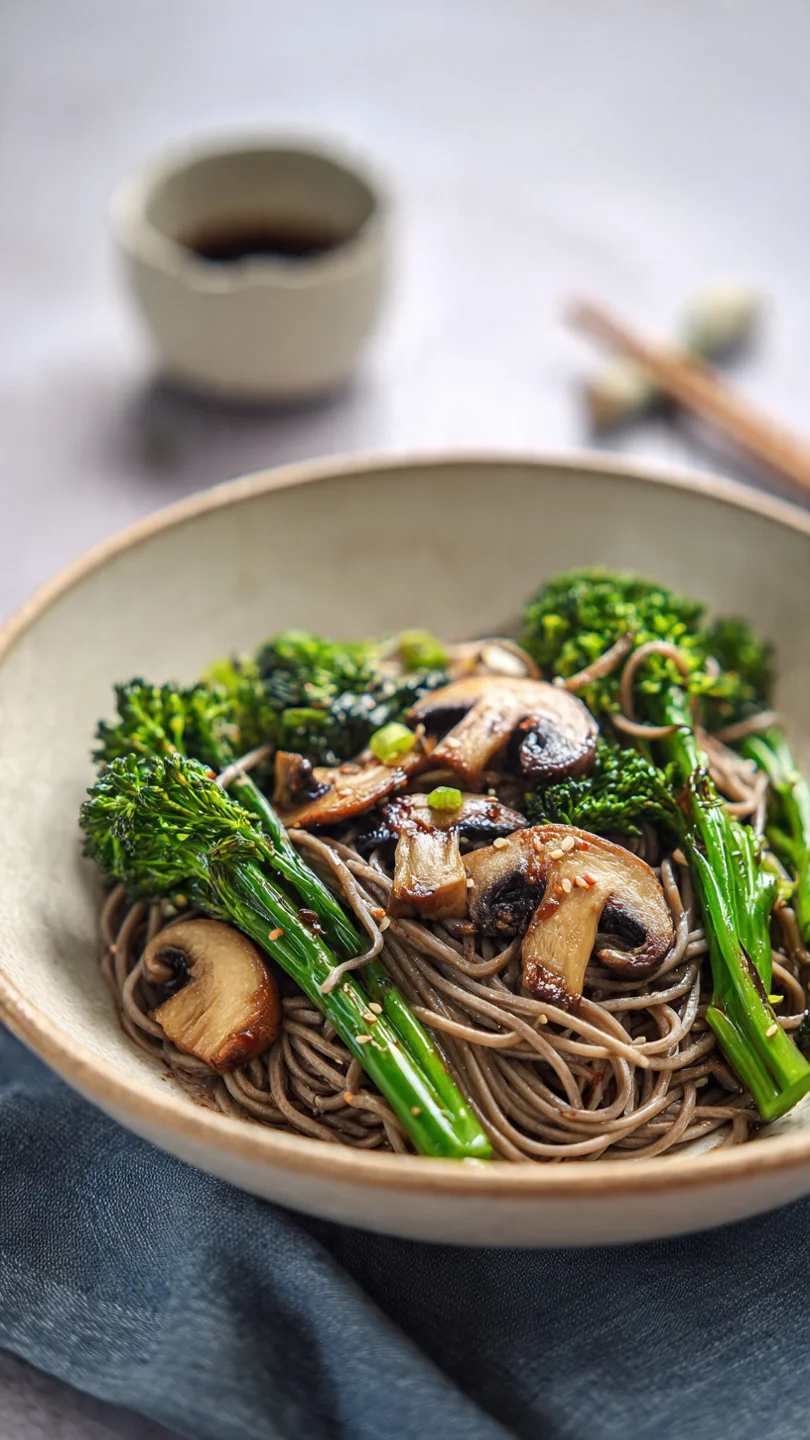
There’s a particular kind of magic that happens in a hot oven. Humble mushrooms transform, their moisture evaporating to concentrate their deep, savory essence into something almost meaty. Beside them, slender broccolini stalks char slightly at the tips, becoming sweet and crisp-tender.
Toss them with nutty, springy soba noodles and a glossy, homemade teriyaki glaze, and you have a dinner that’s greater than the sum of its parts. This is my go-to recipe when I crave something deeply satisfying, packed with umami, and on the table in the time it takes to watch a sitcom. It’s the perfect bridge between a hectic weeknight and the feeling of a well-crafted meal.
This dish earns a permanent spot in your rotation for so many practical reasons. After testing it multiple times in my own kitchen, here’s what makes it truly special:
- 30-Minute Timeline: From preheat to plate, this is a genuinely quick and streamlined dinner. The oven and stovetop work in tandem to get everything done efficiently.
- One-Pan + One-Pot: Maximize flavor while minimizing cleanup. The vegetables roast together on a single sheet pan, and the noodles boil in one pot.
- Big Flavor, Fast: The quick-simmered teriyaki sauce, bright with ginger and garlic, delivers a complex, restaurant-quality glaze without any bottled shortcuts.
- Texture Harmony: You get the delightful contrast of chewy noodles, juicy roasted mushrooms, and crisp broccolini in every bite.
- Diet-Flexible: Naturally vegetarian and easily adapted to be vegan (use maple syrup) and gluten-free (use 100% buckwheat soba and tamari).
- Meal-Prep Friendly: The components keep beautifully for days, making assembly a breeze for lunches or easy dinners.
Ingredients You’ll Need
- Let’s gather our ingredients—this is where simple pantry staples come together to create something truly special. The beauty of this recipe lies in the quality of a few key components.
For the roasted vegetables, you’ll want meaty cremini mushrooms or, for an even deeper flavor, shiitake mushrooms. Slice them about a quarter-inch thick so they roast evenly. The broccolini brings a fresh, slightly bitter counterpoint that softens and sweetens in the oven.
For the sauce, low-sodium soy sauce (or tamari) is your salty-umami base. Mirin, a sweet Japanese rice wine, adds essential sweetness and complexity; if you don’t have it, a mix of rice vinegar and honey works perfectly. Fresh ginger and garlic are non-negotiable for that aromatic punch.
Finally, the soba noodles: look for brands with a high percentage of buckwheat for the best flavor and texture. A rinse under cold water after cooking is the professional secret to perfect, non-gummy noodles.
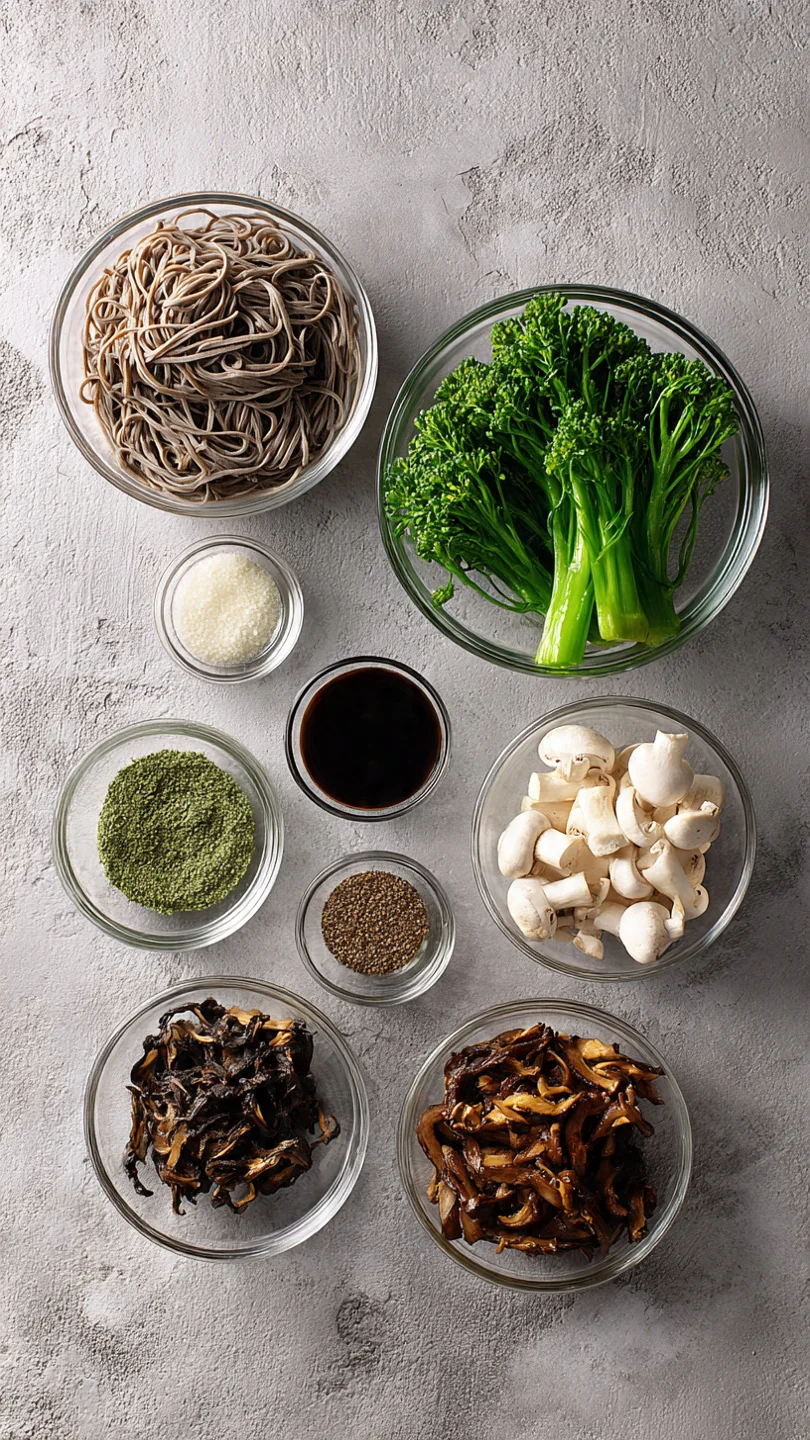
Note: You’ll find the complete list of ingredients, along with their exact measurements, in the printable recipe card at the bottom of this post.
Kitchen Equipment Needed
You don’t need any specialty gear for this recipe. A large, rimmed baking sheet is essential for roasting the vegetables without overcrowding. A large pot for boiling the soba noodles and a small saucepan for the teriyaki glaze round out the cookware.
Have a whisk handy for emulsifying the sauce and tongs or two large spoons for tossing everything together at the end. That’s truly it—this is minimalist cooking for maximum flavor.
How to Make Soba Noodles With Roasted Teriyaki Mushrooms & Broccolini Recipe
Step 1: Roast the Vegetables
Preheat your oven to 425°F (220°C). On a large, rimmed baking sheet, toss the sliced mushrooms and broccolini with the neutral oil, ensuring everything is lightly coated. Spread in a single layer—this is key for proper roasting, not steaming.
Roast for 15-18 minutes, until the broccolini is bright green and crisp-tender and the mushrooms have shrunk and browned. You’ll smell that incredible, toasty aroma wafting from your oven.
Step 2: Cook and Rinse the Soba Noodles
While the vegetables roast, bring a large pot of generously salted water to a boil. Cook the soba noodles according to package directions, usually 4-5 minutes. Tip from me: Soba noodles cook fast and can turn mushy, so set a timer!
Drain and rinse immediately under cold water to stop the cooking and remove excess starch, which gives you perfectly separate, springy noodles. Believe me, this simple step is what separates good soba from great soba.
Step 3: Simmer the Teriyaki Glaze
In a small saucepan, combine the soy sauce, mirin, rice vinegar, honey, grated ginger, and minced garlic. Whisk together and bring to a simmer over medium heat. Let it bubble gently for 2 minutes to mellow the raw garlic and ginger.
Trust me, this quick simmer makes a huge difference in flavor depth, taking the sauce from sharp and pungent to rounded and complex.
Step 4: Thicken the Sauce
Give your cornstarch-and-water slurry another stir (it settles quickly) and whisk it into the simmering sauce. Cook for another 30-60 seconds, whisking constantly, until the sauce thickens to a glossy, coat-the-back-of-a-spoon consistency. Remove from heat and stir in the toasted sesame oil.
This is your flavor-packed, homemade teriyaki glaze. Now comes the fun part: bringing it all together.
Step 5: Combine, Garnish, and Serve
In a large mixing bowl, combine the rinsed soba noodles, the roasted mushrooms and broccolini, and the teriyaki sauce. Use tongs to toss everything together until every strand of noodle and piece of vegetable is beautifully coated. Divide among bowls and garnish generously with toasted sesame seeds and sliced green onions.
Step back and admire your gorgeous, restaurant-worthy creation before digging in.
A few insights from my years in professional kitchens will guarantee your success with this recipe every single time.
- Mushroom Moisture: Don’t wash mushrooms under running water; they act like sponges. Instead, wipe them clean with a damp paper towel or use a soft brush. For roasting, slicing them ensures they release their moisture evenly and caramelize properly.
- The Soba Rinse: I can’t stress this enough. Rinsing cooked soba noodles under cold water is not optional. It washes away the surface starch that causes clumping and stops the residual heat from overcooking them, preserving that perfect al dente texture.
- Sauce Consistency: When you add the cornstarch slurry, the sauce should be at a gentle simmer. If it’s boiling too vigorously, the starch can break down and the sauce won’t thicken properly. Aim for lazy bubbles.
- Single Layer Roasting: This is the difference between steamed, soggy vegetables and properly roasted, caramelized ones. If your baking sheet is too small, use two. Crowding is the enemy of browning.
- Grate, Don’t Mince the Ginger: Using a fine microplane or ginger grater for the ginger ensures its flavor and juice integrate seamlessly into the sauce without leaving fibrous bits behind.
Recipe Variations
- The framework of this recipe is wonderfully adaptable. Here are some of my favorite tested variations to keep it exciting.
- Protein Power: Add cubed extra-firm tofu or tempeh to the sheet pan with the vegetables. For a non-vegetarian version, thinly sliced chicken breast or shrimp roast quickly alongside the veggies.
- Spicy Miso Twist: Whisk 1 tablespoon of red miso paste and 1-2 teaspoons of gochujang (Korean chili paste) or sriracha into the teriyaki sauce for a deeply savory, spicy kick.
- Citrus Brightness: Finish the tossed noodles with the zest and juice of half a lime or a small yuzu for a vibrant, aromatic lift that cuts through the richness.
- Different Greens: Swap broccolini for asparagus (in spring), sliced Brussels sprouts (in fall), or even sturdy kale leaves torn into large pieces.
- Nutty Crunch: Add texture by sprinkling each bowl with chopped roasted peanuts, cashews, or almonds just before serving.
- Sesame Ramp-Up: For an even more pronounced sesame flavor, use a combination of toasted sesame oil and a tablespoon of tahini in the sauce.
What to Serve With This Recipe
This noodle bowl is substantial enough to be a complete meal on its own, but it also plays well with others. For a more expansive Japanese-inspired spread, start with a light miso soup or a simple cucumber sunomono salad. If you’re serving a crowd, these noodles pair beautifully with vegetable gyoza (potstickers) or agedashi tofu for dipping.
Beverage-wise, a crisp, dry Japanese lager, a glass of unoaked Chardonnay, or even cold green tea are all excellent choices. This dish is perfect for casual weeknight dinners, easy lunch meal prep, or even a simple but impressive dish for guests.
Storage & Make-Ahead Instructions
- This recipe is a meal-prep dream. To store, let the components cool completely before combining.
- Refrigerator: Store the rinsed noodles, roasted vegetables, and teriyaki sauce separately in airtight containers for up to 4 days. The sauce may thicken when chilled; just loosen it with a teaspoon or two of warm water when ready to use.
- Freezing: I don’t recommend freezing the assembled dish, as the noodle texture will suffer. However, you can freeze the teriyaki sauce in an ice cube tray for up to 2 months for instant flavor boosts.
- Reheating: Gently reheat the vegetables and sauce in a skillet or microwave. Toss with the cold noodles just until everything is warmed through. Avoid overheating the noodles, or they can become soft.
- Make-Ahead: You can prep the teriyaki sauce and wash/cut the vegetables a day in advance. Store the sauce in the fridge and the prepped veggies in a container lined with a paper towel to absorb moisture.
Frequently Asked Questions
Q: Can I use regular broccoli instead of broccolini?
Absolutely. Cut the broccoli florets into bite-sized pieces, and the stem into thin slices. The roasting time may need an extra minute or two.
Q: My sauce didn’t thicken. What happened?
The cornstarch slurry must be stirred into a simmering liquid. If the sauce wasn’t hot enough, the starch won’t activate. Also, ensure your cornstarch is fresh.
To fix it, mix another teaspoon of cornstarch with cold water and whisk it into the simmering sauce.
Q: Are soba noodles gluten-free?
Not always. Traditional soba noodles are a blend of buckwheat and wheat flour. For a gluten-free version, you must seek out noodles labeled “100% buckwheat” and use tamari instead of soy sauce.
Q: Can I make this vegan?
Yes, easily. Substitute the honey with an equal amount of maple syrup or agave nectar. Ensure your mirin is vegan (some contain fish stock) or use the rice vinegar + maple syrup substitute mentioned.
Q: Why rinse the noodles in cold water?
Rinsing stops the cooking process instantly, preventing mushiness. It also washes away excess surface starch, which prevents the noodles from sticking together into a gummy clump—a standard professional practice in Japan.
Q: What’s the best mushroom for this recipe?
Cremini (baby bella) mushrooms are widely available and roast beautifully. Shiitake mushrooms offer a more intense, woodsy flavor. A mix of both is fantastic for complexity.
Q: Can I bake the tofu with the vegetables?
Yes, for a one-pan protein addition. Use extra-firm tofu, pressed and cubed, tossed with a little oil. Add it to the sheet pan for the last 12-15 minutes of roasting so it browns without drying out.
Final Thoughts
This recipe embodies everything I love about efficient, flavorful cooking: minimal ingredients, maximal technique, and a result that feels both nourishing and indulgent. The combination of earthy roasted mushrooms, sweet-tart teriyaki glaze, and the unique nuttiness of soba noodles is a true winner. It’s a formula you can trust on a busy Tuesday and customize endlessly based on what’s in your fridge.
I’ve served this to everyone from skeptical kids to discerning foodie friends, and it never fails to impress.
Give it a try this week. Take that extra 10 seconds to rinse your noodles and grate your ginger fresh—those small, intentional steps are what build great cooking habits and incredible flavor. I’d love to hear how it turns out for you.
Share your creations online and tag me, or leave a comment below with your favorite variation. Happy cooking
Soba Noodles With Roasted Teriyaki Mushrooms & Broccolini
Equipment
- Large rimmed baking sheet
- Large pot for boiling noodles
- Small saucepan
- Whisk
- Tongs or large spoons for tossing
Ingredients
- 8 oz dried soba noodles 100% buckwheat for gluten-free option
- 1 lb cremini or shiitake mushrooms cleaned and sliced 1/4-inch thick
- 1 bunch broccolini ends trimmed, cut into 2-inch pieces
- 1 tbsp neutral oil like avocado or grapeseed
- 1/3 cup low-sodium soy sauce or tamari tamari for gluten-free
- 3 tbsp mirin or substitute 2 tbsp rice vinegar + 1 tbsp honey
- 2 tbsp rice vinegar
- 1 tbsp honey or maple syrup
- 2 tsp fresh ginger finely grated
- 2 cloves garlic minced
- 1 tsp toasted sesame oil
- 2 tsp cornstarch mixed with 1 tbsp cold water
- toasted sesame seeds and sliced green onion for garnish
Instructions
- Preheat your oven to 425°F (220°C). On a large, rimmed baking sheet, toss the sliced mushrooms and broccolini with the neutral oil, ensuring everything is lightly coated. Spread in a single layer—this is key for proper roasting, not steaming. Roast for 15-18 minutes, until the broccolini is bright green and crisp-tender and the mushrooms have shrunk and browned.
- While the vegetables roast, bring a large pot of generously salted water to a boil. Cook the soba noodles according to package directions, usually 4-5 minutes. Tip from me: Soba noodles cook fast and can turn mushy, so set a timer! Drain and rinse immediately under cold water to stop the cooking and remove excess starch, which gives you perfectly separate, springy noodles.
- In a small saucepan, combine the soy sauce, mirin, rice vinegar, honey, grated ginger, and minced garlic. Whisk together and bring to a simmer over medium heat. Let it bubble gently for 2 minutes to mellow the raw garlic and ginger. Trust me, this quick simmer makes a huge difference in flavor depth.
- Give your cornstarch-and-water slurry another stir (it settles quickly) and whisk it into the simmering sauce. Cook for another 30-60 seconds, whisking constantly, until the sauce thickens to a glossy, coat-the-back-of-a-spoon consistency. Remove from heat and stir in the toasted sesame oil. This is your flavor-packed, homemade teriyaki glaze.
- In a large mixing bowl, combine the rinsed soba noodles, the roasted mushrooms and broccolini, and the teriyaki sauce. Use tongs to toss everything together until every strand of noodle and piece of vegetable is beautifully coated. Divide among bowls and garnish generously with toasted sesame seeds and sliced green onions. Step back and admire your gorgeous, restaurant-worthy creation.