
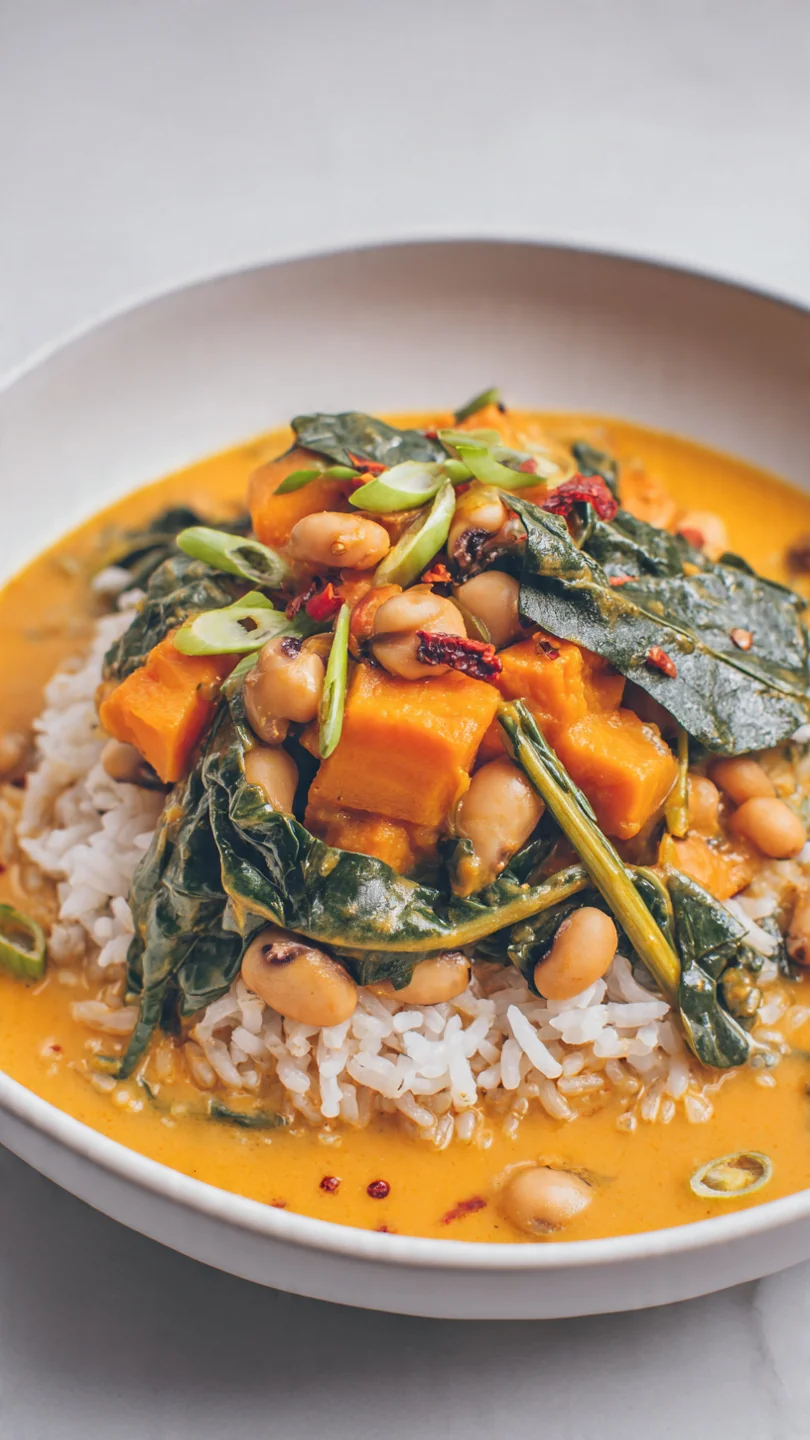
There’s a special kind of comfort found in a simmering pot of curry. It’s the aroma of spices blooming in oil, the promise of a creamy, hearty meal that nourishes body and soul, and the beautiful simplicity of letting one pot do all the work. This Sweet Potato-Coconut Curry is my go-to when I want a dinner that feels indulgent yet is packed with wholesome ingredients.
It’s a vibrant, satisfying bowl where tender sweet potatoes and earthy black-eyed peas swim in a fragrant, creamy coconut broth, all brightened by a final squeeze of lime. It’s weeknight-easy but special enough for company, and it reliably delivers the complex, layered flavors we all crave.
This recipe is a testament to how simple ingredients can create extraordinary meals. Here’s what makes it a keeper:
- One-Pot Wonder: Everything cooks in a single Dutch oven or large pot, meaning minimal cleanup and maximum flavor layering.
- Nutrient-Dense Comfort Food: It’s a powerhouse of vitamins, fiber, and plant-based protein that actually satisfies like a classic comfort dish.
- Meal-Prep Friendly: The flavors improve overnight, making it a perfect make-ahead lunch or dinner for the week.
- Deeply Customizable: Easily adapt the spice level, swap greens, or use different beans based on what you have on hand.
- Creamy Without Dairy: Full-fat coconut milk creates a luxuriously rich and silky sauce that’s completely vegan.
- Balanced Flavor Profile: It masterfully balances sweet, savory, spicy, and tangy notes in every bite.
Ingredients You’ll Need
- Gathering these simple ingredients is the first step to a fantastic meal. Each one plays a specific role in building the curry’s complex flavor and satisfying texture.
- Coconut Oil: Provides a subtle, complementary flavor for sautéing. A neutral oil like avocado or grapeseed works too.
- Aromatics (Onion, Garlic, Ginger): This trio forms the essential flavor foundation. Fresh ginger is key—don’t substitute powdered here.
- Red Curry Paste & Ground Spices: I recommend a quality Thai-style red curry paste (like Maesri or Thai Kitchen) for authentic depth. Blooming the turmeric and cumin with it unlocks their full potential.
- Sweet Potato: Look for firm orange-fleshed sweet potatoes (often labeled as garnet yams). Cutting them into even 3/4-inch cubes ensures they cook uniformly.
- Full-Fat Coconut Milk: This is non-negotiable for the right creamy body and richness. Light coconut milk will make the curry thin and less satisfying.
- Vegetable Broth: Use a low-sodium variety so you can control the final seasoning.
- Black-Eyed Peas: Canned beans are a huge time-saver. Their creamy texture and mild, earthy flavor are perfect here. Chickpeas or kidney beans are great substitutes.
- Collard Greens: They add a wonderful, sturdy texture and a nutritional boost. Be sure to remove the tough central stem before chopping.
- Lime Juice: The final brightening agent. Always use fresh juice—it makes all the difference.
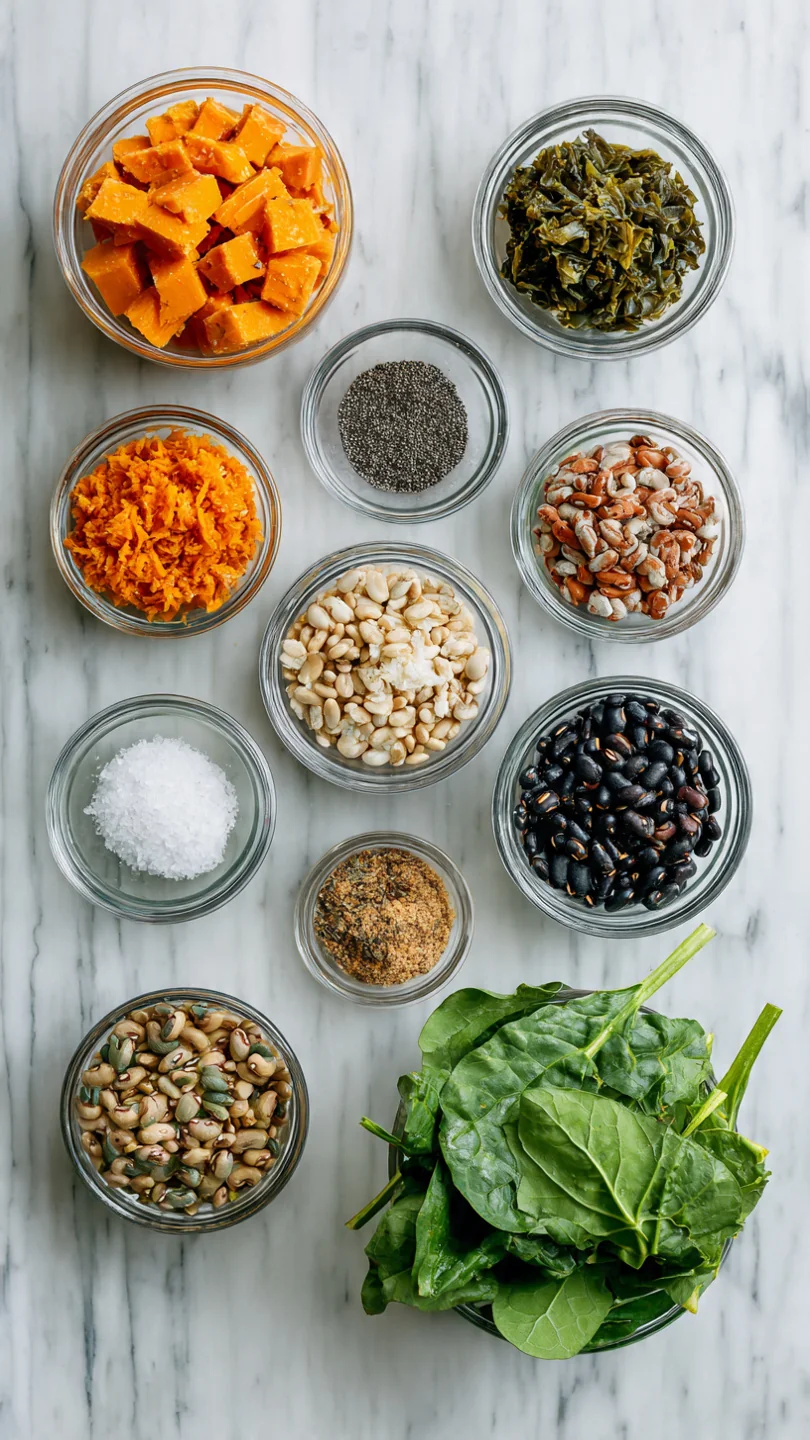
Note: You’ll find the complete list of ingredients, along with their exact measurements, in the printable recipe card at the bottom of this post.
Kitchen Equipment Needed
You don’t need any fancy gadgets for this recipe. A large Dutch oven or heavy-bottomed pot with a lid is essential for even heat distribution and the simmering process. A good chef’s knife makes quick work of the chopping, and a wooden spoon is perfect for stirring and scraping up the flavorful bits from the bottom of the pot.
That’s really it! A microplane for grating the ginger and a citrus juicer for the lime are helpful but optional.
How to Make Sweet Potato-Coconut Curry Recipe
Step 1: Build Your Flavor Foundation
In your large pot, heat the oil over medium heat. Add the diced onion and cook it slowly, stirring occasionally. You’re not looking for color here, just softness and translucency, which takes about 5-6 minutes.
This gentle cooking sweetens the onion. Then, stir in the garlic and ginger. Believe me, cooking them for just 60 seconds until fragrant is enough—any longer risks burning them, which introduces bitterness.
Step 2: Bloom the Spices
This is the most important step for a flavorful curry. Push the aromatics to the side of the pot and add the red curry paste, turmeric, and cumin directly to the cleared hot surface. Cook this mixture, stirring constantly, for 1-2 minutes.
You’ll see it darken slightly and the aroma will become incredibly intense and nutty. Tip from me: This process, called blooming or “tadka,” transforms raw, dusty spices into a deeply flavorful paste that will infuse the entire dish.
Step 3: Simmer the Sweet Potatoes
Add the cubed sweet potatoes to the pot and stir vigorously for a minute to coat every piece with the fragrant spice paste. This ensures the flavor adheres. Now, pour in the coconut milk and vegetable broth.
Use your spoon to scrape up any delicious browned bits stuck to the pot—that’s pure flavor. Bring the liquid to a gentle simmer. You’ll see small bubbles around the edges.
Step 4: Cook Until Just Tender
Once simmering, cover the pot and reduce the heat to medium-low. Let it cook for 15-18 minutes. Trust me, a gentle simmer with the lid on is key.
It cooks the sweet potatoes through without breaking down the coconut milk, which can separate if boiled too hard. Check for doneness by piercing a potato cube with a fork; it should go in with slight resistance but not be mushy.
Step 5: Add Greens, Beans, and Finish
Now comes the satisfying part. Uncover the pot and stir in the drained black-eyed peas and all of your chopped collard greens. The greens will seem like a lot, but they wilt down beautifully.
Let everything simmer, uncovered, for 5-7 more minutes. This final simmer thickens the sauce slightly and tenderizes the collards while keeping their vibrant color. Remove the pot from the heat.
Step 6: Brighten and Serve
Off the heat, stir in the fresh lime juice and season with salt to taste. The lime juice is not just a garnish—it’s a critical balancing component that lifts all the rich, earthy, and spicy notes. Step back and admire your beautiful, colorful pot of curry.
Ladle it into bowls over steamed rice or with warm naan, garnish with cilantro, and dig in.
A few insights from my years in the kitchen will guarantee your curry turns out perfectly every time.
- The Bloom is Everything: Never skip the step of cooking the curry paste and ground spices in oil. This simple act makes the difference between a flat-tasting sauce and one with profound, rounded flavor.
- Control Your Simmer: After adding the coconut milk, maintain a gentle simmer, not a rolling boil. Coconut milk is an emulsion that can “break” or separate if agitated with too much heat, resulting in a greasy-looking sauce.
- Prep Greens Properly: For collard greens, fold the leaf in half along the stem and use a knife to slice the tough stem away. Stack the leaves, roll them into a cigar, and slice into thin ribbons (chiffonade) for the best texture.
- Salt at the End: Always do your final seasoning with salt after adding the lime juice. The acidity changes how we perceive salt, so seasoning at the end ensures you get it just right.
- Don’t Overcook the Sweet Potato: Aim for tender but intact cubes. They should hold their shape in the curry. Overcooked sweet potatoes will turn to mush and thicken the sauce too much.
Recipe Variations & Customizations
- This curry is a fantastic template. Once you’ve mastered the base recipe, try these tested variations to keep it exciting.
- Protein Swap: Substitute the black-eyed peas with chickpeas, red lentils (add them with the sweet potato), or even cubed firm tofu added in the last 5 minutes of cooking.
- Green Vegetable Switch: Use kale, spinach, or Swiss chard instead of collards. For tender greens like spinach, simply stir them in at the very end until wilted.
- Spice Level Adjustment: Control the heat by using mild or hot red curry paste. For an extra kick, add a thinly sliced Thai chili when you add the garlic and ginger.
- Root Vegetable Medley: Replace half the sweet potato with cubed butternut squash, parsnips, or carrots for a different flavor profile.
- Herb Finish: Stir in a handful of fresh Thai basil or regular basil along with the cilantro garnish for an aromatic lift.
- Creamy Peanut Twist: Stir in 2 tablespoons of smooth natural peanut butter along with the coconut milk for a rich, satay-inspired sauce.
What to Serve With This Recipe
This curry is a complete meal in a bowl, but the right accompaniments turn it into a feast. For the classic pairing, serve it over a bed of steamed jasmine or basmati rice to soak up all the delicious sauce. Whole wheat naan or roti are also perfect for scooping.
For a lighter option, try it with cauliflower rice. To round out the meal, a simple side like a cucumber salad with a tangy dressing provides a refreshing contrast. A cold, crisp lager or a glass of off-dry Riesling pairs wonderfully with the spice and richness.
Storage & Make-Ahead Instructions
- This curry is arguably better on the second day, making it a meal-prep superstar.
- Refrigeration: Cool the curry completely, then transfer it to an airtight container. It will keep in the refrigerator for up to 4 days.
- Freezing: This curry freezes beautifully for up to 3 months. Freeze in portion-sized containers. Thaw overnight in the refrigerator before reheating.
- Reheating: Gently reheat in a saucepan over medium-low heat, stirring occasionally. If it has thickened too much, add a splash of water or broth to loosen it. You can also reheat single portions in the microwave.
- Make-Ahead Strategy: You can chop the onion, garlic, ginger, and sweet potato a day in advance and store them separately in the fridge to cut down on active prep time.
Frequently Asked Questions
Q: Can I use light coconut milk?
I don’t recommend it. Full-fat coconut milk provides the necessary creaminess and body that makes this curry so satisfying. Light coconut milk will make the sauce thin and less rich.
Q: My curry sauce seems too thin. How can I thicken it?
Simmer it uncovered for an additional 5-10 minutes to reduce and concentrate the liquid. You can also mash a few pieces of the cooked sweet potato against the side of the pot and stir them in—they’ll act as a natural thickener.
Q: Is there a substitute for red curry paste?
For a similar flavor profile, you can use 1 tablespoon of tomato paste mixed with 1 teaspoon of paprika and 1/2 to 1 teaspoon of cayenne pepper (to taste). The flavor will be different but still delicious.
Q: Can I make this in a slow cooker or Instant Pot?
Yes. For a slow cooker, complete Steps 1 & 2 on the stove, then transfer everything to the cooker and cook on Low for 6-7 hours or High for 3-4. Add the collards and beans in the last 30 minutes.
For Instant Pot, use the Sauté function for Steps 1 & 2, then add everything except the collards, beans, and lime juice. Pressure cook on High for 4 minutes, quick release, then use Sauté again to stir in the greens and beans until wilted.
Q: The coconut milk looks separated or curdled. What happened?
This can happen if the curry was boiled too vigorously after adding the coconut milk. It’s still safe to eat and will taste fine, but the texture will be less smooth. Next time, maintain a gentle simmer.
Q: How can I tell if the sweet potatoes are cooked perfectly?
Pierce a cube with a fork or the tip of a paring knife. It should slide in with a little resistance—think “al dente” pasta. They will continue to soften slightly from residual heat after you turn off the stove.
Q: Can I use frozen sweet potatoes?
Yes, you can use frozen cubed sweet potatoes. There’s no need to thaw them; just add them directly to the pot. You may need to add 2-3 extra minutes to the simmering time.
Final Thoughts
This Sweet Potato-Coconut Curry is more than just a recipe; it’s a reliable template for a nourishing, flavor-packed dinner that comes together with surprising ease. It embodies what I love most about cooking: transforming humble, accessible ingredients into something truly special through a few key techniques. The blooming of spices, the gentle simmer, and the bright finish of lime juice are simple steps that yield a complex and restaurant-worthy result right in your own kitchen.
I encourage you to make this your own. Play with the vegetables, adjust the spice, and find your perfect pairing. Once you experience how the creamy coconut milk melds with the earthy sweet potatoes and hearty greens, I think you’ll find yourself returning to this recipe again and again.
I’d love to hear how it turns out for you—share your creations and any clever twists you come up with. Now, go warm up that pot and get cooking
Sweet Potato-Coconut Curry With Black-Eyed Peas & Collard Greens
Equipment
- Large Dutch oven or heavy-bottomed pot with lid
- Chef’s knife and cutting board
- Wooden spoon or spatula
- Measuring cups and spoons
- Citrus juicer (optional)
Ingredients
- 2 tbsp Coconut oil or neutral oil For sautéing
- 1 large Yellow onion Diced
- 4 cloves Garlic Minced
- 1 tbsp Fresh ginger Grated
- 2 tbsp Red curry paste Use Thai-style for authentic flavor; adjust for spice level
- 1 tsp Ground turmeric
- 1 tsp Ground cumin
- 1 large Sweet potato Peeled and cut into 3/4-inch cubes (about 1.5 lbs)
- 1 13.5 oz can Full-fat coconut milk Shake well before opening
- 1.5 cups Vegetable broth Low-sodium recommended
- 1 15 oz can Black-eyed peas Drained and rinsed
- 1 bunch Collard greens Stems removed, leaves chopped (about 4-5 cups packed)
- 1 tbsp Lime juice Freshly squeezed
- To taste Salt
- For garnish Fresh cilantro and lime wedges
Instructions
- In a large Dutch oven or heavy-bottomed pot, heat the coconut oil over medium heat. Add the diced onion and cook, stirring occasionally, for 5-6 minutes until softened and translucent. Add the minced garlic and grated ginger, cooking for another 60 seconds until fragrant. This builds the aromatic base of your curry.
- Push the aromatics to one side of the pot. Add the red curry paste, turmeric, and cumin to the cleared space. Cook the spices and paste for 1-2 minutes, stirring constantly, until they darken slightly and smell incredibly fragrant. This ‘blooming’ step unlocks their essential oils and deepens the flavor dramatically.
- Add the cubed sweet potato to the pot and stir to coat it thoroughly with the spice mixture. Pour in the coconut milk and vegetable broth, scraping up any browned bits from the bottom of the pot. Bring the mixture to a gentle simmer.
- Once simmering, reduce the heat to medium-low, cover the pot, and let it cook for 15-18 minutes. The sweet potatoes should be just tender when pierced with a fork but not falling apart. Trust me, this gentle simmer prevents the coconut milk from separating.
- Uncover the pot and stir in the drained black-eyed peas and chopped collard greens. The collards will wilt down significantly. Continue to simmer, uncovered, for 5-7 more minutes until the greens are tender and the curry has thickened slightly to your liking.
- Remove the pot from the heat. Stir in the fresh lime juice and season generously with salt to taste. The lime juice is crucial—it brightens all the rich, earthy flavors. Ladle the curry into bowls, garnish with fresh cilantro and lime wedges, and serve immediately over rice or with naan.