
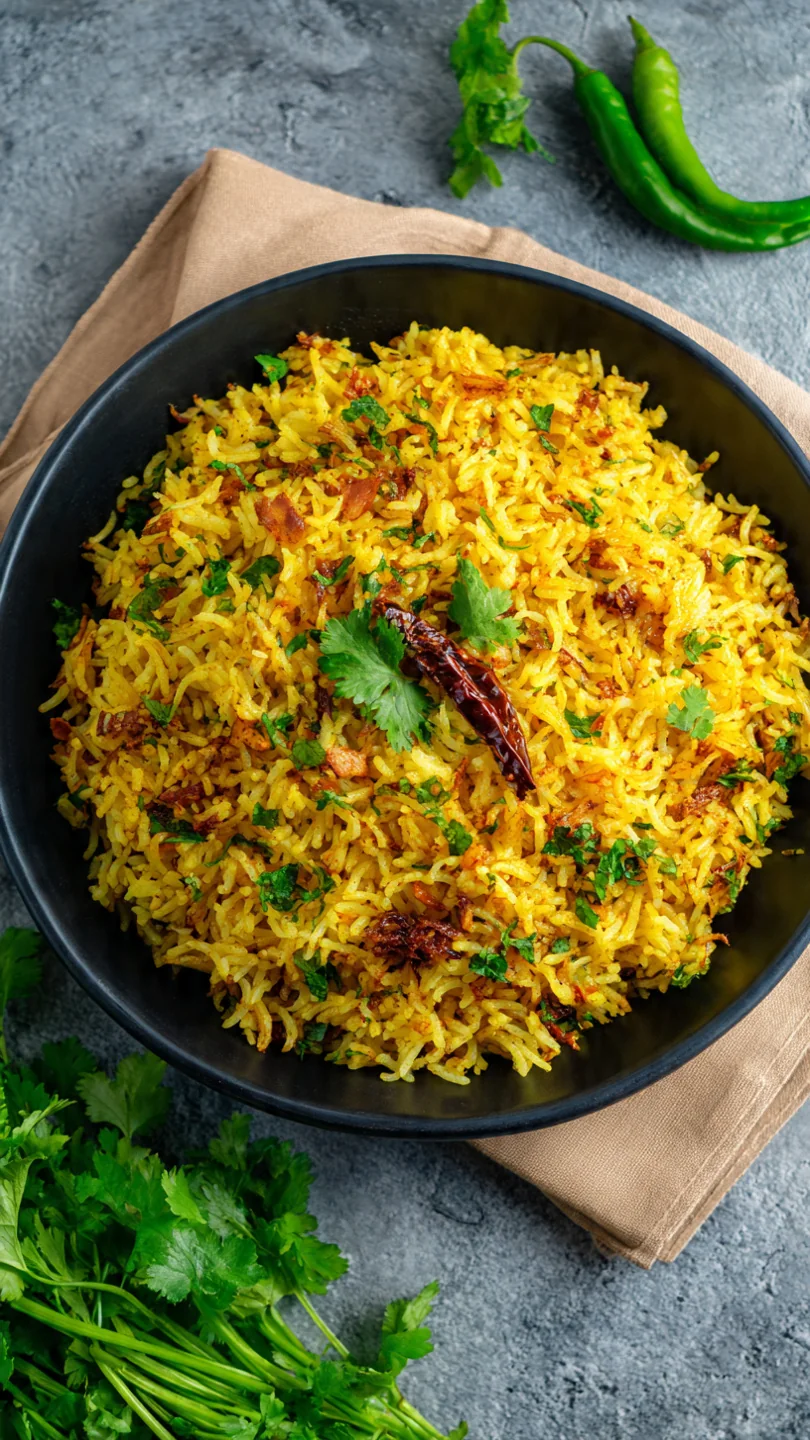
There’s a moment of quiet magic in biryani making, just after you lift the lid. A fragrant steam rises, revealing a mosaic of tender meat, caramelized onions, and vibrant saffron streaks. But the true hero holding it all together?
The rice. Each grain should be long, distinct, and infused with subtle spice, not a sticky, clumpy afterthought. As a chef, I’ve seen too many beautiful biryanis undermined by poorly cooked rice.
This guide isn’t just a recipe; it’s a deep dive into the technique of creating the perfect, fluffy foundation that will elevate your biryani from good to extraordinary.
- The Foundation of Flavor: This rice is aromatic and seasoned on its own, providing a flavorful base that complements rather than competes with your biryani’s main components.
- Foolproof Texture: Follow the soak-toast-steam method, and you’ll achieve consistently long, separate grains every single time—no more gummy rice.
- Technique Over Ingredients: The process uses simple pantry staples but focuses on chef-level techniques that make all the difference in the final result.
- Versatile Base: While designed for biryani, this perfectly cooked spiced rice is fantastic as a side dish for curries, grilled meats, or even on its own.
- Clear Visual Cues: I’ll guide you through exactly what to look for at each stage, from the water running clear during washing to the grains being “al dente” before the final steam.
Ingredients You’ll Need
Let’s gather our ingredients. The beauty of this recipe lies in its simplicity and the transformative power of technique. You don’t need a long list, but quality matters, especially for the star ingredient.
- Basmati Rice: 2 cups. This is non-negotiable. True basmati rice has long, slender grains and a distinctive nutty aroma. Look for aged basmati if possible—it’s less brittle and cooks up even longer. Avoid using generic long-grain rice; it won’t deliver the same fragrance or texture.
- Water: 4 cups. Using the correct water-to-rice ratio (2:1) is critical for the boiling method, which gives us more control than the absorption method for biryani.
- Ghee or Neutral Oil: 2 tablespoons. Ghee adds an authentic, rich flavor that oil can’t match. If you’re dairy-free, a neutral oil like avocado or grapeseed works perfectly.
- Whole Spices: 1-inch cinnamon stick, 4 green cardamom pods (lightly crushed), and 4 whole cloves. These are the classic biryani aromatics. Toasting them in fat first unlocks their full potential.
- Salt: 1 teaspoon, or to taste. Seasoning the cooking water is essential for flavor that penetrates each grain.
- Lemon Juice: 1 tablespoon (optional). A chef’s trick! A splash of acid in the boiling water helps keep the rice grains brilliantly white.

Note: You’ll find the complete list of ingredients, along with their exact measurements, in the printable recipe card at the bottom of this post.
Kitchen Equipment Needed
You don’t need specialized gear, but the right pot makes a difference. A heavy-bottomed pot (like a Dutch oven) distributes heat evenly, preventing hot spots that can scorch the rice at the bottom. A tight-fitting lid is crucial to trap steam during the final off-heat resting phase.
You’ll also need a fine-mesh strainer for rinsing and a large bowl for soaking. A fork (not a spoon!) is the best tool for fluffing the finished rice without crushing the delicate grains.
How to Make Biryani Rice Recipe
Step 1: Wash and Soak the Rice
Trust me, this is the most important step you cannot rush. Place your basmati rice in a large bowl and cover it with cold water. Gently swish the rice with your fingers, then carefully pour out the cloudy, starchy water.
Repeat this 3-4 times until the water runs almost clear. This removes the surface starch that causes clumping. Now, cover the washed rice with fresh cold water and let it soak for 30 minutes.
This allows the grains to absorb water and start elongating, ensuring they cook evenly and to their full length. After soaking, drain the rice thoroughly in a colander.
Step 2: Bloom the Whole Spices
In your heavy-bottomed pot, heat the ghee or oil over medium heat. Add the cinnamon stick, lightly crushed cardamom pods, and cloves. Believe me, the fragrance that fills your kitchen at this moment is the soul of the dish.
Sauté the spices for just 30-45 seconds until they become incredibly aromatic. You’re not frying them until dark, just warming them to release their essential oils into the fat. This process, called “blooming,” infuses the entire cooking medium with flavor that will coat every grain of rice.
Step 3: Toast the Drained Rice
Tip from me: Ensure your drained rice is as dry as possible. Add it to the pot with the spiced ghee. Using a gentle folding motion, stir the rice for 1-2 minutes.
You’ll notice the grains at the edges becoming slightly translucent. This light toasting coats each grain in a thin layer of fat, which helps create a protective barrier, leading to those prized separate grains. It also adds a subtle nutty depth to the rice’s flavor profile.
Step 4: Boil and Simmer
Now, pour in the measured water. It will sizzle dramatically—that’s okay! Add the salt and lemon juice (if using).
Increase the heat to high and bring the pot to a rolling boil. Once boiling vigorously, immediately reduce the heat to the lowest possible setting. Cover the pot with the tight-fitting lid and set a timer for 12-14 minutes.
Do not peek! The rice is now cooking via a combination of simmering and steaming. Peeking releases precious steam and disrupts the cooking process.
Step 5: Steam Off Heat and Fluff
When the timer goes off, turn off the heat. This is critical: do not open the lid. Let the pot sit, covered and off the heat, for a full 10 minutes.
This final steaming stage allows the rice to finish cooking gently using residual heat, ensuring the grains are tender but not mushy, and any remaining moisture is absorbed. After 10 minutes, uncover, step back from the fragrant steam, and use a fork to fluff the rice gently from the top down. Your perfect biryani rice is ready to be layered or served.
- Rice Quality Check: Before cooking, rub a few grains of dry basmati between your fingers. High-quality aged basmati will have a natural, almost floral scent. If it smells musty or like nothing at all, it won’t deliver on flavor.
- The Soaking Secret: Soaking for exactly 30 minutes is the sweet spot. Less, and the grains may crack; more, and they can become too soft. If you’re in a pinch, a 15-minute soak in warm water is better than nothing.
- Water Ratio Wisdom: The 2:1 water-to-rice ratio is for the boiling method used here. If you attempt the absorption method (where all water is absorbed), use a 1.5:1 ratio, but control is harder. The boiling method gives more consistent results for biryani.
- The Lid is Law: Once you cover the pot to simmer, consider it sealed. Lifting the lid releases steam, drops the temperature, and can lead to undercooked, crunchy rice at the top. Trust the process and the timer.
- Don’t Stir, Ever: Resist the urge to stir the rice once the water is added. Stirring agitates the grains, breaks them, and releases more starch into the water, which is the direct path to sticky rice. Fluff only at the very end.
Recipe Variations
- Saffron & Milk Infusion: For a richer, more luxurious rice with golden hues, steep a large pinch of saffron threads in 2 tablespoons of warm milk while the rice cooks. After fluffing, drizzle this over the rice and gently fold it in.
- Herb-Studded Rice: Add a bay leaf with the whole spices, and after fluffing, stir in ¼ cup of finely chopped fresh cilantro and mint. This creates a beautiful green-flecked rice perfect for a lighter biryani or as a side.
- Coconut Milk Rice: Replace 1 cup of the water with full-fat coconut milk. This adds a subtle sweetness and creamy richness that pairs wonderfully with prawn or vegetable biryanis.
- Zeera (Cumin) Rice: Omit the cinnamon, cardamom, and cloves. Instead, bloom 2 teaspoons of cumin seeds in the ghee. This simpler, earthier variation is a classic on its own.
- Brown Basmati Version: For a whole-grain option, use brown basmati rice. Increase the water to 4.5 cups and the simmering time to 35-40 minutes, followed by the 10-minute steam. The texture will be chewier but still delicious.
What to Serve With This Recipe
While this rice is the essential component for building a layered biryani with marinated meat, vegetables, and fried onions, it’s also a spectacular side dish on its own. Serve it alongside a robust curry like butter chicken, chickpea masala, or a dal makhani. The lightly spiced, fluffy rice is perfect for soaking up those rich sauces.
For a complete meal, add a simple cucumber raita (yogurt sauce) and a tangy mango pickle (achaar). It’s also excellent with grilled kebabs or tandoori chicken. A cold glass of mango lassi or a light Indian beer like Kingfisher makes for a refreshing beverage pairing.
Storage & Make-Ahead Instructions
- Refrigeration: Cool the rice completely within 1 hour of cooking. Transfer it to an airtight container and refrigerate for up to 3 days.
- Freezing: Spread cooled rice in a single layer on a baking sheet to flash-freeze for 1 hour, then transfer to a freezer bag. It will keep for up to 2 months. This prevents it from freezing into a solid block.
- Reheating Best Practices: The best way to reheat is to sprinkle 1-2 tablespoons of water over the rice, cover it tightly (in a microwave-safe dish with a lid or a plate), and microwave on medium power in 60-second intervals, fluffing between each. You can also reheat it in a steamer basket over simmering water.
- Critical Safety Note: Never reheat rice more than once. Always ensure reheated rice is piping hot all the way through before serving.
Frequently Asked Questions
Q: Can I make this rice ahead of time for a biryani?
A: Absolutely, and it’s a great strategy. Cook the rice as directed, let it cool completely, and store it in the fridge for up to a day. Bring it to room temperature before layering your biryani.
Slightly undercooked (by 1 minute) rice is ideal for make-ahead, as it will finish cooking during the biryani’s “dum” (steaming) phase.
Q: My rice is still hard after simmering. What went wrong?
A: This usually means either the heat was too low during the simmer, the lid wasn’t tight (letting steam escape), or you peeked! Ensure a vigorous boil is achieved before reducing to low, and keep that lid sealed. If it happens, sprinkle 2-3 tbsp of hot water over the rice, cover, and steam on very low heat for another 5 minutes.
Q: Can I use a rice cooker?
A: You can, but you’ll lose some control over the spice infusion. Bloom the spices in ghee in a small pan, then add them along with the rice, water, and salt to the rice cooker. Use the “white rice” setting.
The texture may be slightly softer.
Q: Why is my rice sticky or mushy?
A: The most common culprits are insufficient rinsing (starch remains), overcooking (simmering too long), or stirring during cooking. Also, ensure you are draining the soaked rice very well before toasting; extra water throws off the ratio.
Q: Is the lemon juice necessary?
A: No, it’s optional. Its primary function is to maintain a bright white color in the grains by preventing oxidation. It has a minimal effect on flavor.
You can omit it without issue.
Q: What’s the difference between this and plain boiled rice?
A: The technique! The washing/soaking removes starch, the toasting in spiced fat adds flavor and protects the grain, and the precise boil-steam method guarantees separation. Plain boiling often results in clumpier, blander rice.
Q: How do I scale this recipe up for a crowd?
A: Scale linearly with the 2:1 water-to-rice ratio. Use a wider, heavy pot to ensure even heat distribution. You may need to add 1-2 extra minutes to the simmering time for larger batches (e.g., 4 cups rice = 14-16 minutes simmer).
Final Thoughts
Mastering this biryani rice recipe is like learning a fundamental chord on the guitar—it opens up a world of culinary possibilities. This isn’t just a side dish; it’s the disciplined, flavorful canvas upon which you can create countless biryani masterpieces. The process teaches patience and respect for simple ingredients, rewarding you with grains that are fragrant, distinct, and worthy of any celebration.
I encourage you to try this method exactly as written the first time. Pay attention to the sound of the boil, the scent of the blooming spices, and the satisfying fluff of the final fork. Once you’ve experienced the perfect batch, you’ll understand the technique intuitively.
I’d love to hear how it turns out for you! Please leave a comment or rating below, and if you share your biryani creation on social media, tag me so I can admire your work. Happy cooking

Perfect Biryani Rice
Equipment
- Heavy-bottomed pot with tight-fitting lid
- Fine-mesh strainer or colander
- Large bowl for washing and soaking
Ingredients
- 2 cups Basmati rice High-quality, aged basmati is best
- 4 cups Water For boiling
- 2 tbsp Ghee or neutral oil Ghee adds authentic flavor
- 1 inch Cinnamon stick
- 4 whole Green cardamom pods lightly crushed
- 4 whole Cloves
- 1 tsp Salt or to taste
- 1 tbsp Lemon juice optional, for whiter grains
Instructions
- Wash the basmati rice in a large bowl under cold running water until the water runs almost clear, about 3-4 changes. This removes excess starch, which is the key to preventing sticky rice. Soak the washed rice in fresh cold water for 30 minutes, then drain completely.
- In a heavy-bottomed pot, heat the ghee or oil over medium heat. Add the cinnamon stick, cardamom pods, and cloves. Sauté for 30-45 seconds until they become fragrant, being careful not to burn them. This step blooms the spices in the fat, releasing their essential oils into the cooking medium.
- Add the drained rice to the pot with the spices. Gently stir for 1-2 minutes until each grain is lightly coated in the ghee and becomes slightly translucent at the edges. This ‘toasting’ step helps seal the grains and contributes to their final separate texture.
- Pour in the 4 cups of water, add the salt and lemon juice (if using). Bring the mixture to a vigorous boil over high heat. Once boiling, reduce the heat to low, cover the pot with a tight-fitting lid, and let it simmer undisturbed for 12-14 minutes.
- After 14 minutes, turn off the heat. Do not open the lid. Let the rice steam, covered and off the heat, for an additional 10 minutes. This final steaming stage is non-negotiable for perfect texture. Finally, uncover and fluff the rice gently with a fork before using it to layer your biryani.