
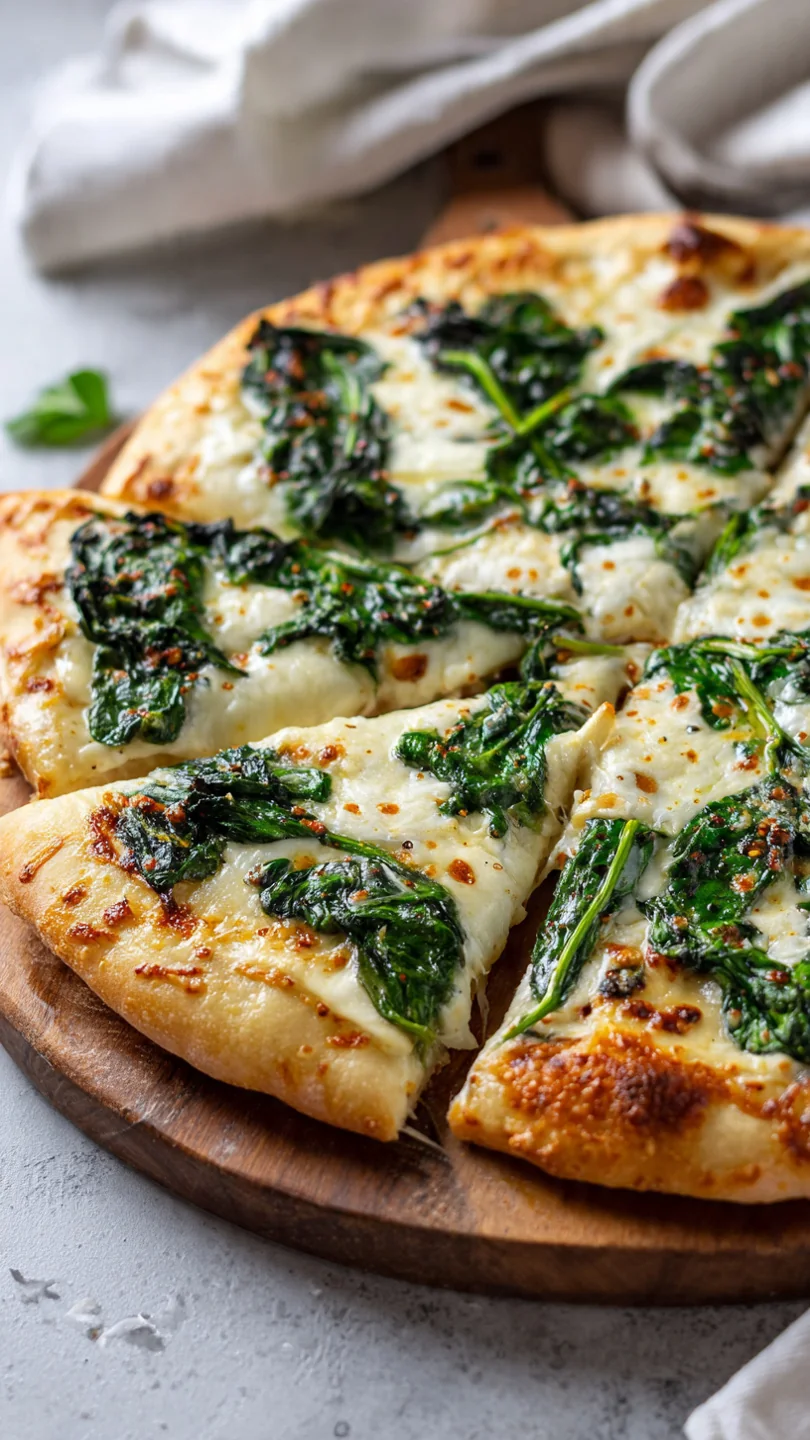
Imagine the aroma of sweet, mellow roasted garlic mingling with the tang of feta and the earthy scent of fresh spinach, all atop a perfectly crisp, golden pizza crust. This isn’t your average delivery pizza. It’s a homemade gourmet experience that feels special but is deceptively simple to pull off on any busy weeknight.
I developed this Greek Roasted Garlic Spinach White Pizza to bridge the gap between casual comfort food and the bright, fresh flavors I love from Mediterranean cuisine. You get a creamy, savory base without a drop of tomato sauce, topped with ingredients that bake into a harmonious, satisfying whole. The result is a pizza that’s both elegant and utterly craveable, with a texture contrast between the crispy edge and the soft, flavorful center that will have everyone asking for seconds.
- Restaurant-Quality at Home: This pizza rivals any gourmet pie you’d order out, but you control the quality of ingredients and it’s far more economical.
- Simple, Fresh Ingredients: The flavor magic comes from a handful of wholesome components like fresh spinach, real garlic, and good cheese—no complicated sauces or hard-to-find items.
- Perfect Texture Balance: The method ensures a crisp, chewy crust every time, while the toppings stay distinct and never turn soggy.
- Incredibly Versatile: The base recipe is a fantastic canvas. I’ll show you how to easily adapt it with different cheeses, proteins, or herbs based on what you have on hand.
- Quick Active Prep: The oven does most of the work. Your hands-on time is about 20 minutes, making it a feasible and impressive option for a weeknight dinner.
Ingredients You’ll Need
Let’s gather our ingredients—this is where simple components transform into something greater than the sum of their parts. The star is the garlic: roasting it whole tames its sharp bite and coaxes out a nutty, caramelized sweetness that forms the soul of the creamy ricotta base. For the ricotta, seek out a whole-milk variety for the richest flavor and creamiest texture; if it seems watery, let it drain in a fine-mesh sieve for 10 minutes.
The spinach is added raw, trust me on this. The high heat of the oven wilts it perfectly without releasing excess moisture that would steam the crust. For the feta, I prefer a block of Greek feta in brine that you crumble yourself—it’s tangier and creamier than pre-crumbled versions.
Finally, a good pizza dough is key. A quality store-bought dough from the refrigerated section of your supermarket works wonderfully, but if you have a favorite homemade recipe, by all means use it. Just ensure it’s fully thawed and at room temperature for easy stretching.
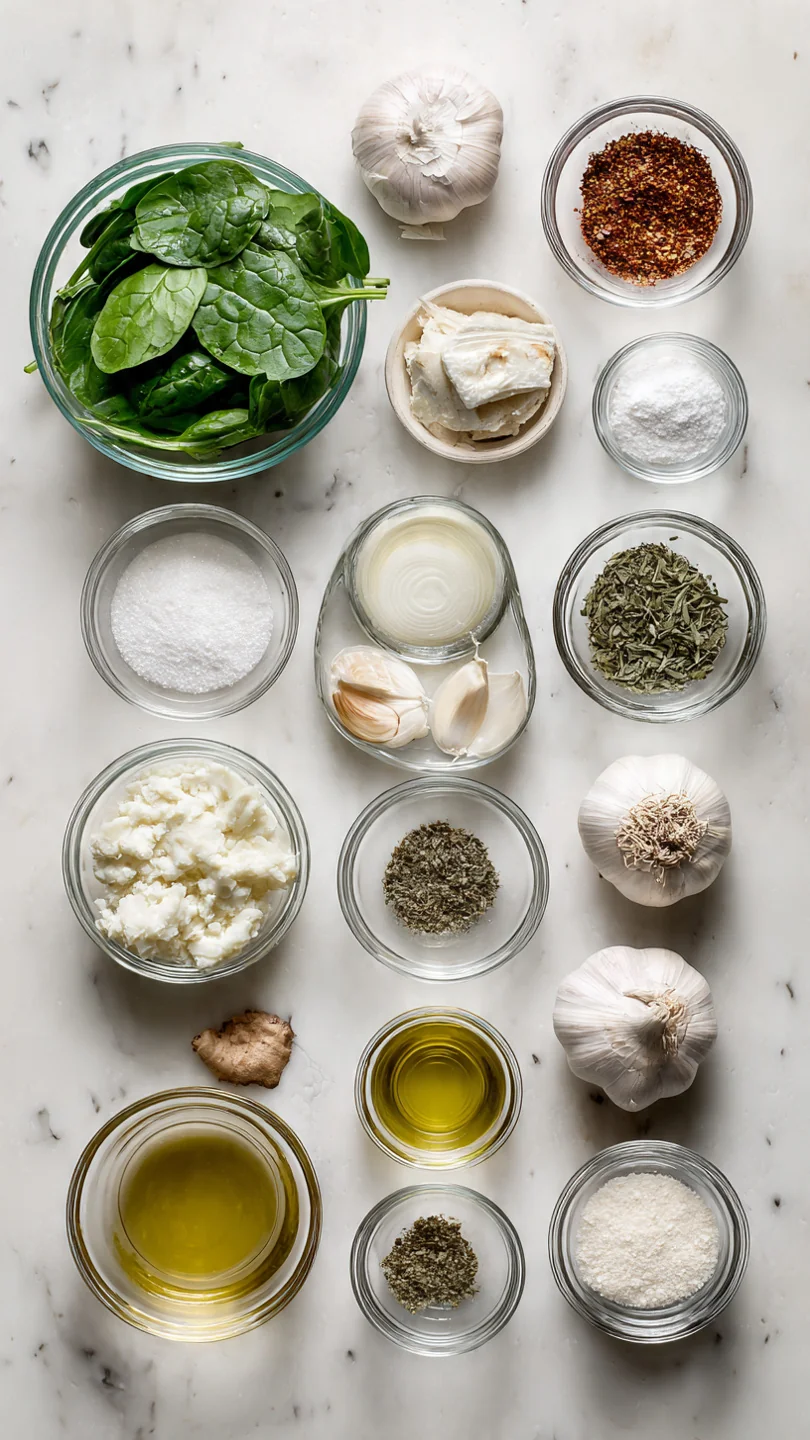
Note: You’ll find the complete list of ingredients, along with their exact measurements, in the printable recipe card at the bottom of this post.
Kitchen Equipment Needed
You don’t need professional gear to make exceptional pizza at home. The most important tool is a pizza stone or steel. It radiates intense, even heat to the bottom of the crust, creating that coveted crispness and airy interior. If you don’t have one, an inverted heavy baking sheet preheated in the oven is a great alternative.
Parchment paper is non-negotiable for me—it makes transferring your topped pizza to the hot stone foolproof and eliminates sticking. You’ll also need a rimmed baking sheet to roast the garlic, a mixing bowl for the cheese blend, and a rolling pin (though skilled hands work just as well for stretching the dough).
How to Make Greek Roasted Garlic Spinach White Pizza Recipe
Step 1: Roast the Garlic and Prep the Oven
Start by transforming your garlic. Roasting it whole, wrapped in foil with a drizzle of oil, slowly caramelizes the natural sugars. You’ll know it’s done when your kitchen smells incredible and the cloves are soft enough to squeeze out like paste.
This deep, sweet flavor is the foundation of our sauce. While it roasts at 400°F, get your pizza stone or inverted baking sheet heating on a middle rack in a cold oven, then crank the heat to 475°F (or higher if your stone recommends it). A blazing-hot cooking surface is the secret to a crust that puffs and browns, not steams.
Step 2: Shape the Pizza Dough
On a lightly floured surface, gently press and stretch your room-temperature dough into a circle. Don’t fight it—if it springs back, let it rest for 5 minutes and try again. I aim for about a 12-14 inch diameter.
The thickness is a personal choice; I like it thin but with a slightly thicker border for a satisfying chew. Transfer the shaped dough to a sheet of parchment paper. This is your assembly platform and your vehicle for sliding the pizza into the oven.
Let it rest here while you finish the toppings.
Step 3: Make the Roasted Garlic Ricotta Base
Once the garlic is cool enough to handle, squeeze every last bit of the soft, golden paste into a bowl. Combine it with the ricotta, Parmesan, oregano, and pepper. Mix it vigorously until completely smooth.
Believe me, taking the time to fully incorporate the roasted garlic ensures every bite is infused with its flavor. Taste it now—it should be creamy, savory, and aromatic. This is where you can adjust, adding a touch more pepper or oregano if you like.
Step 4: Assemble the Pizza
Now for the satisfying assembly. Spread the garlic ricotta mixture evenly over the dough, leaving that crucial border for the crust. Scatter all the fresh spinach on top; it will look like a mountain, but it wilts down perfectly.
Next, evenly distribute the crumbled feta and Kalamata olives. The feta provides salty, tangy pops, and the olives add a briny depth. Finish with a fine drizzle of olive oil over everything—this helps the spinach wilt and promotes beautiful browning.
Step 5: Bake, Rest, and Serve
Carefully slide the pizza (on its parchment paper) onto the preheated stone. You’ll hear an immediate sizzle—that’s the sound of success. Bake for 12-15 minutes.
The visual cues are key: the crust should be deeply golden, the cheese should be bubbling, and the spinach will be perfectly wilted. Tip from me: let the pizza rest on a cutting board for 3-5 minutes after baking. This allows the molten cheese to set slightly, giving you cleaner slices.
Sprinkle with red pepper flakes if desired, slice, and serve immediately.
- Dough Temperature is Critical: Using cold dough is the number one reason homemade pizza turns out tough. Ensure your dough has been out of the fridge for at least 60-90 minutes to relax the gluten, making it easy to stretch without snapping back.
- Maximize Crispness with a Hot Stone: Preheat your pizza stone or baking sheet for a full hour if possible. The sustained, radiant heat is what instantly sets the bottom of the crust, creating a crisp foundation that can support the wet toppings without getting soggy.
- Balance Your Toppings: The beauty of a white pizza is its simplicity. Avoid the temptation to add too many wet ingredients (like fresh tomatoes or artichoke hearts in brine) directly on top. If using them, pat them very dry or place them under the cheese layer.
- The Resting Period: Letting the baked pizza rest for a few minutes isn’t just about safety; it allows the cheeses to firm up slightly. This means your first slice won’t drag all the toppings off with it, and you’ll get a perfect, photogenic piece every time.
Recipe Variations
- Protein-Powered: Add cooked, shredded chicken breast or crumbled cooked Italian sausage over the spinach layer for a heartier meal. For a vegetarian protein boost, scatter rinsed canned chickpeas over the cheese.
- Herb-Infused: Stir 2 tablespoons of finely chopped fresh dill or oregano into the ricotta mixture for a brighter, more distinctly Greek flavor profile. You can also add a handful of fresh basil leaves after baking.
- Creamy Dreamy: Swap half the ricotta for an equal amount of creamy goat cheese (chèvre). It pairs beautifully with the roasted garlic and adds a lovely tang.
- Sun-Drenched: Add 1/4 cup of chopped, oil-packed sun-dried tomatoes (well-drained) along with the olives. They contribute a sweet, concentrated tomato flavor without making the pizza wet.
- Gluten-Free Adaptation: Use your favorite store-bought gluten-free pizza dough blend or a pre-made crust. Follow the par-baking instructions on the package before adding toppings, as GF crusts often need a head start to crisp up.
What to Serve With This Recipe
This pizza is a complete meal on its own, but it shines as part of a Mediterranean-inspired spread. For a light starter, serve a simple Greek salad with cucumbers, tomatoes, red onion, and a lemon-oregano vinaigrette. The acidity cuts through the richness of the pizza beautifully.
If you’re serving a crowd, lemon-herb roasted potatoes or a tzatziki sauce for dipping the crust make excellent accompaniments. Beverage-wise, a crisp, dry white wine like a Sauvignon Blanc or Assyrtiko complements the salty feta and bright flavors. For a non-alcoholic option, sparkling water with a squeeze of lemon or a mint-infused iced tea is perfect.
This pizza is ideal for casual Friday night dinners, casual entertaining, or even a fun and different pizza night with the family.
Storage & Make-Ahead Instructions
- Storage: Leftover pizza slices can be stored in an airtight container in the refrigerator for up to 3 days. The crust will soften, but it’s still delicious.
- Reheating: To restore crispness, reheat slices in a toaster oven, air fryer, or a conventional oven at 375°F for 5-8 minutes. Avoid the microwave, as it will make the crust rubbery and the toppings soggy.
- Freezing: You can freeze the baked and cooled pizza slices. Wrap each slice individually in plastic wrap and then foil, and freeze for up to 2 months. Reheat from frozen in a 375°F oven until hot throughout.
- Make-Ahead: You can roast the garlic and prepare the ricotta cheese mixture up to 2 days in advance. Store them separately in airtight containers in the refrigerator. Let the cheese mixture come to room temperature for easier spreading on pizza day.
Frequently Asked Questions
Q: Can I use frozen spinach instead of fresh?
Yes, but you must thaw it completely and squeeze out ALL excess moisture using a clean kitchen towel. If you skip this step, the water will release during baking and create a soggy pizza. Use about 1/2 cup of squeezed, thawed spinach.
Q: My store doesn’t sell pizza dough. What can I use?
Naan bread, pre-baked pizza crusts, or even large flour tortillas make excellent quick bases. Adjust the baking time downward, as these will brown much faster—usually 8-10 minutes at 425°F.
Q: Can I make this without a pizza stone?
Absolutely. Preheat a heavy, rimless baking sheet (like the back of a sheet pan) in the oven as a substitute. The parchment paper method works the same way, and you’ll still get good results.
Q: Why is my pizza dough so hard to stretch?
This means the gluten is too tight, likely because the dough is too cold or hasn’t rested after kneading. Let it sit, covered, at room temperature for another 20-30 minutes, then try again. Gently press from the center outward.
Q: Can I use pre-minced jarred garlic?
For the best flavor, I strongly recommend fresh roasted garlic. Jarred garlic won’t caramelize and mellow in the same way. In a pinch, you could sauté 2 teaspoons of minced garlic in oil until fragrant and golden, then mix that into the ricotta.
Q: How do I know when the pizza is done baking?
Look for a deeply golden brown crust on the edges and bottom (lift a corner with a spatula to check). The cheese should be bubbling, and the spinach will be fully wilted and dark green.
Q: Is there a way to make this lower in fat?
You can use part-skim ricotta and reduce the amount of feta. The flavor will be slightly less rich but still very enjoyable. The olive oil drizzle can also be omitted or lightly sprayed.
Final Thoughts
This Greek Roasted Garlic Spinach White Pizza is more than just a recipe; it’s a testament to how a few quality ingredients, treated with care, can create a meal that feels both comforting and special. The process of roasting the garlic, spreading the creamy cheese, and watching it transform in your own oven is genuinely rewarding. I’ve served this to everyone from busy families to dinner party guests, and it never fails to impress with its vibrant flavors and perfect textures.
I encourage you to make it your own—try the variations, adjust the herbs to your taste, and enjoy the process. Once you experience the magic of a homemade white pizza, you might just find it becomes a regular in your rotation. I’d love to hear how it turns out for you!
Share your creations and any clever twists you come up with. Happy cooking
Greek Roasted Garlic Spinach White Pizza
Equipment
- Pizza stone or inverted heavy baking sheet
- Parchment paper
- Rolling pin (optional, for stretching dough)
- Mixing bowls
- Brush for oil (optional)
Ingredients
- 1 lb pizza dough store-bought or homemade, at room temperature
- 1 whole head garlic
- 1 tbsp olive oil plus extra for drizzling
- 1 cup whole milk ricotta cheese drained if watery
- 1/4 cup grated Parmesan cheese
- 1/2 tsp dried oregano
- 1/4 tsp black pepper freshly ground
- 4 cups fresh baby spinach lightly packed
- 4 oz feta cheese crumbled
- 1/4 cup Kalamata olives pitted and halved
- 1/2 tsp red pepper flakes optional, for serving
Instructions
- Preheat your oven to 400°F (200°C). Slice the top 1/4 inch off the head of garlic to expose the cloves. Place it on a small piece of foil, drizzle with 1 tsp olive oil, and wrap tightly. Roast for 30-35 minutes until the cloves are deeply golden and soft. Let cool slightly, then squeeze the roasted garlic paste into a small bowl. Increase oven temperature to 475°F (245°C) or your pizza stone’s recommended temperature.
- While the garlic roasts, prepare your pizza base. On a lightly floured surface, stretch or roll your room-temperature dough into a 12-14 inch circle. Transfer it to a piece of parchment paper. This prevents sticking and makes transferring to the oven effortless. Let the shaped dough rest for 10-15 minutes while you prepare the toppings—this helps prevent excessive shrinking.
- In a medium bowl, combine the ricotta, grated Parmesan, dried oregano, black pepper, and all of the roasted garlic paste. Mix vigorously until smooth and creamy. This is your flavor-packed white sauce. Taste it—the roasted garlic should be sweet and mellow, not sharp. Season with a tiny pinch of salt only if needed (feta will add salt later).
- Assemble the pizza. Spread the roasted garlic ricotta mixture evenly over the dough, leaving a 1/2-inch border for the crust. Scatter the fresh spinach evenly over the cheese—it will seem like a lot, but it wilts dramatically. Top with the crumbled feta and halved Kalamata olives. Drizzle the entire pizza lightly with about 1 tablespoon of olive oil.
- Carefully transfer the pizza (on the parchment paper) to a preheated pizza stone or an inverted baking sheet in the hot oven. Bake for 12-15 minutes, rotating halfway through, until the crust is puffed and golden brown, the cheese is bubbling, and the spinach is wilted. Remove from the oven and let it rest for 3-5 minutes before slicing. This allows the cheese to set slightly for cleaner cuts.