
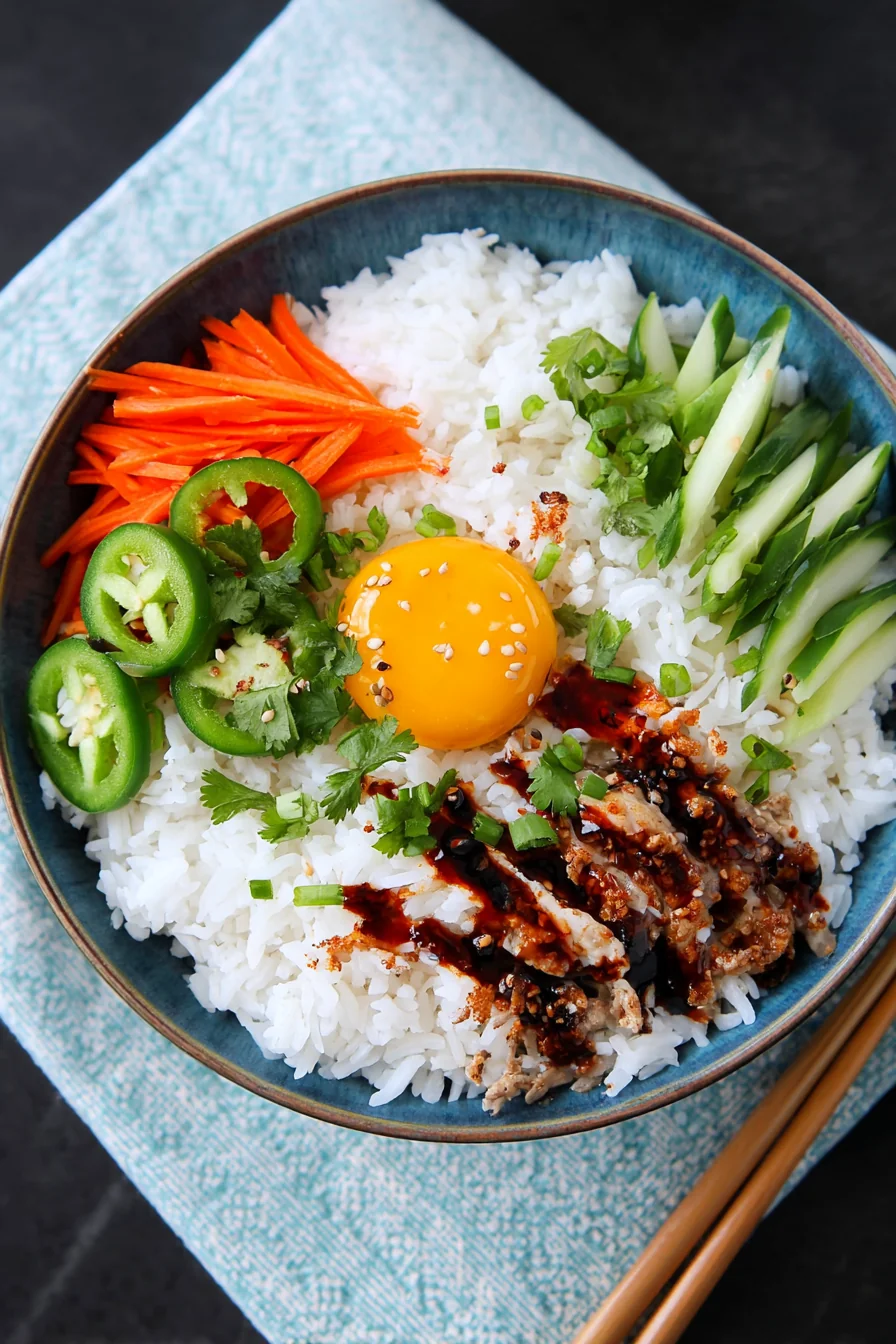
Why You’ll Love This Recipe
- Quick and Easy: Ready in just 30 minutes, perfect for busy weeknights.
- Flavorful Ingredients: The combination of soy sauce and sesame oil adds depth and umami to the dish.
- Nutritious and Balanced: Packed with vegetables and protein, making it a well-rounded meal.
- Customizable: Easily adapt to your dietary preferences or what you have on hand.
- Meal Prep Friendly: Great for making ahead and enjoying throughout the week.
- Visually Appealing: The colorful ingredients make for an inviting presentation.
Ingredients & Preparation Notes
- Jasmine rice: Known for its fragrant aroma and slightly sticky texture when cooked. Rinse well before cooking to remove excess starch for fluffier results.
- Soy sauce: Opt for low-sodium to control the saltiness of your dish. Tamari can be used as a gluten-free substitute.
- Sesame oil: Adds a rich, nutty flavor. A little goes a long way, so measure carefully.
- Mixed vegetables: Choose a variety of colors and textures for a balanced meal. Fresh or frozen work well.
- Protein: Chicken, tofu, or shrimp are excellent options. Ensure they’re cooked to safe temperatures.
- Green onions and sesame seeds: These add a fresh crunch and visual appeal. Toasting the sesame seeds enhances their flavor.
When selecting ingredients, opt for fresh, high-quality produce and proteins for the best results. Consider seasonal vegetables for variety and flavor.
Professional Tips & Techniques
- Rice Cooking: The key to perfect Jasmine rice is the right water ratio (2:1) and not lifting the lid during cooking. This allows the steam to stay trapped, cooking the rice evenly.
- Vegetable Sauté: Cook vegetables quickly over medium heat to preserve their color and nutrients. Aim for a tender-crisp texture.
- Protein Preparation: If using raw protein, cook it separately before adding to the vegetables to ensure it reaches a safe internal temperature.
- Flavor Layering: Add soy sauce towards the end of cooking to maintain its flavor without burning. The same goes for sesame oil; a drizzle at the end can enhance the dish’s aroma.
- Visual Cues: Look for the rice to have small steam holes on the surface, indicating it’s done. The vegetables should be vibrant and slightly firm.
Recipe Variations
- Vegetarian: Substitute tofu or tempeh for the protein, and use tamari instead of soy sauce for a gluten-free option.
- Seafood Lover: Swap out the protein for shrimp or salmon for a seafood twist.
- Spicy Kick: Add sriracha or chili flakes to the vegetable and protein mix for some heat.
- Herbaceous: Incorporate fresh herbs like cilantro or Thai basil for a burst of freshness.
- Seasonal Twist: Use seasonal vegetables like asparagus in spring or butternut squash in fall.
- Grain Swap: Try using quinoa or brown rice for a different texture and nutritional profile.
- Sauce Variation: Experiment with different sauces like teriyaki or hoisin for varied flavor profiles.
- Breakfast Bowl: Top with a fried egg and avocado for a hearty morning meal.
Serving Suggestions
- Casual Dinner: Serve the bowls as is, perhaps with a side of miso soup for a complete meal.
- Family Style: Arrange all components separately on the table and let everyone build their own bowls.
- Entertaining: Elevate the presentation by serving in individual bowls with chopsticks and a garnish of edible flowers.
- Side Dishes: Pair with a simple cucumber salad or edamame for added freshness and texture.
- Wine Pairing: A light, crisp white wine like Sauvignon Blanc complements the flavors well.
- Presentation Tip: Use a ring mold to shape the rice for a restaurant-quality look.
Storage & Make-Ahead Tips
- Refrigeration: Store leftovers in airtight containers in the fridge for up to 3 days.
- Freezing: Rice and vegetables can be frozen separately for up to 3 months. Thaw in the fridge before reheating.
- Make-Ahead: Prepare the rice and protein ahead of time, then reheat and assemble with fresh vegetables for a quick meal.
- Reheating: Microwave or steam the components to maintain texture and flavor.
Frequently Asked Questions
Q: Can I make this ahead of time?
A: Yes, you can prepare the rice and protein in advance. Assemble the bowls with fresh vegetables when ready to serve.
Q: What can I use instead of Jasmine rice?
A: You can use basmati, brown rice, or even quinoa for a different texture and nutritional profile.
Q: How do I know when the rice is done?
A: Look for small steam holes on the surface of the rice and listen for the absence of bubbling, indicating all water has been absorbed.
Q: Can I use frozen vegetables?
A: Absolutely, just thaw them before cooking or add a few extra minutes to the sauté time.
Q: Is this recipe gluten-free?
A: Yes, if you use tamari instead of soy sauce, it can be made gluten-free.
Q: How can I make this vegan?
A: Use tofu or tempeh as your protein source and ensure all other ingredients are vegan-friendly.
Q: Can I add more flavor to the rice?
A: Yes, try cooking the rice in vegetable or chicken broth instead of water for added flavor.
Q: What’s the best way to reheat leftovers?
A: Microwave or steam the components separately to maintain their texture and flavor.
Conclusion
The Jasmine Rice Bowl is a versatile and delicious meal that’s perfect for any occasion. Its quick preparation and customizable nature make it a go-to for busy cooks, while the professional tips ensure perfect results every time. Give this recipe a try and enjoy a flavorful, nutritious meal in minutes.
Don’t forget to share your creations on social media and let us know how you made it your own! For an extra touch, serve with a wedge of lime to brighten the flavors.
Jasmine Rice Bowl
Equipment
- Medium saucepan with lid
- Skillet
- Measuring cups and spoons
Ingredients
- 1 cup Jasmine rice Rinsed until water runs clear
- 2 cups Water
- 1 tbsp Soy sauce Low-sodium preferred
- 1 tbsp Sesame oil
- 1 cup Mixed vegetables Broccoli, bell peppers, carrots, etc.
- 1 cup Protein Cooked chicken, tofu, or shrimp
- 2 tbsp Green onions Sliced
- 1 tbsp Sesame seeds Toasted
Instructions
- In a medium saucepan, combine the rinsed Jasmine rice and water. Bring to a boil, then reduce heat to low, cover, and simmer for 18-20 minutes until the water is absorbed and the rice is tender.
- While the rice cooks, heat sesame oil in a skillet over medium heat. Add mixed vegetables and sauté until just tender, about 5-7 minutes. Add protein and soy sauce, stirring to combine and heat through.
- Once the rice is cooked, fluff with a fork and divide among four bowls. Top each bowl with the vegetable and protein mixture, then garnish with green onions and sesame seeds.