
Why You’ll Love This Recipe
- Quick and Easy: Ready in just 15 minutes, perfect for busy weeknights.
- Versatile: Pairs wonderfully with seafood, chicken, or even vegetables.
- Flavorful: The tangy lemon and briny capers create a bright and savory sauce.
- Healthy: Low in calories and packed with nutrients from fresh ingredients.
- Customizable: Easily adjust the flavors to suit your taste preferences.
Ingredients & Preparation Notes
- Butter: Use unsalted butter to control the saltiness of the sauce.
- Olive oil: Adds a subtle richness and helps prevent the butter from burning.
- Garlic: Mince finely for even distribution of flavor throughout the sauce.
- Chicken broth: Opt for low-sodium to manage the salt level; vegetable broth works as a substitute.
- Lemon juice: Freshly squeezed is best for vibrant flavor; bottled juice can be used in a pinch.
- Capers: Rinse to reduce saltiness, but keep some brine for added flavor.
- Dijon mustard: Adds a slight tang and helps emulsify the sauce.
- Fresh parsley: Adds a fresh, herbaceous note to balance the sauce.
Professional Tips & Techniques
- Temperature Control: Keep the heat at medium to prevent the garlic from burning and to allow the sauce to reduce gently.
- Reduction: Simmering the sauce helps concentrate flavors and thicken it slightly. Watch for bubbles to know when it’s simmering.
- Emulsification: The Dijon mustard helps to emulsify the sauce, creating a smooth texture. Whisk well to incorporate.
- Visual Cues: The sauce is ready when it coats the back of a spoon. If it’s too thin, simmer a bit longer; if too thick, add a splash of broth.
Recipe Variations
- Herb Variations: Try adding different herbs like dill or tarragon for a new flavor profile.
- Creamy Version: Finish the sauce with a splash of heavy cream for a richer texture.
- Vegan Option: Use vegan butter and vegetable broth to make this sauce plant-based.
- Spicy Twist: Add a pinch of red pepper flakes for a bit of heat.
- Citrus Blend: Combine lemon juice with a splash of orange juice for a more complex citrus flavor.
- Thicker Sauce: For a thicker sauce, you can whisk in a cornstarch slurry at the end of cooking.
- Wine Infusion: Substitute half of the chicken broth with white wine for a more sophisticated taste.
Serving Suggestions
- Seafood: Drizzle over grilled salmon, pan-seared scallops, or shrimp for a perfect pairing.
- Chicken: Serve with roasted or pan-fried chicken breasts for a zesty finish.
- Vegetables: Use as a dressing for steamed asparagus or roasted Brussels sprouts.
- Pasta: Toss with cooked pasta and a bit of pasta water for a quick and delicious meal.
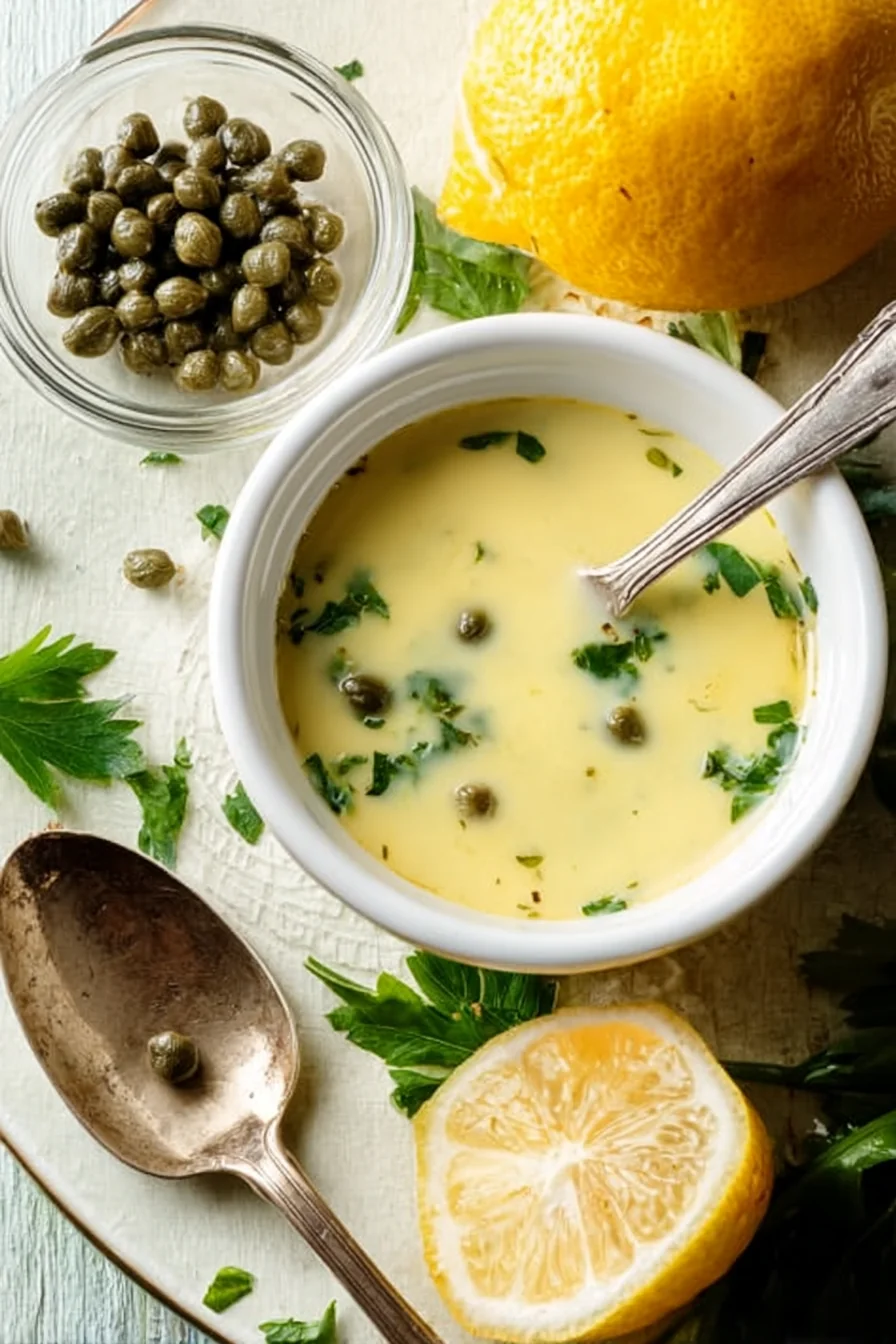
- Presentation: Garnish with a lemon slice and a sprinkle of fresh parsley for an elegant touch.
- Pairing: Pairs well with a crisp white wine like Sauvignon Blanc or a light Chardonnay.
Storage & Make-Ahead Tips
- Refrigeration: Store leftovers in an airtight container in the refrigerator for up to 3 days.
- Freezing: The sauce can be frozen for up to 1 month; thaw in the refrigerator before reheating.
- Reheating: Gently reheat on the stove over low heat, stirring occasionally to prevent separation.
- Make-Ahead: Prepare the sauce a day in advance and reheat before serving. It may thicken in the fridge, so add a splash of broth when reheating.
Frequently Asked Questions
Q: Can I make this sauce ahead of time?
A: Yes, you can make the sauce a day in advance. Store it in the refrigerator and reheat gently before serving.
Q: What can I substitute for capers if I don’t have them?
A: You can use chopped green olives or pickles for a similar briny flavor, though the taste will be slightly different.
Q: Can I use bottled lemon juice instead of fresh?
A: Yes, but fresh lemon juice will give a brighter, more vibrant flavor. Use bottled juice if necessary, but adjust the amount to taste.
Q: How can I thicken the sauce if it’s too thin?
A: Simmer the sauce a bit longer to reduce it, or whisk in a cornstarch slurry (mix 1 tsp cornstarch with 1 tbsp water) at the end of cooking.
Q: Is this sauce suitable for a gluten-free diet?
A: Yes, as long as you use gluten-free chicken broth, this sauce is gluten-free.
Q: Can I use this sauce with other proteins besides seafood?
A: Absolutely, it pairs well with chicken, pork, and even tofu for a versatile flavor boost.
Q: How do I prevent the garlic from burning?
A: Keep the heat at medium and sauté the garlic for just 1 minute until fragrant. Stir constantly to avoid burning.
Q: Can I freeze this sauce?
A: Yes, you can freeze it for up to 1 month. Thaw in the refrigerator and reheat gently on the stove.
Conclusion
The Lemon Caper Sauce is a versatile and flavorful addition to any meal, perfect for enhancing seafood, chicken, or vegetables. With its quick preparation and bright, tangy taste, it’s an easy way to elevate your dishes. Give this recipe a try and let me know how it turns out!
Share your creations on social media and tag me for a chance to be featured. Enjoy the burst of flavor this sauce brings to your table.
Lemon Caper Sauce
Equipment
- Medium saucepan
- Whisk or spoon for stirring
Ingredients
- 2 tbsp Butter Unsalted preferred
- 1 tbsp Olive oil
- 2 cloves Garlic Minced
- 1 cup Chicken broth Low-sodium
- 1/4 cup Lemon juice Freshly squeezed
- 2 tbsp Capers Drained and rinsed
- 1 tbsp Dijon mustard
- 1 tbsp Fresh parsley Chopped
- Salt and pepper To taste
Instructions
- In a medium saucepan over medium heat, melt the butter with the olive oil. Add the minced garlic and sauté for about 1 minute until fragrant.
- Pour in the chicken broth and lemon juice, stirring to combine. Bring the mixture to a simmer and let it cook for 5 minutes to reduce slightly.
- Stir in the capers and Dijon mustard, then continue to simmer for another 3-4 minutes until the sauce thickens slightly.
- Remove the saucepan from the heat, and stir in the chopped parsley. Season with salt and pepper to taste.