
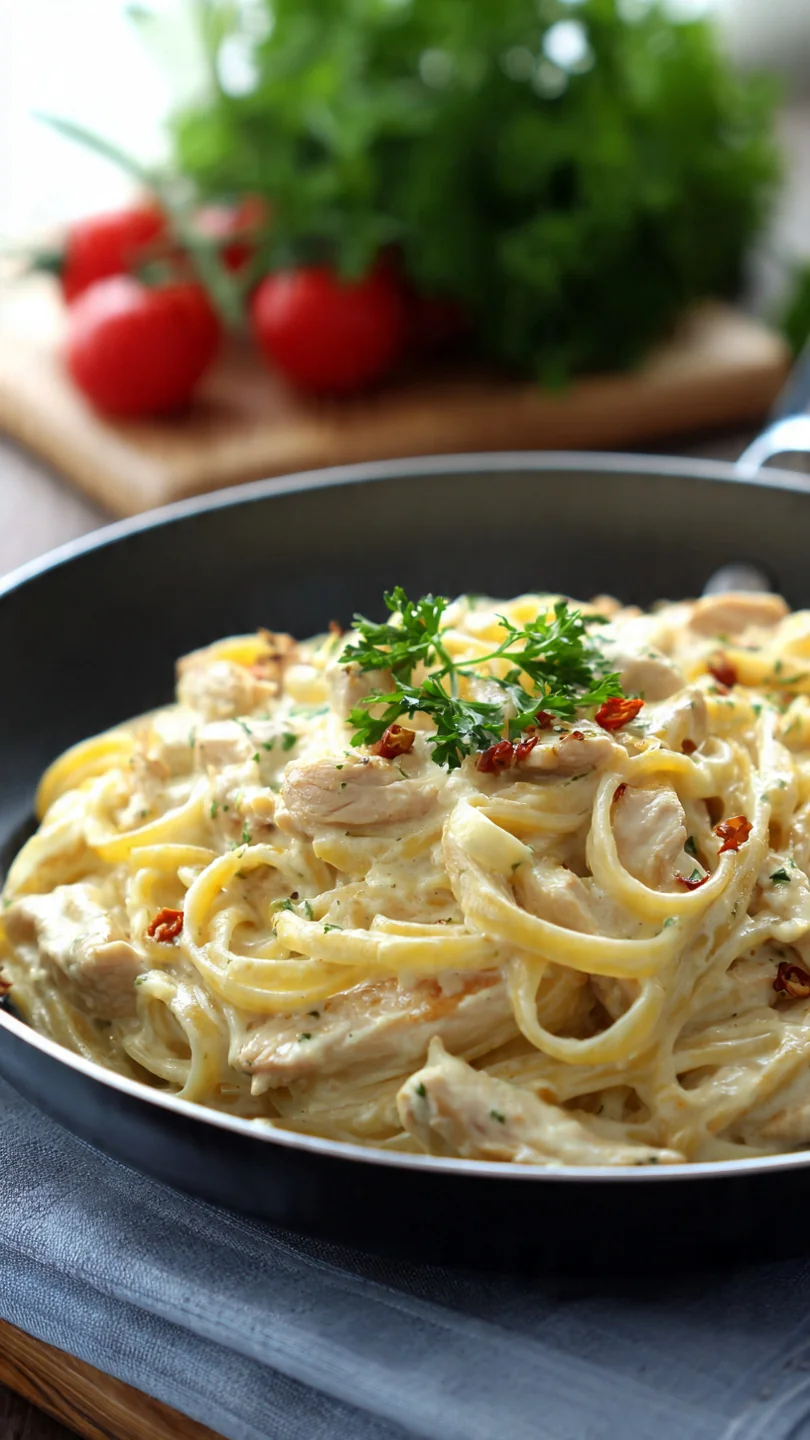
There’s something undeniably comforting about a bowl of creamy Alfredo pasta, but the traditional version can leave you feeling weighed down. What if you could have that same luxurious, velvety sauce clinging to every strand of pasta, but feel energized and satisfied after your meal? As a chef who has made gallons of the classic heavy cream-based sauce, I set out to create a version that delivers on every promise of flavor and texture, while being something you can enjoy any night of the week.
This Low Calorie Chicken Alfredo is that dish—a clever, kitchen-tested formula where humble cauliflower transforms into a shockingly rich base, Greek yogurt adds tang and protein, and a good sear on the chicken builds layers of flavor. The result is a dinner that feels like a treat, but is built on smart, wholesome ingredients.
This recipe isn’t about deprivation; it’s about a smarter, more satisfying way to enjoy a classic. Here’s what makes it a keeper:
- Restaurant-Quality at Home: Achieves a creamy, luxurious sauce texture that rivals the original, using professional blending techniques.
- Macro-Balanced Meal: Packed with nearly 40 grams of protein per serving and a good dose of fiber, it’s designed to keep you full and fueled.
- Weeknight Fast: From pot to plate in about 35 minutes, with straightforward steps that flow together efficiently.
- Covertly Veggie-Packed: The entire head of cauliflower disappears into the sauce, making it a great way to add vegetables to your diet.
- Highly Customizable: The base recipe is a perfect canvas for your favorite add-ins, from sun-dried tomatoes to different proteins.
- Meal-Prep Friendly: The sauce and chicken can be made ahead, making assembly on busy nights a breeze.
Ingredients You’ll Need
- Let’s gather our ingredients—this is where the magic happens. The beauty of this recipe is how simple pantry staples and a few fresh items come together to create something that feels indulgent. The cauliflower is the star of the show, providing the body and creaminess without the need for cups of heavy cream. Using a good, freshly grated Parmesan cheese is non-negotiable for that authentic salty, nutty flavor. Trust me, the pre-grated stuff won’t melt as smoothly. The touch of nutmeg is a classic chef’s secret for enhancing creamy sauces; it adds a warm, subtle depth that makes the sauce taste more complex.
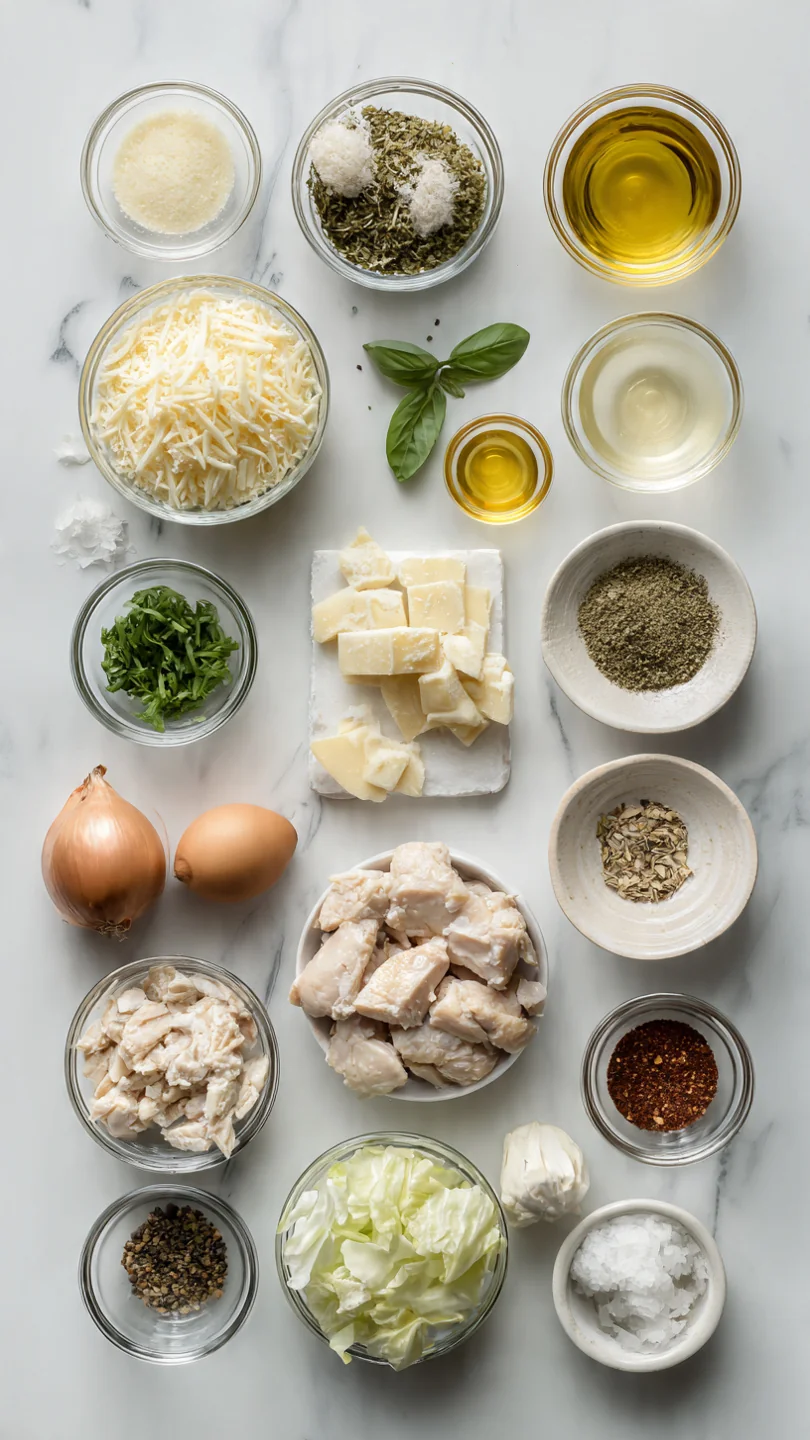
Note: You’ll find the complete list of ingredients, along with their exact measurements, in the printable recipe card at the bottom of this post.
Kitchen Equipment Needed
You don’t need any special equipment, but a few key tools will make the process seamless. A high-powered blender is ideal for getting the cauliflower sauce perfectly silky, though an immersion blender will work in a pinch. A large skillet or Dutch oven is essential for cooking the chicken and then bringing the whole dish together.
You’ll also need a large pot for boiling the pasta and cauliflower, a box grater for the Parmesan (freshly grated melts better!), and the usual suspects: a cutting board, chef’s knife, and measuring tools.
How to Make Low Calorie Chicken Alfredo Recipe
Step 1: Create the Creamy Cauliflower Base
Bring a large pot of well-salted water to a rolling boil. Add the cauliflower florets and let them cook until they are fork-tender and almost falling apart, about 8-10 minutes. This tenderness is crucial for a smooth sauce.
Using a slotted spoon, transfer the hot cauliflower directly to your blender. Reserve that flavorful boiling water in the pot—you’ll use it for the pasta next. To the blender, add the almond milk, Greek yogurt, half of your Parmesan, the minced garlic, onion powder, nutmeg, and a good pinch of salt and pepper.
Blend on high for a full 1-2 minutes until the mixture is completely smooth, with no graininess. Tip from me: blending while the cauliflower is hot helps emulsify the sauce into a velvety texture. Taste and adjust the seasoning; it should be well-seasoned now to carry through the whole dish.
Step 2: Cook the Pasta Perfectly
Return the pot of water to a boil and add your pasta of choice. Cook it according to the package directions, but aim for al dente—it will finish cooking in the sauce later. Just before draining, scoop out about 1/2 cup of the starchy pasta water.
This liquid gold is your secret weapon for adjusting the sauce consistency. Drain the pasta and set it aside. Using whole wheat or a legume-based pasta like chickpea adds extra protein and fiber, making the meal even more substantial.
Step 3: Sear the Chicken for Maximum Flavor
While the pasta cooks, pat your chicken pieces dry and season them generously on all sides with salt and pepper. Heat the olive oil in a large skillet over medium-high heat until it shimmers. Add the chicken in a single layer, giving each piece space.
Resist the urge to move it for a good 4-5 minutes to allow a deep golden-brown sear to form. This sear, or fond, on the bottom of the pan is packed with flavor. Flip the chicken and cook until it’s just cooked through, about 4-5 more minutes.
Remove the chicken to a plate. You’ve now built a flavor foundation in that pan.
Step 4: Bring the Sauce and Components Together
Reduce the heat under the skillet to medium-low. Pour your beautifully smooth cauliflower sauce right into the same pan you cooked the chicken in. As it heats for 2-3 minutes, use a wooden spoon to scrape up any of those delicious browned bits from the chicken.
This simple step infuses the entire sauce with a savory, meaty depth. If the sauce seems thicker than you’d like, this is the moment to whisk in a splash of that reserved pasta water until it reaches a creamy, coating consistency.
Step 5: Combine, Finish, and Serve
Now comes the satisfying part. Add the drained pasta and the cooked chicken back into the skillet with the warm sauce. Gently toss everything together for a couple of minutes until the pasta is evenly coated and everything is heated through.
Off the heat, stir in the remaining Parmesan cheese—it will melt into the sauce, enriching it further. Serve immediately in warm bowls. Garnish with a sprinkle of fresh parsley, a crack of black pepper, and an extra dusting of Parmesan if you like.
Step back and admire your creation: a creamy, dreamy, guilt-free Alfredo that’s ready to delight.
A few chef-level insights will guarantee your success every time you make this.
- Sauce Smoothness is Key: For an absolutely silken sauce, let the blender run for a full two minutes. The friction from prolonged blending helps break down the cauliflower completely, preventing any graininess.
- Temperature Management: Add the Greek yogurt to the blender with the hot cauliflower. The heat helps it incorporate smoothly without seizing or curdling, which can happen if you add it later to a hot pan.
- Don’t Crowd the Chicken: Cooking the chicken in a single layer is non-negotiable. If you pile it in, the pieces will steam and release liquid, preventing that crucial, flavorful sear from forming.
- Salt in Layers: Season the cauliflower water, season the sauce in the blender, and season the chicken. Building seasoning in stages creates a more balanced and developed final flavor than adding all the salt at the end.
- The Pasta Water Trick: The reserved starchy water is your best friend. It loosens the sauce perfectly and the starch helps the sauce cling to the pasta, mimicking the luxurious texture of a traditional, butter-and-cream-bound sauce.
Recipe Variations & Customizations
- This recipe is wonderfully adaptable. Here are some tested variations to make it your own.
- Mushroom Lover’s Alfredo: Add 8 oz of sliced cremini mushrooms to the skillet after removing the chicken. Sauté until browned and tender, then proceed with the sauce. Their earthy flavor is fantastic.
- Sun-Dried Tomato & Spinach: Stir in 1/3 cup of chopped sun-dried tomatoes (oil-packed, drained) and two large handfuls of fresh baby spinach when you combine the pasta and sauce. The spinach will wilt perfectly.
- Garlic Shrimp Alfredo: Swap the chicken for 1 lb of large peeled shrimp. Sear them quickly for 1-2 minutes per side until pink, then remove and add back at the end.
- Vegan/Dairy-Free Version: Use nutritional yeast instead of Parmesan and a plain, unsweetened vegan yogurt. For the protein, use chickpeas or a plant-based chicken alternative.
- Extra Herbaceous: Blend a handful of fresh basil or parsley into the cauliflower sauce for a vibrant green color and fresh flavor.
- Spicy Kick: Add 1/2 teaspoon of red pepper flakes to the skillet when you’re warming the sauce for a gentle, warming heat.
What to Serve With This Recipe
This Chicken Alfredo is a complete meal with protein, carbs, and veggies, but a simple side can round out the dinner table beautifully. A crisp green salad with a light lemon vinaigrette provides a refreshing contrast to the creamy pasta. For a vegetable side, roasted asparagus or sautéed green beans with almonds add color and texture.
If you’re serving a crowd, a loaf of crusty whole-grain bread is perfect for sopping up any extra sauce. For beverages, a dry white wine like Pinot Grigio complements the dish well, or a sparkling water with lemon keeps things light.
Storage & Make-Ahead Instructions
- This dish is best enjoyed fresh, but leftovers can be stored successfully.
- Refrigerator: Store leftovers in an airtight container for up to 3 days. The sauce will thicken significantly when chilled.
- Reheating: Reheat gently in a skillet over low heat, adding a splash of milk, broth, or water to loosen the sauce back to a creamy consistency. The microwave can work but may cause the sauce to separate slightly; stir well.
- Freezing: I don’t recommend freezing the fully assembled dish, as the cauliflower sauce can become watery and grainy upon thawing. However, you can freeze the cooked, plain chicken pieces for up to 2 months.
- Make-Ahead: You can make the cauliflower sauce up to 2 days in advance. Store it in a sealed container in the fridge. Gently reheat it in a saucepan, whisking in a little liquid to refresh the consistency, before combining with freshly cooked pasta and chicken.
Frequently Asked Questions
Q: Can I really not taste the cauliflower?
A: Believe me, when blended smooth with the garlic, Parmesan, and seasonings, the cauliflower provides the creamy texture and body but not a distinct “cauliflower” flavor. It becomes a neutral, nutritious base that carries the other flavors beautifully.
Q: My sauce turned out too thin. How can I fix it?
A: Let it simmer in the skillet for a few extra minutes to reduce and thicken. Alternatively, you can whisk in an extra tablespoon of grated Parmesan or a teaspoon of cornstarch slurry (cornstarch mixed with a little cold water).
Q: Can I use frozen cauliflower florets?
A: Yes, you can. Use them straight from frozen, but you may need to boil them for a minute or two longer to ensure they are completely tender. Thawed frozen cauliflower can contain more water, so you might need to reduce the almond milk slightly or simmer the finished sauce longer.
Q: Is there a substitute for Greek yogurt?
A: For a similar tang and protein boost, you can use low-fat cottage cheese blended until smooth. For a dairy-free version, a plain, unsweetened vegan yogurt or a scoop of raw cashew butter can work, though the flavor profile will change.
Q: How can I make this gluten-free?
A: Simply use your favorite gluten-free pasta. Be sure to reserve the pasta water, as gluten-free pasta starches are excellent for thickening the sauce.
Q: The sauce seems to separate a bit when I reheat it. What happened?
A: This can happen with emulsions. The best fix is to reheat it slowly over low heat and whisk vigorously. Adding a small fresh splash of milk or yogurt and whisking it in can help rebind the sauce.
Q: Can I add broccoli or other veggies to the pasta itself?
A: Absolutely! Add chopped broccoli florets to the pasta water during the last 3-4 minutes of cooking. You can also stir in peas, roasted red peppers, or artichoke hearts when you combine everything in the skillet.
Final Thoughts
This Low Calorie Chicken Alfredo is a testament to how smart ingredient swaps and solid technique can transform a heavy classic into a nourishing, everyday favorite. It’s the recipe I make when I want comfort food that doesn’t compromise—a dish that feels celebratory but is practical enough for a Wednesday night. The creamy, garlicky sauce, the tender chicken, and the satisfying pasta come together in a way that will make you forget it’s a “lightened-up” version.
I hope this recipe brings as much joy to your table as it has to mine. If you give it a try, I’d love to hear how it turned out! Share your creations online and tag me, or leave a comment with your favorite variation.
Happy, healthy cooking
Low Calorie Chicken Alfredo
Equipment
- Large pot
- Blender or immersion blender
- Large skillet or Dutch oven
- Chef’s knife and cutting board
- Box grater (for Parmesan)
Ingredients
- 1 medium head Cauliflower cut into florets (about 4-5 cups)
- 3/4 cup Unsweetened almond milk or low-fat milk
- 1/3 cup Plain non-fat Greek yogurt
- 1/2 cup Freshly grated Parmesan cheese plus extra for serving
- 3 cloves Garlic minced
- 1/2 tsp Onion powder
- 1/4 tsp Freshly grated nutmeg optional but recommended
- 1 lb Boneless, skinless chicken breasts cut into 1-inch pieces
- 8 oz Whole wheat or chickpea pasta like fettuccine or linguine
- 1 tbsp Olive oil
- Kosher salt and black pepper
- Fresh parsley chopped, for garnish
Instructions
- Bring a large pot of salted water to a boil. Add the cauliflower florets and cook until very tender, about 8-10 minutes. Using a slotted spoon, transfer the cauliflower to a blender, reserving the boiling water in the pot. To the blender, add the almond milk, Greek yogurt, half of the Parmesan cheese, garlic, onion powder, nutmeg, and a generous pinch of salt and pepper. Blend on high until completely smooth and creamy, about 1-2 minutes. Taste and adjust seasoning. Set the sauce aside.
- Return the pot of water to a boil and cook your pasta according to package directions for al dente. Before draining, reserve about 1/2 cup of the starchy pasta water. Drain the pasta and set aside.
- While the pasta cooks, season the chicken pieces generously with salt and pepper. Heat the olive oil in a large skillet or Dutch oven over medium-high heat. Add the chicken in a single layer and cook without moving for 4-5 minutes to get a good sear. Flip and cook until the chicken is cooked through and no longer pink in the center, about 4-5 more minutes. Remove the chicken from the skillet and set aside.
- Reduce the heat to medium-low. Pour the prepared cauliflower sauce into the same skillet. Let it warm through for 2-3 minutes, stirring occasionally. If the sauce seems too thick, whisk in a splash of the reserved pasta water to reach your desired consistency.
- Add the drained pasta and cooked chicken back to the skillet with the sauce. Toss everything together gently until the pasta and chicken are evenly coated and heated through, about 2 minutes. Stir in the remaining Parmesan cheese. Serve immediately, garnished with fresh parsley, extra black pepper, and a sprinkle of Parmesan.