
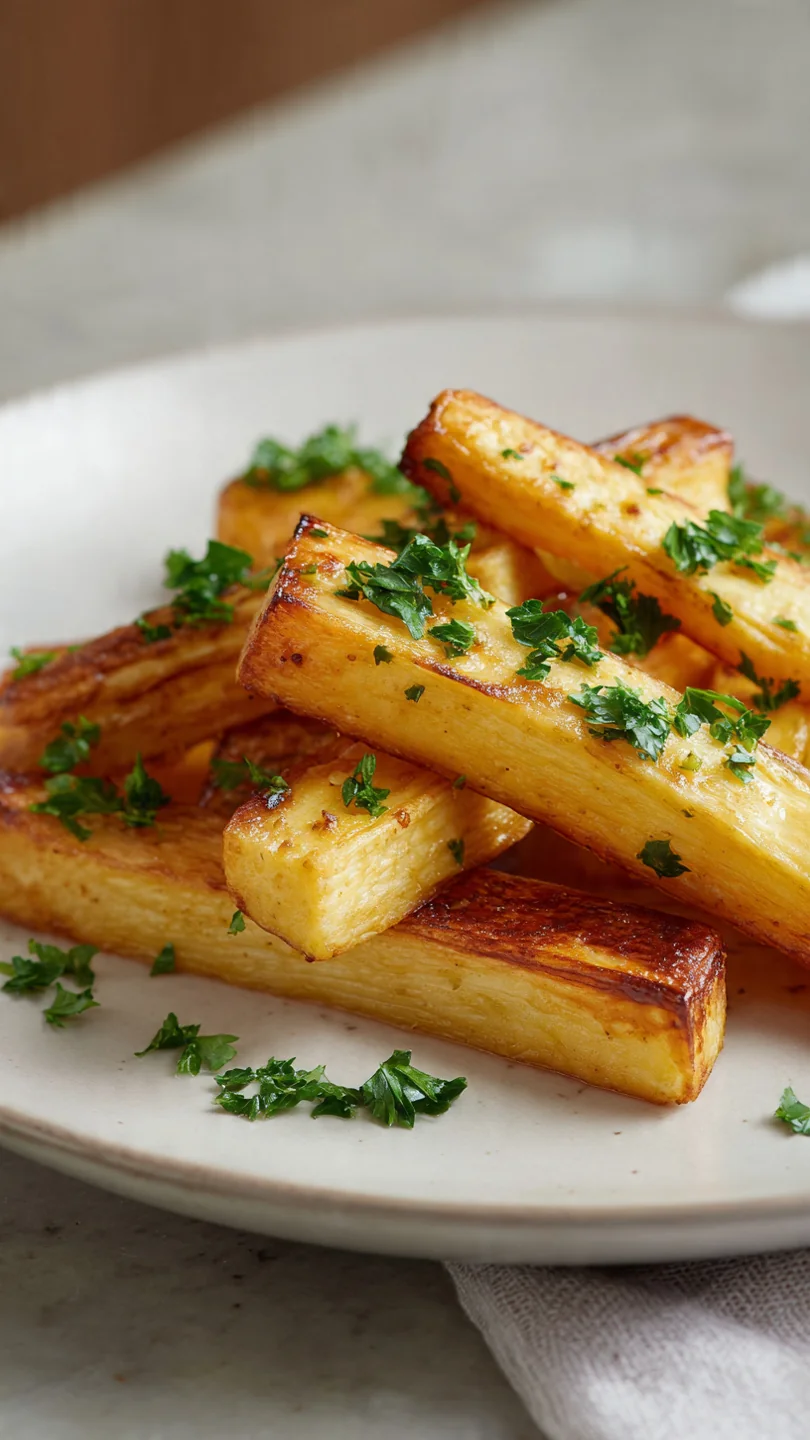
There’s a quiet magic that happens when humble root vegetables meet the intense heat of your oven. The natural sugars concentrate, edges crisp, and flavors deepen into something profoundly satisfying. Parsnips, with their sweet, almost nutty essence, are perhaps the best canvas for this transformation.
Tossed in a simple glaze of whole grain mustard and honey, they roast into sticky, caramelized batons that are impossible to stop eating. Finished with a bright sprinkle of fresh parsley, this dish is the side that often steals the show—elegant enough for a holiday table yet simple enough for a Tuesday night.
This recipe earns a permanent spot in your rotation for several compelling reasons. After testing it multiple times in my own kitchen, here’s what makes it a winner:
- Effortless Elegance: With just a handful of pantry ingredients and one baking sheet, you create a side dish that looks and tastes far more sophisticated than the effort required.
- Perfect Texture: The high-heat roasting method ensures you get tender, creamy interiors and delightfully caramelized, slightly crisp edges—never soggy or steamed.
- Big Flavor Balance: The glaze is a masterclass in balance. The honey mellows the mustard’s bite and encourages browning, while the mustard adds a savory, complex depth that keeps the sweetness in check.
- Diet-Friendly Flexibility: This recipe is naturally vegetarian, gluten-free, dairy-free, and nut-free. With one simple swap (maple syrup for honey), it becomes fully vegan.
- Meal Prep Friendly: These parsnips reheat beautifully, making them a fantastic make-ahead option for busy weeks or streamlined holiday cooking.
Ingredients You’ll Need
- Let’s gather our ingredients—this short list is a testament to how a few quality components can create extraordinary flavor. The magic lies in the combination and technique.
- Parsnips: Look for firm, medium-sized parsnips without significant blemishes or soft spots. Larger parsnips can have a woody core, which is best trimmed out after peeling.
- Olive Oil: A good extra virgin olive oil forms the base of our glaze and helps conduct heat for even roasting. Its fruity notes complement the parsnips beautifully.
- Whole Grain Mustard: I prefer the texture and mild tang of whole grain mustard here. Its seeds pop with flavor. A smooth Dijon mustard is a perfect, more refined substitute if that’s what you have.
- Honey: This is our natural sweetener that caramelizes under heat. For a deeper flavor, try using a darker honey like buckwheat. As noted, pure maple syrup works for a vegan version.
- Fresh Parsley: Don’t underestimate this final garnish. The fresh, grassy pop of parsley cuts through the richness of the roasted glaze and adds a vital note of color and freshness.
Kitchen Equipment Needed
You likely have everything you need already. The essentials are a large rimmed baking sheet (often called a half-sheet pan), a large mixing bowl, and a whisk. A good chef’s knife makes prepping the parsnips easy.
I don’t recommend crowding the vegetables onto a smaller pan, as they will steam instead of roast. If you have one, a microplane is excellent for adding a final zest of lemon over the top, though it’s optional.
How to Make Mustard and Honey Roasted Parsnips Recipe
Step 1: Heat the Oven and Prep the Pan
Preheat your oven to a solid 425°F (220°C). This high temperature is non-negotiable for proper caramelization. While it heats, take a moment to lightly coat your baking sheet with a thin film of olive oil or line it with parchment paper.
Trust me, this small step makes cleanup effortless and prevents any sticky glaze from welding itself to your pan.
Step 2: Make the Flavor-Packed Glaze
In your large mixing bowl, combine the olive oil, mustard, honey, salt, and pepper. Whisk it vigorously for about 30 seconds. You’re looking for it to emulsify slightly—the oil and honey/mustard will come together into a cohesive, glossy sauce.
This emulsion is key; it coats the parsnips evenly so every bite is flavorful.
Step 3: Coat and Arrange the Parsnips
Add your prepped parsnip batons to the bowl with the glaze. Now, use your hands (the best tools for the job!) to toss and massage the glaze onto every surface of the parsnips. Tip from me: Get in there and make sure no piece is left naked.
Spread them out in a single, uncrowded layer on your prepared pan. Crowding is the enemy of browning.
Step 4: Roast and Flip for Perfection
Slide the pan into the hot oven and set your timer for 15 minutes. When it goes off, pull the tray out. You’ll already smell the incredible aroma.
This is the crucial flip. Use a spatula to turn and stir the parsnips, moving the ones from the edges to the center and vice-versa. Believe me, this ensures uniform caramelization and no burnt spots.
Step 5: Finish, Garnish, and Serve
Return the pan to the oven for another 10-15 minutes. They’re done when easily pierced with a fork and gloriously spotted with deep golden-brown color. Transfer them to a serving dish and immediately shower them with the chopped fresh parsley.
The residual heat will wilt it just enough. Step back and admire your beautiful, fragrant creation before serving warm.
A few insights from my years in professional kitchens will guarantee your success every single time.
- Uniformity is Key: Try to cut your parsnip batons to a similar thickness (about 1/2 to 3/4-inch thick). This ensures they all finish cooking at the same time, so you don’t have some pieces mushy while others are still hard.
- Don’t Fear the Dark Spots: Those deep brown, almost blackened edges? That’s flavor. That’s caramelization. It’s not burning (unless it’s smoking and acrid). Embrace those sticky, dark bits—they’re the best part.
- The Single Layer Rule: I can’t stress this enough. If you pile the parsnips on top of each other, they’ll steam in their own moisture. Giving them space allows hot, dry air to circulate, which is what creates the perfect roasted texture.
- Glaze Adjustments: Taste your glaze before tossing the parsnips. If you prefer more tang, add an extra half teaspoon of mustard. For more sweetness, a drizzle more honey. This is your dish—make it to your taste.
Recipe Variations
- This recipe is wonderfully adaptable. Here are some tested variations that work beautifully.
- Maple-Balsamic Twist: Replace the honey with pure maple syrup and add 1 teaspoon of good balsamic vinegar to the glaze for a deeper, more complex sweetness with a hint of acidity.
- Spicy Kick: Add 1/4 to 1/2 teaspoon of crushed red pepper flakes or a few cracks of freshly ground black pepper to the glaze for a gentle warmth that plays nicely with the sweetness.
- Herb-Infused: Add 1 teaspoon of finely chopped fresh rosemary or thyme to the glaze before tossing with the parsnips. The woody herbs roast beautifully and add a fantastic fragrance.
- Citrus Brightness: Add the zest of one lemon or orange to the glaze. After roasting, finish with the parsley and a final squeeze of the fresh citrus juice for a vibrant, sunny lift.
- Parmesan Crust: For a cheesy finish, sprinkle 2-3 tablespoons of finely grated Parmesan cheese over the parsnips in the last 5 minutes of roasting. It will melt and form a delicious, savory crust.
What to Serve With This Recipe
These roasted parsnips are an incredibly versatile side. Their sweet-savory profile makes them a perfect partner for simple roast chicken, pork chops, or pan-seared salmon. For a vegetarian feast, pair them with a creamy lentil stew or a wholesome grain salad like farro or quinoa.
They are a stellar addition to a holiday spread alongside roast turkey or beef tenderloin, offering a brighter, more modern alternative to traditional candied sweet potatoes. For a complete, comforting plate, serve them with a dollop of mashed potatoes and some sautéed greens.
Storage & Make-Ahead Instructions
- Refrigeration: Allow the roasted parsnips to cool completely, then store them in an airtight container in the refrigerator for up to 4 days.
- Reheating: To restore their texture, reheat them in a 375°F oven on a baking sheet for 10-15 minutes until hot. The microwave will make them soft, but the oven method will help recrisp the edges.
- Freezing: I don’t recommend freezing, as the texture of the parsnips can become watery and mushy upon thawing.
- Make-Ahead: You can peel and cut the parsnips 1 day in advance. Store them submerged in cold water in the refrigerator to prevent browning. Drain and pat them very dry before proceeding with the recipe.
Frequently Asked Questions
Q: Can I use baby parsnips or leave the skins on?
A: Baby parsnips are wonderful—just roast them whole after a good scrub. For mature parsnips, I always recommend peeling. The skin can be tough, fibrous, and sometimes bitter, which detracts from the delicate final texture.
Q: My glaze is separating in the bowl. What did I do wrong?
A: Don’t worry! This can happen if the ingredients are very cold. Just whisk it vigorously again right before adding the parsnips.
The act of tossing will also help distribute it. It doesn’t need to be perfectly emulsified to taste great.
Q: How do I know when the parsnips are done roasting?
A: The best test is the fork test. Pierce the thickest piece with a fork; it should slide in with little to no resistance. Visual cues are a tender appearance and those beautiful caramelized patches all over.
Q: Can I make this with other root vegetables?
A: Absolutely. This glaze is fantastic on carrots, sweet potatoes, turnips, or a mix. Just be mindful that different vegetables have different cooking times, so you may need to cut harder veggies smaller or add quicker-cooking ones partway through.
Q: Is there a substitute for honey for a vegan version?
A: Yes, pure maple syrup is the best 1:1 substitute. Agave nectar will also work, though it has a milder flavor.
Q: My parsnips taste a bit bitter. Is that normal?
A: Very large, overmature parsnips can sometimes have a slightly bitter, woody core. If you encounter this, simply cut the parsnip in half lengthwise and use the tip of your knife to cut out the darker, denser core before cutting into batons.
Final Thoughts
This recipe embodies what I love most about cooking: transforming a few simple, wholesome ingredients into something truly special with minimal fuss. The combination of earthy parsnips, piquant mustard, and sweet honey creates a harmony of flavors that feels both comforting and sophisticated. It’s a dish that proves a great side doesn’t need a long ingredient list, just a solid technique.
I encourage you to give these mustard and honey roasted parsnips a try. Pay attention to the sound they make when you toss them in that glaze, and watch for that magical transformation in the oven. I’m confident they’ll become a new favorite.
When you make them, I’d love to hear how it went! Share your results or any creative twists you tried. And if you’re looking for more simple, vegetable-forward sides, explore the other recipes on the blog.
Happy roasting
Mustard and Honey Roasted Parsnips with Chopped Parsley
Equipment
- Large rimmed baking sheet (half-sheet pan)
- Large mixing bowl
- Whisk
- Chef’s knife and cutting board
- Spatula or tongs
Ingredients
- 1.5 pounds parsnips peeled, ends trimmed, cut into 3-inch batons
- 2 tablespoons olive oil extra virgin, plus more for the pan
- 1 tablespoon whole grain mustard Dijon mustard works perfectly as a substitute
- 1 tablespoon honey or pure maple syrup for a vegan version
- 0.5 teaspoon kosher salt plus more to taste
- 0.25 teaspoon black pepper freshly ground
- 2 tablespoons fresh parsley finely chopped, for garnish
Instructions
- Preheat your oven to 425°F (220°C). Lightly coat a large, rimmed baking sheet with olive oil or line it with parchment paper for easier cleanup. This high heat is key for achieving caramelization without steaming the vegetables.
- In a large mixing bowl, whisk together the 2 tablespoons of olive oil, whole grain mustard, honey, salt, and black pepper until you have a smooth, emulsified glaze. Add the parsnip batons to the bowl and use your hands or a spatula to toss them thoroughly, ensuring every piece is evenly coated with the glossy mixture.
- Arrange the coated parsnips in a single layer on your prepared baking sheet, making sure they aren’t crowded. This space allows hot air to circulate, promoting even browning and crisp edges. Roast in the preheated oven for 25-30 minutes.
- Halfway through the roasting time, at about the 15-minute mark, pull the tray from the oven. Use a spatula to flip and stir the parsnips. This simple move ensures all sides get that beautiful, sticky, golden-brown caramelization. Return to the oven to finish roasting.
- The parsnips are done when they are tender when pierced with a fork and have deep golden-brown, caramelized spots. Remove them from the oven and transfer to a serving platter. Immediately sprinkle the freshly chopped parsley over the top. The residual heat will wilt the parsley just slightly, releasing its fragrance. Serve warm.