
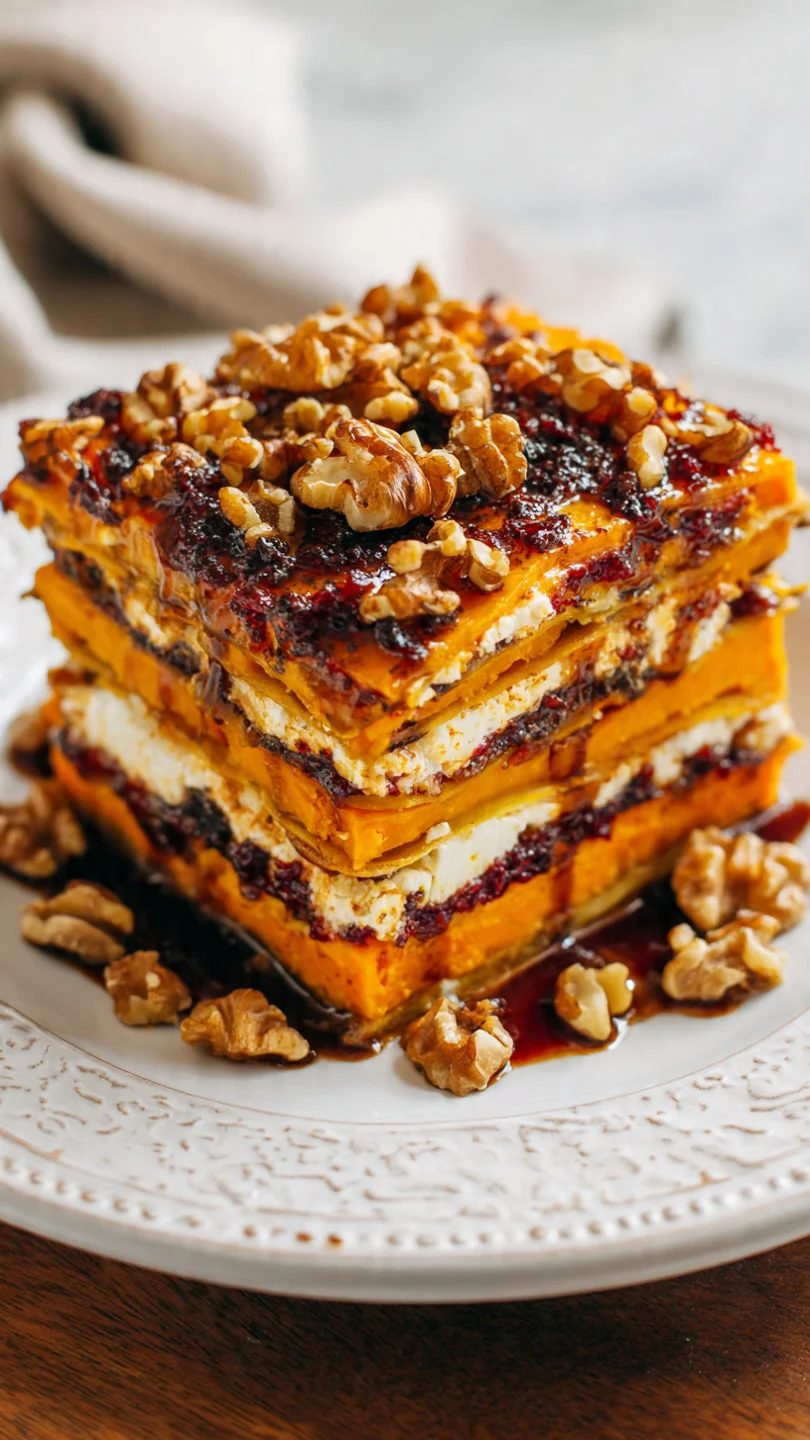
Imagine a dish that captures the essence of autumn in every bite: sweet, earthy vegetables, creamy cheese, and a glaze that sings with seasonal tartness. This lasagna is that dish. Born from a desire to create a stunning, satisfying centerpiece for vegetarian holiday tables, it replaces traditional pasta with thin slices of roasted sweet potato and butternut squash.
The result is a hearty, gluten-free casserole with incredible depth of flavor and a presentation that will have everyone reaching for their phones before their forks. It’s the kind of recipe that looks like you spent all day in the kitchen, but with a bit of smart prep, it comes together with elegant ease.
- A Show-Stopping Centerpiece: This lasagna is visually stunning with its golden layers and vibrant red glaze, making it perfect for holidays, dinner parties, or any meal where you want to impress.
- Naturally Gluten-Free: By using thin slices of roasted vegetables instead of pasta, this dish is inherently gluten-free and packed with more nutrients and fiber than its traditional counterpart.
- Complex, Balanced Flavors: The sweetness of the squash, the tang of the ricotta and feta, the herbal notes of sage, and the sweet-tart pop of the cranberry glaze create a symphony of autumn flavors in every forkful.
- Make-Ahead Friendly: You can roast the vegetable slices and prepare the fillings a day in advance, making assembly on the day you plan to serve it quick and stress-free.
- Satisfyingly Hearty: Don’t let the lack of meat fool you. The layered vegetables and rich cheese filling make this a deeply satisfying and comforting main course that will please vegetarians and omnivores alike.
Ingredients You’ll Need
Let’s gather our ingredients—this combination of humble vegetables, creamy cheeses, and a simple glaze creates something truly special. Quality matters here, especially for the cheeses. For the ricotta, seek out a whole-milk variety from the dairy section; it’s creamier and less grainy than some tubs found near the pasta.
Fresh sage is non-negotiable for its distinct, woodsy aroma that pairs perfectly with squash. If fresh cranberries are out of season, you can use high-quality cranberry sauce from a jar; just warm it gently with a tablespoon of honey to loosen it up. For the walnuts, toasting them in a dry pan for a few minutes until fragrant will unlock their full, nutty potential.
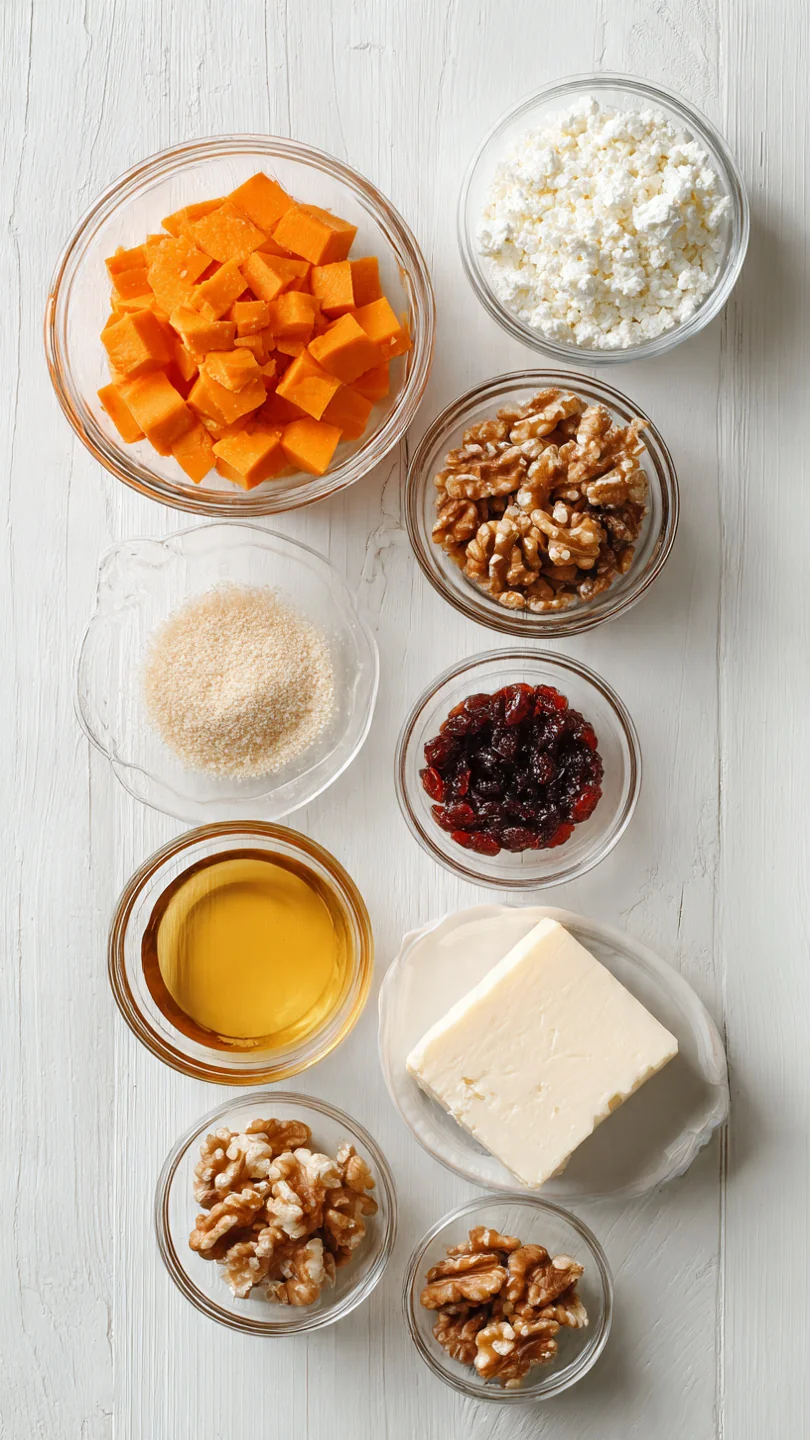
Note: You’ll find the complete list of ingredients, along with their exact measurements, in the printable recipe card at the bottom of this post.
Kitchen Equipment Needed
You won’t need any specialty equipment, but a few key tools will make the process smoother. A sharp chef’s knife is essential, but for truly uniform, paper-thin slices of sweet potato and squash, a mandoline slicer is a game-changer—just always use the safety guard. You’ll need two large baking sheets lined with parchment paper for roasting the vegetable “noodles.” A standard 9×13 inch baking dish is the perfect vessel for assembly and baking.
A small saucepan for the glaze and a few mixing bowls round out the list.
How to Make Sweet Potato & Butternut Squash Lasagna Recipe
Step 1: Slice and Roast the Vegetables
Preheat your oven to 400°F (200°C). Using a sharp chef’s knife or a mandoline, carefully slice the peeled sweet potato and butternut squash into 1/8-inch thick rounds. Trust me, uniform thickness is key for even cooking.
Toss the slices in a large bowl with 2 tablespoons of olive oil, 1 teaspoon of salt, and 1/2 teaspoon of black pepper. Arrange them in a single layer on two parchment-lined baking sheets. Roast for 18-20 minutes, just until pliable but not fully tender.
They’ll finish cooking in the lasagna. Let cool slightly.
Step 2: Prepare the Fillings and Glaze
While the vegetables roast, make the filling and glaze. In a medium bowl, combine the ricotta, egg, 3/4 cup of the Parmesan cheese, chopped sage, thyme, nutmeg, 1/2 teaspoon salt, and 1/4 teaspoon pepper. Mix until smooth and set aside.
For the glaze, combine the cranberries, honey, and water in a small saucepan. Bring to a simmer over medium heat and cook for 8-10 minutes, stirring occasionally, until the cranberries have burst and the mixture has thickened slightly. Remove from heat; it will thicken more as it cools.
Step 3: Assemble the First Layers
Reduce the oven temperature to 375°F (190°C). Lightly brush a 9×13 inch baking dish with olive oil. Now, assemble the lasagna.
Spread about 1/3 of the ricotta mixture evenly on the bottom of the dish. Arrange a single, slightly overlapping layer using half of the roasted sweet potato and squash slices. Tip from me: mix the two types of slices for a beautiful marbled effect in each layer.
Spread another 1/3 of the ricotta over the vegetables.
Step 4: Complete Assembly and Initial Bake
Create a second layer with the remaining vegetable slices. Spread the final portion of the ricotta mixture on top. Sprinkle with the remaining 1/4 cup of Parmesan cheese.
Cover the dish tightly with aluminum foil. Bake on the center rack for 40 minutes. Believe me, this covered steaming phase is crucial for softening the vegetable ‘noodles’ completely.
Step 5: Add Toppings, Final Bake, and Serve
Carefully remove the foil. The lasagna should look set. Sprinkle the crumbled feta and toasted walnuts evenly over the top.
Return to the oven, uncovered, for 15-20 minutes, or until the top is golden brown and the edges are bubbling. Let the lasagna rest for at least 15 minutes before slicing; this allows the layers to set for clean cuts. Drizzle individual servings generously with the cranberry-honey glaze and garnish with fresh sage leaves.
- Mandoline Mastery: If using a mandoline, slice the squash first (when it’s firmer) and the sweet potato last. This prevents the starchy sweet potato from gumming up the blade for the squash. Always, always use the hand guard.
- Avoid Sogginess: The key to a lasagna that holds its shape is roasting the vegetable slices just until flexible, not until they’re fully soft and releasing liquid. They should be dry to the touch after roasting.
- Resting is Part of Cooking: I can’t stress this enough. Letting the lasagna rest for a full 15-20 minutes after baking allows the cheeses to set and the starches in the vegetables to firm up. You’ll get beautiful, clean slices instead of a delicious but messy scoop.
- Glaze Consistency: The cranberry glaze will be syrupy when hot but will thicken to a perfect, spoonable consistency as it cools. If it becomes too thick upon standing, simply warm it gently with a teaspoon of water.
Recipe Variations
- Dairy-Free/Vegan Version: Substitute the ricotta with a blend of firm tofu (crumbled and pressed dry), nutritional yeast, lemon juice, and salt. Use a vegan Parmesan alternative and omit the feta or use a vegan crumble. For the egg, a flax egg (1 tbsp ground flax + 3 tbsp water) works as a binder.
- Nut-Free Option: Simply omit the walnuts. For added crunch, you could use toasted pumpkin seeds (pepitas) as a garnish instead.
- Herb Swaps: While sage is classic with squash, fresh rosemary (finely chopped) or a tablespoon of chopped fresh oregano can create a different flavor profile. For a brighter note, try adding the zest of one lemon to the ricotta mixture.
- Meat Addition: For a heartier version, brown 1/2 pound of Italian sausage (mild or hot) or ground turkey, drain the fat, and sprinkle it between the vegetable layers along with the ricotta mixture.
- Cheese Variations: Try substituting the feta topping with crumbled goat cheese for a tangier finish, or use a smoked Gouda for a deeper, savory note.
What to Serve With This Recipe
This lasagna is rich and satisfying, so pair it with sides that offer freshness and contrast. A simple arugula salad with a lemon vinaigrette, shaved fennel, and a few pomegranate arils cuts through the richness beautifully. For a heartier meal, serve it alongside garlic sautéed greens like kale or Swiss chard.
It’s the perfect main course for a vegetarian Thanksgiving or Friendsgiving, but don’t relegate it just to holidays—it’s a fantastic Sunday dinner. In terms of drinks, a crisp, dry white wine like a Sauvignon Blanc or a Pinot Gris complements the dish well, as does a light-bodied red like Pinot Noir.
Storage & Make-Ahead Instructions
- Refrigeration: Cool the baked lasagna completely, then cover tightly or transfer slices to an airtight container. It will keep in the refrigerator for up to 4 days.
- Freezing: This lasagna freezes remarkably well. Assemble it completely but do not add the final feta and walnut topping. Wrap the unbaked, covered dish tightly in both plastic wrap and foil. Freeze for up to 2 months. Thaw overnight in the refrigerator before baking, adding the feta and walnuts during the last 20 minutes of baking as directed.
- Reheating: Reheat individual slices in the microwave until warmed through, or cover the whole dish with foil and reheat in a 350°F oven for 20-25 minutes. For best texture, reheat in the oven.
- Make-Ahead: You can roast all the vegetable slices and prepare the ricotta filling and cranberry glaze up to 24 hours in advance. Store them separately in the refrigerator. Let the ricotta mixture come to room temperature for 30 minutes before assembling.
Frequently Asked Questions
Q: Can I use pre-cut butternut squash cubes?
A: Unfortunately, no. You need long, flat, thin slices to create the lasagna “noodle” layers. Pre-cut cubes won’t work for this specific layered structure.
Q: My sweet potato slices are breaking. What did I do wrong?
A: They were likely roasted for too long or sliced too thin. They should be pliable but still have some structural integrity. Aim for that 1/8-inch thickness and check them at the 18-minute mark.
Q: Can I make this without the cranberry glaze?
A: Absolutely. The lasagna is delicious on its own. For a simpler finish, you could drizzle it with a balsamic reduction or even a little high-quality olive oil before serving.
Q: How do I know when the lasagna is done baking?
A: The top should be golden brown, the edges should be bubbling actively, and a knife inserted into the center should meet little resistance, sliding through the softened vegetable layers easily.
Q: Is there a substitute for fresh cranberries?
A: Yes. You can use 1/3 cup of good-quality cranberry sauce or jam. Warm it gently in a saucepan with a tablespoon of water or orange juice until it’s a drizzle-able consistency.
Q: Can I use dried herbs instead of fresh?
A: For the sage, fresh is highly recommended as its flavor is central to the dish. If you must substitute, use 2 teaspoons of dried rubbed sage in the ricotta, but the flavor will be more muted.
Q: Why is my lasagna watery after baking?
A: This is usually caused by under-roasting the vegetable slices initially. If they aren’t roasted enough to release their excess moisture, that water will seep out during baking. Ensure your slices are dry and pliable after their first roast.
Final Thoughts
This Sweet Potato & Butternut Squash Lasagna is more than just a recipe; it’s a celebration of autumn’s best produce. It proves that vegetarian food can be every bit as comforting, complex, and celebratory as any traditional dish. The process of slicing, roasting, and layering is genuinely therapeutic, and the reward—a gorgeous, golden casserole that fills your kitchen with an incredible aroma—is worth every minute.
Whether you’re serving it for a special holiday or a cozy weeknight dinner, it’s a dish that invites sharing and creates lasting memories around the table. I hope you enjoy making (and eating!) it as much as I do. If you give it a try, please leave a comment or rating below—I love hearing about your kitchen adventures.
Don’t forget to tag me on social media if you share a photo; I always love to see your beautiful creations

Layered Sweet Potato & Butternut Squash Lasagna With Feta, Walnuts & Cranberry-Honey Glaze
Equipment
- 9×13 inch baking dish
- Sharp chef’s knife or mandoline slicer
- Two large baking sheets
- Parchment paper
- Medium mixing bowls
- Small saucepan
Ingredients
- 1 large sweet potato about 1.5 lbs, peeled
- 1 small butternut squash about 1.5 lbs, peeled and seeded
- 15 oz whole milk ricotta cheese drained if very wet
- 1 large egg
- 1 cup grated Parmesan cheese divided
- 2 tbsp fresh sage finely chopped, plus whole leaves for garnish
- 1 tsp fresh thyme leaves
- 0.5 tsp ground nutmeg freshly grated preferred
- 2 tbsp olive oil plus more for brushing
- 1 cup fresh cranberries
- 0.25 cup honey
- 2 tbsp water
- 0.75 cup crumbled feta cheese
- 0.5 cup walnuts chopped and toasted
- Kosher salt and black pepper to taste
Instructions
- Preheat your oven to 400°F (200°C). Using a sharp chef’s knife or a mandoline, carefully slice the peeled sweet potato and butternut squash into 1/8-inch thick rounds. Trust me, uniform thickness is key for even cooking. Toss the slices in a large bowl with 2 tablespoons of olive oil, 1 teaspoon of salt, and 1/2 teaspoon of black pepper. Arrange them in a single layer on two parchment-lined baking sheets. Roast for 18-20 minutes, just until pliable but not fully tender. They’ll finish cooking in the lasagna. Let cool slightly.
- While the vegetables roast, make the filling and glaze. In a medium bowl, combine the ricotta, egg, 3/4 cup of the Parmesan cheese, chopped sage, thyme, nutmeg, 1/2 teaspoon salt, and 1/4 teaspoon pepper. Mix until smooth and set aside. For the glaze, combine the cranberries, honey, and water in a small saucepan. Bring to a simmer over medium heat and cook for 8-10 minutes, stirring occasionally, until the cranberries have burst and the mixture has thickened slightly. Remove from heat; it will thicken more as it cools.
- Reduce the oven temperature to 375°F (190°C). Lightly brush a 9×13 inch baking dish with olive oil. Now, assemble the lasagna. Spread about 1/3 of the ricotta mixture evenly on the bottom of the dish. Arrange a single, slightly overlapping layer using half of the roasted sweet potato and squash slices. Tip from me: mix the two types of slices for a beautiful marbled effect in each layer. Spread another 1/3 of the ricotta over the vegetables.
- Create a second layer with the remaining vegetable slices. Spread the final portion of the ricotta mixture on top. Sprinkle with the remaining 1/4 cup of Parmesan cheese. Cover the dish tightly with aluminum foil. Bake on the center rack for 40 minutes. Believe me, this covered steaming phase is crucial for softening the vegetable ‘noodles’ completely.
- Carefully remove the foil. The lasagna should look set. Sprinkle the crumbled feta and toasted walnuts evenly over the top. Return to the oven, uncovered, for 15-20 minutes, or until the top is golden brown and the edges are bubbling. Let the lasagna rest for at least 15 minutes before slicing; this allows the layers to set for clean cuts. Drizzle individual servings generously with the cranberry-honey glaze and garnish with fresh sage leaves.